How to Decide Between Resurfacing or Replacing Your EMC Chambers

Retrofitting Legacy EMC Chambers: When to Replace vs. Resurface Ferrite Tiles
Thousands of testing labs across Europe and North America are sitting on the same dilemma — chambers built in the late 1990s or early 2000s that still look functional from the outside but tell a very different story on the inside. Tear everything out, or find a smarter path forward?
The answer depends on a lot more than budget.
What Ferrite Tiles Actually Do — And Why Age Matters
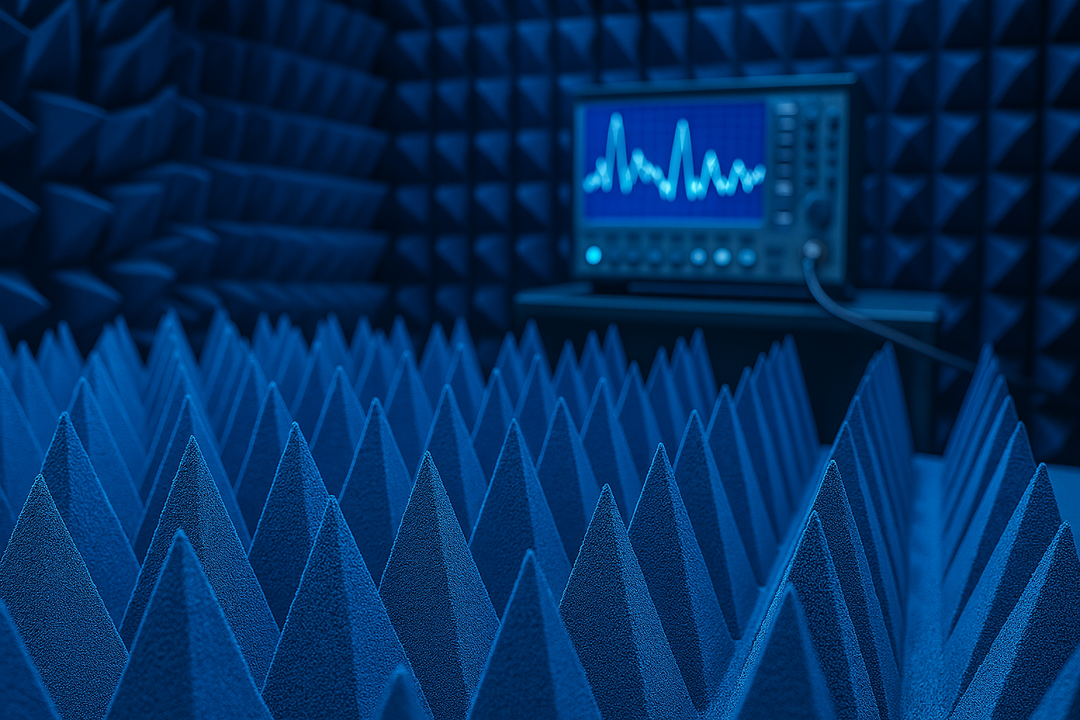
Ferrite tiles have lined the walls of EMC chambers since the late 1960s. Made from ceramic materials, they absorb magnetic waves at frequencies below 1 GHz, and they do it well. When properly installed, they can last for decades — but that's not the same as lasting forever without intervention.
One detail that rarely gets enough attention: tile gap width. Maximum low-frequency absorption depends on keeping tile-to-tile gaps as tight as possible — ideally under 0.13mm. Thermal cycling, structural shifts, and wear gradually widen those gaps. Once they exceed tolerance, performance figures drift, and the chamber may no longer pass the Normalized Site Attenuation requirements defined under CISPR 16-1-4, which governs radiated disturbance measurements from 9 kHz to 18 GHz.
The Resurface Route: Smarter Than It Sounds
Resurfacing doesn't mean settling. In many cases, it's the more technically sound choice — particularly when the underlying tiles are still structurally intact.
Here's when keeping existing ferrite tiles makes sense:
- NSA and Field Uniformity tests still pass current standards
- No widespread cracking, delamination, or bonding failure
- Budget and testing downtime are key constraints
- The frequency upgrade target is above 1 GHz, not below
Hybrid Absorbers: Where Old Meets New
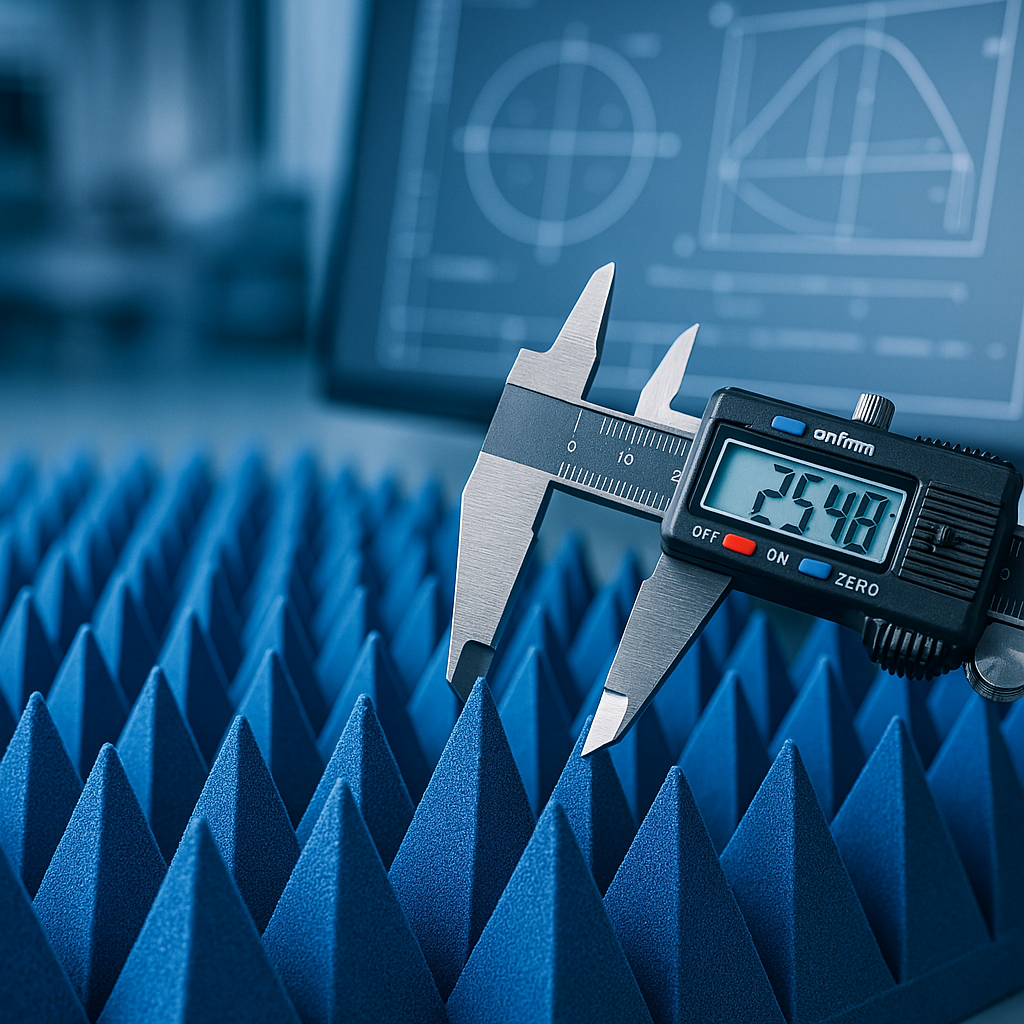
This is where things get genuinely interesting. Ferrite tiles were never designed for high-frequency performance — but that doesn't mean they have to go. Modern polystyrene absorbers can be installed directly over intact tile layers, effectively extending a chamber's usable frequency range, in some renovated facilities up to 50 GHz.
Polystyrene absorbers offer sharper cone geometry than traditional polyurethane foam, which translates directly to better signal dampening at higher frequencies. They're also more durable. Older PU foam gradually loses its carbon content, begins to crumble, and releases particulate matter — including chemical fire retardants — into the working environment. People who regularly work in aging EMC anechoic chambers with deteriorated PU absorbers are exposed to those substances over time. That alone is a compelling reason to act.
The non-negotiable step before any overlay work begins: RF testing of the existing ferrite tiles, followed by impedance matching calculations. The interface between old tiles and new absorbers must be compatible, especially in the 80–240 MHz range. A mismatch in that band doesn't just reduce performance — it introduces measurement errors that can invalidate entire test campaigns.
A complete renovation, when properly planned, typically takes one to two weeks. A new SAC-3 chamber, by comparison, requires roughly three times the investment and can take months from teardown to handover.
When Replacement Is the Only Real Answer
Resurfacing has its limits. Some EMC chambers genuinely can't be saved, and recognizing that early avoids throwing money at a foundation that won't hold.

Four Signs the Tiles Need to Go
These are the situations where full replacement becomes unavoidable:
- Validation failure — The chamber fails CISPR 16-1-4 testing and the failure points to reduced magnetic permeability in the tiles themselves. No overlay system fixes that.
- Widespread physical damage — Crumbling tiles, large-scale delamination, or sections that have fully detached from the wall aren't cosmetic problems. They're structural ones.
- Gap deterioration beyond repair — Once tile-to-tile gaps can't be reliably corrected, the physics of sub-1 GHz absorption break down completely.
- Incompatible upgrade targets — Older tile configurations from suppliers no longer operating may not provide a viable base for modern hybrid systems, particularly chambers being retooled for 5G or automotive radar testing.
A chamber that fails validation now and gets resurfaced will likely fail again. That's not a renovation — it's a delayed full replacement with an extra invoice attached.
The Structural Assessment Nobody Skips Twice
Before any decision gets finalized — replace or resurface — the chamber's physical infrastructure needs a proper engineering review. This means examining:
- Metal shielding panels in walls, ceiling, and floor for corrosion or deformation
- The ground plane, turntable, and antenna mast
- Cable penetrations, access points, and filter panels
EMC test chambers are precision instruments. A structurally compromised chamber won't hold shielding effectiveness regardless of what absorber system gets installed on top. Skipping the structural review is the kind of shortcut that shows up during accreditation testing — at exactly the wrong moment.
Making the Final Call
The decision comes down to four things evaluated together: current performance against applicable standards, physical condition of the tiles, target frequency range, and realistic budget against expected downtime.
A chamber with clean tiles that still passes NSA testing and only needs to operate below 1 GHz is a strong resurface candidate. A chamber with validation failures, physical damage, or requirements for modern high-frequency testing is a replacement candidate — even when the upfront cost is harder to justify.
RF testing first. Structural assessment before committing to a path. The tiles, when tested properly, will tell you exactly what they need.