Ferrite Tiles: Essential Components for Electromagnetic Interference Suppression

In today's technology-driven world, electromagnetic interference (EMI) presents significant challenges for industries ranging from telecommunications to aerospace. Ferrite tiles stand out as a reliable solution to these challenges, offering effective electromagnetic wave absorption across various applications. This article explores ferrite absorbers' composition, functionality, and applications, highlighting their critical role in modern electronics and testing environments.
Understanding Ferrite Absorbers and Their Function
Ferrite tiles are square-shaped electromagnetic absorbers manufactured from sintered ferrite materials. These specialized components absorb incident electromagnetic energy and convert it into heat through magnetic loss mechanisms. This conversion process effectively reduces or eliminates electromagnetic wave reflections and suppresses electromagnetic noise in various settings.
The magnetic loss in ferrite absorbers occurs through multiple mechanisms when electromagnetic waves pass through the material:
-
Eddy current loss
-
Natural resonance
-
Domain-wall resonance
-
Exchange resonance
These mechanisms collectively contribute to the tiles' effectiveness in absorbing unwanted electromagnetic radiation. Ferrite tiles are highly effective for EMI suppression across the 30 MHz to 1 GHz frequency range, typically delivering absorption levels of 10 to 25 dB, making them well-suited for a wide range of electromagnetic interference control applications.
Physical Characteristics of Ferrite Tile Absorbers
Ferrite tile absorbers come in various dimensions and formats to suit different application requirements. Standard sizes include 100 x 100 mm and 600 x 600 mm tiles, with thickness options ranging from 0.8 mm to 6 mm and beyond. The physical properties of these tiles allow for versatile installation methods, including:
-
Wall mounting using screws
-
Ceiling installation with appropriate adhesives
-
Direct application to surfaces such as concrete or exterior porcelain tiles
The ferrite tiles are available in three main formats:
-
Solid tiles for maximum durability
-
Flexible tiles for curved or irregular surfaces
-
Panel formats (assembled units of multiple tiles) for larger coverage areas
The construction quality of ferrite absorbers directly impacts their performance. During installation, precise machining of all sides of the tile helps minimize air gaps between adjacent tiles, which could otherwise degrade absorption performance.

Applications and Benefits of Ferrite Tile Technology
Ferrite tiles serve as critical components in numerous applications where electromagnetic interference presents challenges. Their versatility and effectiveness have made them standard components in testing facilities and electronic systems worldwide.
EMC Testing and Anechoic Chambers
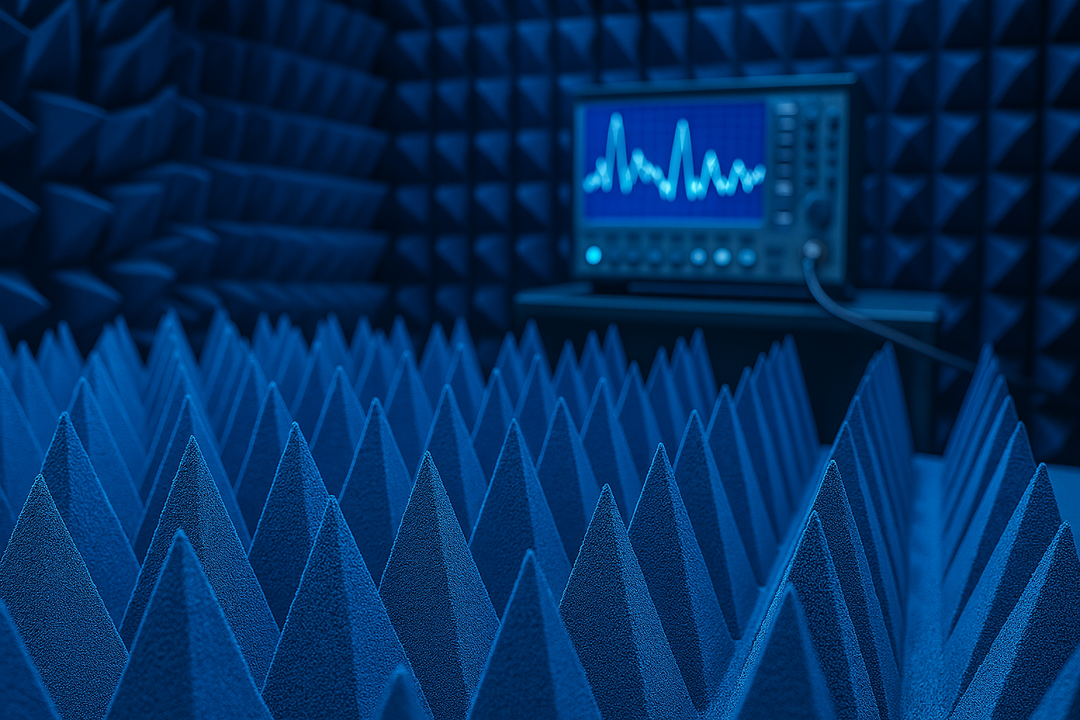
One of the primary applications of ferrite absorbers is in anechoic chambers for electromagnetic compatibility (EMC) testing. In these specialized environments, ferrite absorbers create conditions where electromagnetic waves do not reflect off surfaces, allowing for accurate measurements and testing of electronic equipment.
These tiles are particularly suitable for:
-
Normalized site attenuation in EMC chambers per ANSI C63.4 standards
-
Applications in accordance with CISPR 16-1-4 specifications
-
Testing environments compliant with IEC 61000-4-3 requirements
Implementing ferrite absorbers in testing chambers significantly improves measurement accuracy by reducing ambient electromagnetic noise and preventing wave reflections that could interfere with test results.
Telecommunications and Broadcasting Applications
In telecommunications, ferrite absorbers play a crucial role in maintaining signal integrity and preventing interference. Specific applications include:
-
Television broadcasting: Ferrite tiles prevent TV ghosting caused by waves reflected off high-rise buildings, ensuring clearer reception for viewers. When installed on structures that might otherwise reflect signals, these tiles absorb the electromagnetic waves rather than bouncing them back, which would create ghost images on screens.
-
Radio communication: The tiles help prevent disturbances in radio communications by absorbing stray signals that might otherwise cause interference. This application is particularly important in densely populated urban areas where multiple radio signals coexist.
-
UHF RFID systems: Ferrite tiles prevent interference between UHF RFID readers, allowing for more reliable and accurate identification systems in retail, logistics, and inventory management applications.
Aerospace and Defense Applications
The aerospace and defense sectors benefit significantly from ferrite tile technology. These tiles help prevent false images on airborne radar systems by absorbing reflected signals that might otherwise create misleading returns. This application is critical for navigation safety and accurate target identification.
Electronics and Computing
In the realm of electronics and computing, ferrite tiles find applications in:
-
EMI absorption on integrated circuits (ICs)
-
Electromagnetic shielding for CPUs running at high clock speeds
-
Interference prevention on the bus drives
-
Dark boxes for mobile phone inspection and testing
Very thin ferrite absorbers are commonly used in these applications, where space constraints require compact solutions. Flexible ferrite absorbers offer particular advantages for EMI suppression in tight spaces or on curved surfaces within electronic devices.
Building Materials for EMI Protection
Beyond electronic components and testing environments, ferrite tiles serve as specialized building materials for EMI protection. When incorporated into construction plans for sensitive facilities such as research laboratories, data centers, or healthcare facilities housing sensitive equipment, these tiles create electromagnetically secure spaces.
Advanced Applications and Future Developments
The technology behind ferrite tiles continues to advance, opening new possibilities for electromagnetic interference management across industries. Understanding these developments helps professionals stay ahead in implementing effective EMI solutions.
Extended Frequency Applications
While standard ferrite tiles perform optimally in the 30 MHz to 1 GHz range, many modern applications require effective absorption at higher frequencies. For high-frequency testing needs above 1 GHz, ferrite absorbers can be installed over dielectric spacers of appropriate thickness. This configuration creates:
-
Double-layer absorbers
-
Composite radio wave absorbers
These modified installations offer enhanced performance and extended frequency ranges, making ferrite absorbers relevant for testing and shielding applications involving 5G technologies, advanced radar systems, and other high-frequency applications.
Hybrid Solutions
Modern EMI management often requires a combination of approaches. Ferrite tiles frequently form part of hybrid solutions that may include:
-
Conductive materials for reflection rather than absorption
-
Multiple absorber types targeting different frequency bands
-
Active cancellation systems work alongside passive absorption
The combination of ferrite absorbers with complementary technologies provides comprehensive EMI management solutions tailored to specific application requirements.
Miniaturization for Electronics
As electronic devices continue to shrink while increasing in complexity and speed, the demand for smaller ferrite tile solutions grows. Ultra-thin ferrite tiles measuring less than 0.5mm in thickness are now available for applications in compact electronic devices. These miniaturized versions maintain effective absorption properties while fitting into increasingly tight spaces.
The development of micro-scale ferrite tile structures represents one of the most promising research directions in this field, potentially enabling EMI suppression directly at the circuit board level.

Selecting the Right Ferrite Tiles for Specific Applications
Choosing appropriate ferrite absorbers requires consideration of several factors to ensure optimal performance. The selection process should account for:
Frequency Range Considerations
Different formulations of ferrite materials provide optimal absorption in specific frequency ranges. When selecting ferrite tiles, it's necessary to match the tile's peak absorption frequency with the target interference frequency. Manufacturers typically provide absorption curves showing performance across the frequency spectrum, which serve as valuable reference data during the selection process.
Environmental Factors
Environmental conditions can affect the performance and longevity of ferrite tiles. When selecting tiles, consider:
-
Temperature ranges in the installation environment
-
Humidity levels and potential exposure to moisture
-
Presence of corrosive chemicals or gases
-
Physical stress factors such as vibration
Ferrite tiles offer advantages over some alternative absorber materials in these regards, as they are generally less susceptible to fire, humidity, and chemical damage. Their robust construction provides a longer lifespan in challenging environments.
Space Constraints
One of the key benefits of ferrite absorbers is their space efficiency. They typically occupy less space inside anechoic chambers than alternative absorber types, allowing for more test volume space. When planning installations in restricted spaces, the compact profile of ferrite absorbers becomes particularly valuable.
For applications with extreme space limitations, flexible ferrite tiles or ultra-thin variants provide solutions that conform to available space while maintaining effective absorption properties.
Installation Considerations
The effectiveness of ferrite absorbers depends significantly on proper installation. Key considerations include:
-
Minimizing air gaps between adjacent tiles
-
Ensuring secure attachment to substrate surfaces
-
Maintaining proper orientation relative to the expected wave direction
-
Creating continuous coverage across the target area
Professional installation by experienced technicians often yields the best results, particularly for critical applications such as calibrated test environments.
In Conclusion
Ferrite tiles represent a crucial technology in the ongoing battle against electromagnetic interference. From testing environments to electronic devices and architectural applications, these specialized components effectively absorb unwanted electromagnetic energy.
Their ability to convert electromagnetic waves into heat through multiple loss mechanisms makes ferrite absorbers indispensable in applications ranging from anechoic chambers to mobile devices. As technology continues to advance, with higher frequencies and more densely packed electronic components, the role of ferrite absorbers will likely expand further.
Understanding the properties, applications, and selection criteria for ferrite absorbers enables engineers, facility managers, and electronics designers to implement effective EMI suppression solutions. Whether addressing compliance testing requirements, improving signal integrity, or protecting sensitive equipment, ferrite tiles offer proven performance with practical advantages over alternative approaches.
As we continue to develop and deploy more wireless technologies and higher-frequency applications, the importance of effective electromagnetic interference management will only increase. Ferrite absorbers, with their established track record and ongoing technological development, will remain at the forefront of solutions addressing these challenges.
Ready to Equip Your Anechoic Chamber?
dB Absorber offers NRL 8000 certified pyramidal RF absorbers in sizes from 2″ to 36″. In-stock products ship from California in 1–2 business days.
Browse RF Absorbers →