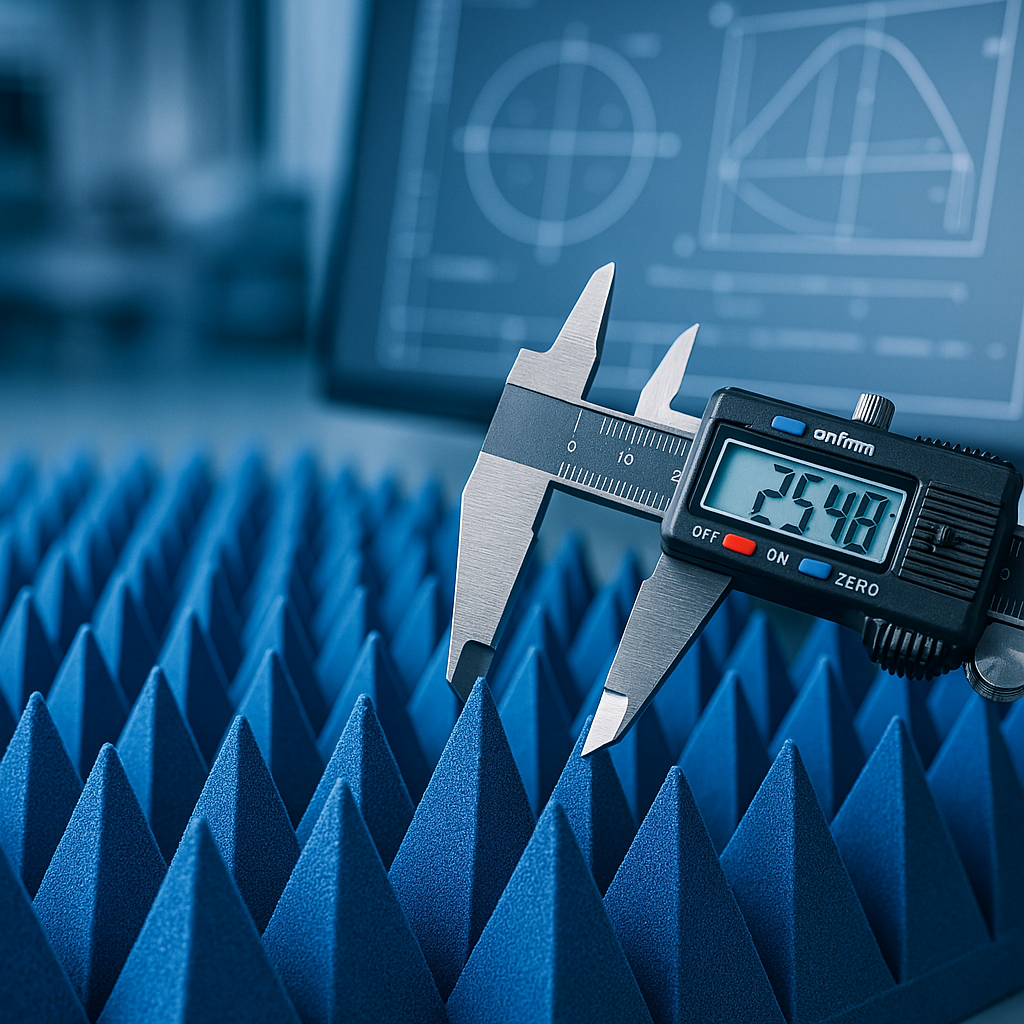
How to Achieve Optimal RF Shielding Effectiveness in Thermal Management

Thermal Management vs. RF Shielding: How to Cool Your Device Without Creating an EMI Leak
Every engineer working with enclosed electronics eventually runs into the same wall: the cooling solution that works perfectly on paper punches holes in the electromagnetic barrier the whole design depends on. Heat needs an exit. RF interference uses the same exit. That's the conflict in a nutshell.
Heat and EMI — Two Problems That Share the Same Door
RF shielding effectiveness relies on a continuous conductive barrier. A seam, a vent hole, a loose gasket — each one is a potential EMI leak waiting to happen. Thermal management, meanwhile, almost always demands some kind of opening or conduction path to move heat out of that sealed space.
Why Junction Temperature Is Non-Negotiable
Semiconductor reliability is directly tied to temperature. According to component reliability data widely cited in electronics engineering, a junction temperature increase of just 5°C above the optimal range can cut a component's expected lifespan roughly in half. So the pressure to keep devices cool isn't about performance preference — it's about whether the product survives long enough to matter.
The challenge is creating a thermal path that doesn't become an EMI leak in the process.
What Happens When Vent Holes Act Like Antennas
Openings in metal enclosures don't behave passively. They couple electromagnetic energy in and out of the shielded space, functioning as aperture antennas. A 2-inch square metallic box, for instance, resonates at around 12 GHz in its first cavity mode — and any noise source near that frequency gets amplified by the enclosure's Q-factor rather than suppressed.
That's why RF shielding effectiveness can't be treated as a static property. Every design change that affects airflow also affects the barrier.
Three Vent Designs That Protect RF Shielding Effectiveness
Vents are where thermal and RF goals collide most visibly. The good news is that engineered vent designs can serve both purposes — but only if the geometry is right.
The Waveguide-Beyond-Cutoff Method
This approach uses the physical dimensions of a vent hole to block RF signals while allowing airflow. The rule: hole depth must be at least three times its diameter. At those proportions, the opening behaves as a waveguide below its cutoff frequency, attenuating electromagnetic waves before they transit the aperture. Air passes freely. RF doesn't.
It's a well-established technique in military and aerospace applications where both EMI and thermal specs are hard requirements — not suggestions.
Honeycomb Vents: Many Cells, One Shield
Metal honeycomb panels scale the waveguide principle across hundreds of hexagonal cells simultaneously. The result is high airflow with strong electromagnetic attenuation. Key variables:
- Cell depth — deeper cells push the cutoff frequency higher, blocking more of the spectrum
- Cell diameter — smaller cells improve RF shielding effectiveness at higher frequencies
- Panel density — denser panels attenuate more but restrict airflow, so pressure drop is a real tradeoff
ePTFE Pressure-Equalization Vents
Expanded PTFE membrane vents are worth knowing about for consumer electronics and wearables. They allow pressure equalization and gas exchange while blocking moisture, dust, and high-frequency electromagnetic energy. For enclosures that need to breathe but can't afford an EMI leak, they're one of the cleaner off-the-shelf solutions.
Materials That Handle Both Jobs at Once
Choosing the right materials often resolves the thermal-vs-shielding conflict before any vent geometry needs to be calculated.
Board-level metal shields (steel or aluminum) provide the electromagnetic barrier. Filling the gap between the shield and the hot component underneath with a thermal interface material — a pad, gel, or phase-change compound — lets heat conduct out through the shield itself. No extra openings required.
Common TIM options and their typical use cases:
- Thermal greases and gels — fill microscopic surface gaps, good for flat component-to-heatsink interfaces
- Phase-change pads — melt slightly at operating temperature for improved contact, easy to apply
- Graphite gaskets — excellent conductivity-to-weight ratio, well-suited for wearables and space-constrained designs
Thermally conductive absorbers add another dimension: they simultaneously absorb incident RF energy as heat and conduct that heat away. RF shielding effectiveness is maintained through absorption rather than reflection, which also lowers the cavity Q-factor and reduces resonance risk.

Seam Gaskets That Don't Degrade Over Time
Every enclosure seam is a liability. Conductive elastomer gaskets seal those joints while maintaining electrical continuity through thermal cycling — something metal-on-metal contact can't reliably do over time. Gasket fill material affects performance noticeably:
- Silver-aluminum fill — highest conductivity, used where RF shielding effectiveness is the top priority
- Nickel-graphite fill — cost-effective, adequate for most mid-frequency applications
Don't Wait for Compliance Testing to Find the Leak
Pre-scan testing with a near-field probe can catch EMI leak paths introduced by cooling modifications long before the product reaches a certified test chamber. Failures found during final compliance testing are far more expensive to fix than problems caught during design validation — in time, tooling, and schedule.
RF shielding effectiveness should be measured after every significant thermal design change. Vent placement, gasket fit, and TIM installation all shift the result. The thermal engineer and the EMC engineer need to be working from the same enclosure model, not separate ones.
Treating heat management and RF shielding as one integrated problem — not two separate workstreams — is what separates products that pass first time from those that don't.