Understanding EMI Testing: Tips, Techniques & Challenges
Meta description: Explore essential tips for successful EMI testing. Learn about techniques, common challenges, and how to ensure your device meets compliance standards.
Understanding EMI Testing: Tips, Techniques & Challenges
Electronic products face an invisible enemy that most people never think about—electromagnetic interference. This silent troublemaker doesn't just mess with device performance; it can completely tank product launches and drain company budgets through expensive redesigns. Nearly half of all products fail their first EMI compliance test, which should make any design team sit up and pay attention.
The stakes are higher than just checking boxes on a compliance form. Products that don't properly manage electromagnetic interference can malfunction when users need them most, create safety risks, or mess with other nearby devices. Medical equipment, car electronics, and everyday consumer gadgets all rely on thorough electromagnetic interference testing to make sure they won't cause problems or break down when something else nearby turns on.
Governments around the world aren't taking chances with this stuff. They've put strict rules in place to control harmful EMI testing from electronic goods, making compliance testing mandatory for market access. Skip it, and the product doesn't ship. Simple as that.
Getting Started: What EMI Testing Actually Looks Like
Testing examines two main things: what a device puts out and what it can handle. Emissions are the unintended electromagnetic signals that leak out through the air or power lines. Immunity measures whether equipment keeps working when electromagnetic chaos erupts around it. Both matter equally.
The Two Faces of EMI Interference Testing
Conducted emissions testing checks interference traveling through wires and power lines. Technicians use specialized equipment called LISNs to measure this noise across different frequencies. Problems here usually point to weak filtering or grounding issues in the design.
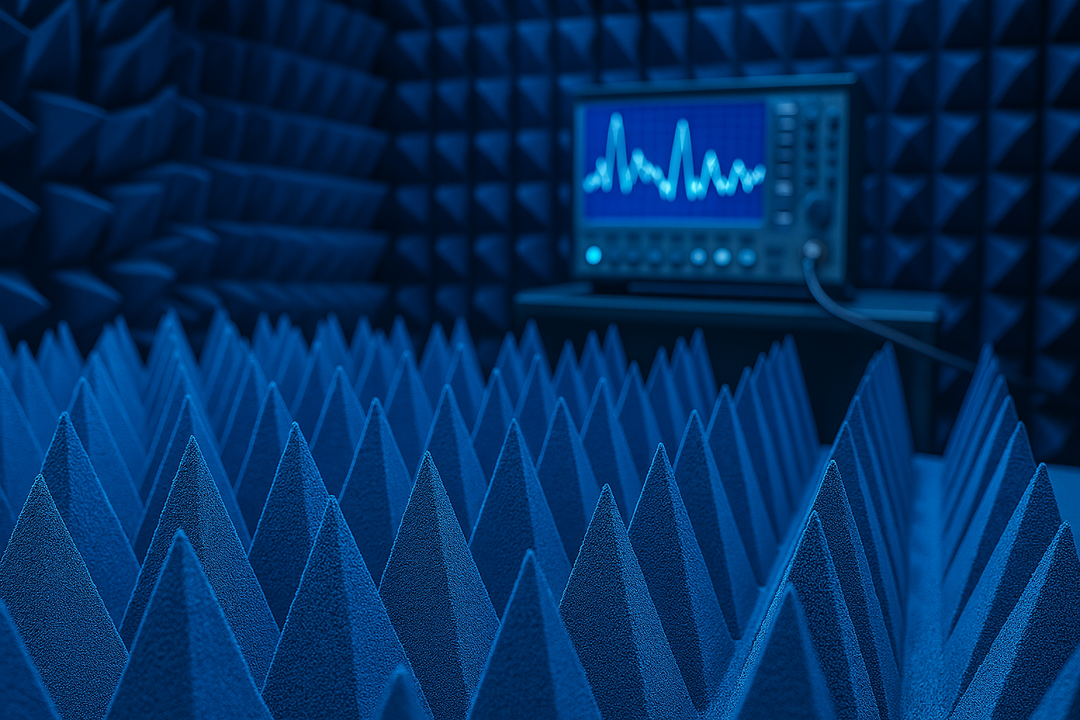
Radiated emissions testing captures the electromagnetic energy broadcasting into the air. The device sits in a special chamber while antennas positioned several meters away pick up any signals. Rotating the product through different angles helps find the worst-case emissions.
When Reality Hits: Reading Test Reports the Right Way
Here's something that catches people off guard: that specific frequency listed in the test report probably isn't exactly where the problem lives. Testing facilities use different methods depending on the frequency range, and their equipment can't always pinpoint sources with perfect accuracy. A failure at 88.7291 MHz doesn't mean that's precisely the troublemaker's frequency.
Test reports show adjusted field strength values compared against specification limits. The margin column reveals whether measurements exceed what's allowed. Keep in mind that quasi-peak measurements (a weighted detection method used in official testing) always read lower than or equal to simple peak detection. This becomes practical knowledge for pre-compliance testing.
Innovative Strategies That Keep Testing on Track
Waiting until the end to think about EMI testing is a recipe for disaster. Pre-compliance measurements during the prototype stage catch problems when fixes are cheap and quick. Most company labs don't have fancy calibrated chambers, but that's fine—relative measurements work great for finding sources and checking if fixes actually help.
Building a Test Plan That Works
The testing process moves through clear phases:
- Planning identifies which standards apply and what requirements matter
- Equipment setup ensures everything's configured correctly and calibrated
- Conducted testing examines interference on power and signal lines
- Radiated testing captures unwanted emissions in the air
- Immunity testing verifies the device can handle external disturbances
Documentation throughout creates the proof needed for compliance certification.
Immunity Testing: Making Sure Devices Can Take a Hit
While emissions testing looks at what comes out, immunity testing checks what the device can survive. Standards define specific disturbance types:
- Electrostatic discharge simulates the zap from touching a device
- Electrical fast transient represents switching noise on power lines
- Surge testing mimics lightning effects
- Radiated immunity checks performance near strong radio signals
Devices must either keep working correctly during these disturbances or recover quickly without needing a reset. Both matter for passing.
When Problems Show Up (And How to Fix Them)
Even well-designed products hit electromagnetic interference testing snags. Common issues include excessive noise on power lines, emissions exceeding limits, failures during static discharge tests, and unusual problems that only appear in certain modes.
Tools That Actually Help Find Problems
Near-field probing with specialized probes helps locate emission sources through relative measurements. These come in two types:
- H-field probes have a loop design that detects magnetic fields from high-current sources like power supplies and cables. The loop must align with the current flow to work properly.
- E-field probes work like tiny antennas, picking up voltage changes from high-impedance circuits and unterminated traces. These need to stay perpendicular to conductors.
Mixed-domain oscilloscopes combine spectrum analyzer and scope functions, showing which circuit signals coincide with which EMI problems. This correlation often reveals the culprit faster than traditional methods.
Fixes That Address Root Causes
Once problems are identified, several mitigation techniques help:
- Adding ferrites, common-mode chokes, or capacitors to reduce conducted noise
- Improving PCB layout with better grounding and shorter return paths
- Repositioning cables and wire bundles to lower radiation coupling
- Using shielding or enclosures when other measures aren't enough
The key is addressing causes rather than just treating symptoms.
Knowing When to Get Help
Some situations need expert eyes. Repeated failures despite multiple fixes, wildly different results between labs, or mysterious intermittent problems might require professional consultation. Accredited testing services bring specialized equipment and deep knowledge to complex issues. Getting help early prevents wasted time chasing wrong solutions.
Industry-Specific Challenges Worth Knowing
Automotive electronics face tough requirements because safety systems can't tolerate interference. Modern cars pack electric motors, driver assistance tech, and wireless systems into tight spaces where electromagnetic compatibility becomes critical. Standards like CISPR 25 demand extensive testing.
Aerospace applications need electronics that perform reliably at extreme temperatures and altitudes while weighing as little as possible. Aircraft navigation and communication systems must meet strict standards like DO-160. Engineers constantly balance effective shielding against weight penalties.
Consumer electronics fight for bandwidth in crowded RF environments. Smartphones and smart home devices must meet FCC or CE requirements in compact packages. Small form factors make EMI control tricky, requiring creative PCB layouts and filtering approaches.
Practical Tips from the Trenches
Think about EMI during schematic design, not after building prototypes. Component choices, grounding structure, and PCB stackup decisions made early have a huge impact on final performance. Changing these things later costs serious time and money.
For pre-compliance measurements, consistency beats absolute accuracy. Use the same probe positions and measurement settings each time. This produces reliable relative measurements showing whether changes help or hurt, even without access to calibrated facilities.
Budget-conscious teams should consider equipment rental instead of purchasing. Spectrum analyzers, antennas, and chambers represent significant investments that might see limited use. Rental provides access to calibrated tools without the financial burden. Premium used EMI testing equipment from reputable sources also offers reliable performance at reduced cost.
Making EMI Testing Work for Your Product
Electromagnetic interference testing isn't just another compliance hoop to jump through. Products that manage EMI properly work reliably across different environments, play nicely with other electronics, and earn user trust. The testing investment pays off in better performance, happier customers, and a stronger reputation.
Technology keeps advancing, pushing frequencies higher and cramming more functionality into smaller packages. These trends make EMI challenges tougher while making effective testing even more necessary. Teams that treat EMI testing as an ongoing design consideration rather than a last-minute checkpoint get better results with lower costs.
Looking for high-quality RF absorbers? Browse our in-stock pyramidal absorbers — shipping from California in 1-2 business days.