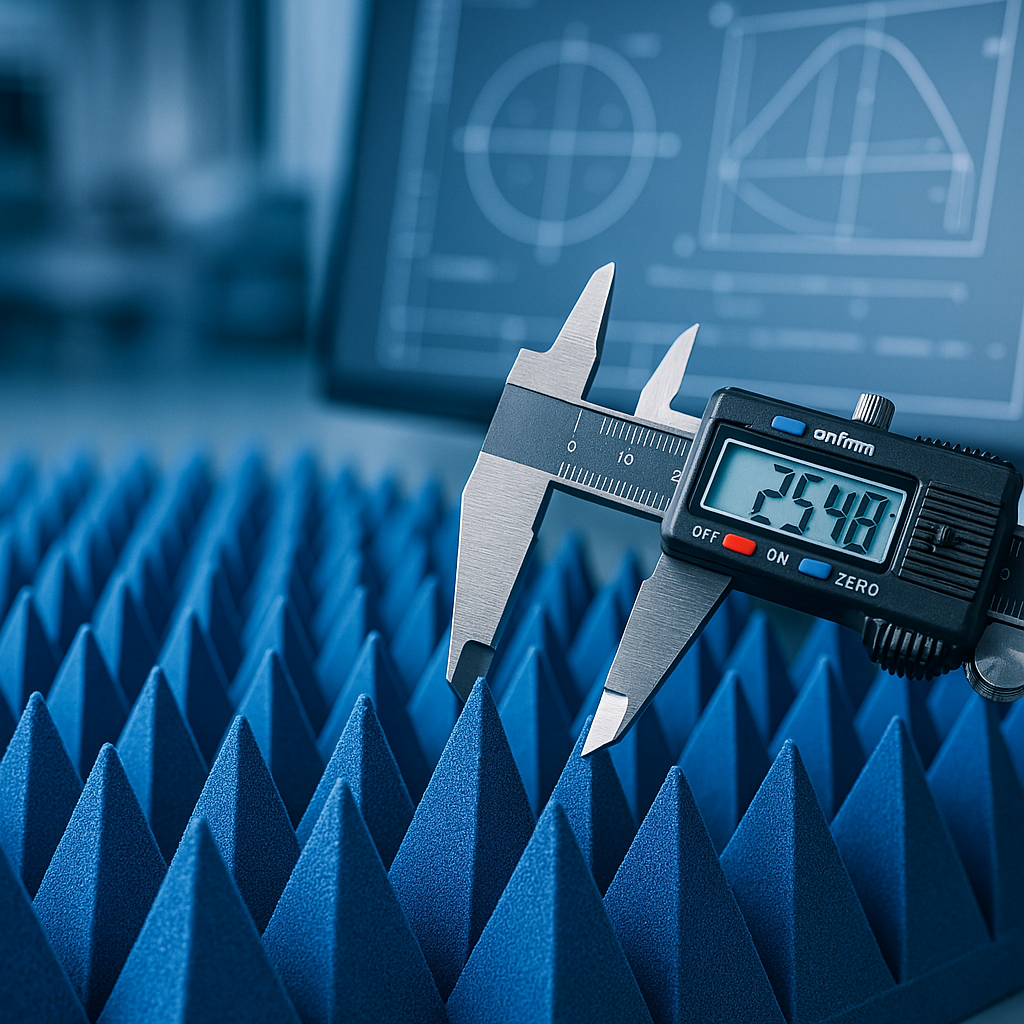
The Complete Guide to 5G OTA Chamber: Testing the Future of Wireless

In wireless technology development, the 5G OTA chamber has become an essential component for validating the performance of next-generation devices. These specialized testing environments allow engineers to accurately measure how 5G devices perform in real-world conditions without the interference of outside signals. This article explores the fundamentals of OTA chambers, their applications, and their critical role in bringing reliable 5G technology to market.
Understanding 5G OTA Chamber
A 5G OTA chamber provides a controlled environment for testing wireless devices using over-the-air methods. Unlike traditional wired testing approaches, OTA testing evaluates device performance through actual radio frequency transmissions, which is particularly important for 5G technology operating at millimeter wave (mmWave) frequencies.
The design of an OTA chamber must accommodate several unique requirements of 5G testing. The chamber must be large enough to create proper far-field conditions while maintaining an electromagnetic quiet zone where reflections are minimized. This allows for accurate measurement of beam patterns, signal strength, and other crucial performance metrics.
Key Components of a 5G OTA Chamber
The effectiveness of an OTA chamber depends on several critical components:
-
RF absorbers: These materials line the walls, ceiling, and floor to minimize signal reflections.
-
Positioning systems: Precision multi-axis positioners allow devices to be tested at various angles.
-
Measurement antennas: Specialized antennas capture the signals transmitted by the device under test.
-
Shielding: External RF interference is blocked to maintain test integrity.
-
Control and analysis systems: Software and hardware that manage the test process and analyze results.
When these components work together properly, the 5G OTA chamber provides reliable data about how devices will perform in real-world conditions.
Far-Field Requirements and Chamber Size
The size of a 5G OTA chamber is largely determined by the far-field requirements of the device under test. According to the Fraunhofer equation:
R > 2D²/λ
Where:
-
R is the far-field distance
-
D is the dimension of the antenna aperture
-
λ is the wavelength
This equation often results in far-field distances that require substantial chamber sizes for 5G devices with larger antenna arrays. This is why many 5G OTA chamber facilities are quite large, sometimes measuring several meters in each dimension.
OTA Testing Methodologies and Applications
5G OTA testing involves various methodologies designed to evaluate different aspects of device performance. These tests are critical for ensuring that 5G devices meet industry standards and deliver expected performance in real-world scenarios.

For device manufacturers, OTA testing provides crucial data about antenna performance, signal quality, and overall device efficiency. This testing is particularly important for smartphones, IoT devices, and other consumer electronics operating on 5G networks.
Types of OTA Tests
Several types of 5G OTA test procedures are commonly performed in an OTA chamber:
-
Total Radiated Power (TRP): Measures the total power radiated by the device in all directions.
-
Total Isotropic Sensitivity (TIS): Evaluates the device's ability to receive signals from various directions.
-
Radiation Pattern Measurement: Maps the directional power distribution of transmissions.
-
MIMO Performance Testing: Assesses how well multiple-input and multiple-output antenna systems function.
-
Beamforming Verification: Confirms that beam steering capabilities work as intended.
Each 5G OTA test method provides different insights into device performance and helps identify potential issues before products reach the market.
Industry Standards for OTA Testing
Organizations like 3GPP have established specific protocols for 5G OTA testing to ensure consistency across the industry. These standards define test conditions, measurement techniques, and performance thresholds that devices must meet.
A properly equipped 5G OTA chamber enables manufacturers to conduct these standardized tests and verify that their devices comply with industry requirements. This standardization ensures interoperability between devices and networks from different manufacturers.
Implementing Effective OTA Testing Strategies
The complexity of 5G technology necessitates sophisticated OTA testing strategies. Manufacturers must consider various factors when designing test protocols and selecting appropriate 5G OTA chamber facilities.
Device Categories and Test Requirements
According to 3GPP specifications, devices are categorized based on their antenna configurations:
-
Devices with a single antenna panel under 5 centimeters
-
Devices with multiple independent antenna panels, each under 5 centimeters
-
Devices with multiple phase-coherent antenna panels
Each category requires different OTA testing approaches and may necessitate specific 5G OTA chamber configurations. Understanding these categories helps manufacturers select appropriate test facilities and methodologies.
Quiet Zone Considerations
The quiet zone is a critical region within the OTA chamber where electromagnetic reflections are minimized. The quality of this zone directly impacts the accuracy of test results.
Several factors affect quiet zone quality:
-
The effectiveness of RF absorbers
-
The geometric configuration of the chamber
-
The positioning of measurement antennas
-
The management of ambient electromagnetic noise
Engineers must carefully consider these factors when designing or selecting an OTA chamber for their testing needs.
Link Budget Calculations
Accurate link budget calculations are essential for 5G OTA testing. These calculations account for all gains and losses in the signal path, including:
-
Transmitter power
-
Cable losses
-
Connector losses
-
Free space path loss
-
Antenna gains
-
Receiver sensitivity
In a 5G OTA chamber, these calculations help ensure that test signals are strong enough to be accurately measured while remaining within realistic parameters.
Advanced Considerations in OTA Chamber Design
As 5G technology evolves, OTA chamber designs must adapt to accommodate new testing requirements. Several advanced considerations are shaping the future of these testing environments.
Compact Range Solutions
Traditional 5G OTA chamber designs often require large spaces to achieve far-field conditions. However, compact range solutions use reflectors to create plane waves at shorter distances, allowing for smaller chamber sizes while maintaining test accuracy.
These solutions make OTA testing more accessible to smaller organizations with limited space and resources. They also reduce the cost of establishing comprehensive test facilities.
Multi-Device Testing Capabilities
Modern OTA chamber designs increasingly support simultaneous testing of multiple devices. This capability significantly improves testing efficiency and throughput, allowing manufacturers to validate more devices in less time.
Multi-device OTA testing is particularly valuable for IoT applications, where thousands of devices might need validation before deployment. This approach helps manufacturers meet tight production schedules while maintaining thorough testing protocols.
Environmental Simulation
Advanced 5G OTA chamber facilities now incorporate environmental simulation capabilities. These systems can recreate various temperature, humidity, and other environmental conditions to evaluate how devices perform under different circumstances.
This environmental testing is crucial for devices operating in harsh or variable conditions. It helps manufacturers identify potential failure modes and design more robust products.
Conclusion
The 5G OTA chamber represents a critical piece of infrastructure in developing and deploying next-generation wireless technology. By providing controlled environments for OTA testing, these facilities enable manufacturers to validate device performance and ensure compliance with industry standards.
As 5G technology continues to evolve and deployment accelerates, the importance of thorough OTA testing will only increase. Manufacturers who invest in comprehensive testing strategies and utilize appropriate OTA chamber facilities will be better positioned to deliver reliable, high-performance products to the market.
Whether through traditional far-field chambers or innovative compact range solutions, OTA testing will remain an essential part of the wireless technology ecosystem for years to come. The insights gained from these tests will continue to drive improvements in device design, network performance, and ultimately, the user experience.
Ready to Equip Your Anechoic Chamber?
dB Absorber offers NRL 8000 certified pyramidal RF absorbers in sizes from 2″ to 36″. In-stock products ship from California in 1–2 business days.
Browse RF Absorbers →