Why RF Immunity Testing Is Essential for Product Compliance and Safety
Meta description: Learn why RF immunity testing is crucial for ensuring product reliability, meeting regulatory standards, and preventing costly malfunctions in real-world conditions.
Why RF Immunity Testing Is Essential for Product Compliance and Safety
Electronics don't live alone anymore. A smartphone sits next to a laptop. A microwave runs while Wi-Fi streams a movie. Radio towers broadcast signals through walls. This creates an invisible storm of electromagnetic energy that every device must survive.
Radio frequency immunity determines whether your product keeps working when waves hit it. Poor immunity means failures. Strong immunity means reliability. Testing proves which category your device falls into before customers find out the hard way.
Understanding Radio Frequency Immunity
Radio frequency immunity measures a device's resistance to electromagnetic interference. When RF waves strike electronics, several things can happen. The device might continue working normally. It might glitch temporarily. It could fail completely.
Sources of RF Interference
Interference comes from everywhere in modern environments:
- Mobile phones transmitting to cell towers
- Wireless routers broadcasting throughout buildings
- Bluetooth devices exchanging data
- Radio transmitters sending signals across distances
- Other electronics accidentally emitting RF energy
Some interference is intentional—phones need to transmit. Other interference is accidental—electrical circuits sometimes leak electromagnetic energy. Both types can disrupt nearby devices.
Why Immunity Matters
A coffee maker that freezes when someone answers a phone is annoying. A medical device that stops working near wireless equipment could kill someone. The stakes vary wildly depending on application, which is why regulators take RF immunity seriously across all product categories.
Manufacturers can't predict every electromagnetic environment their products will encounter. Testing simulates worst-case scenarios to ensure devices survive real-world conditions.
Regulatory Requirements for Market Access
Selling electronics legally requires proving electromagnetic compatibility. RF immunity testing forms a core part of this proof. Skip the testing, and your product stays off store shelves.
FCC Standards in the United States
The Federal Communications Commission mandates RF immunity testing under Part 15 regulations. Two compliance pathways exist: certification and Supplier's Declaration of Conformity. Both require passing immunity tests. There are no exceptions for consumer electronics entering American markets.
Products lacking FCC marks cannot be sold, advertised, or imported legally. Customs officials stop non-compliant shipments at borders. Retailers refuse to stock uncertified items. Online marketplaces remove listings that violate regulations.
International Compliance Standards
Different regions enforce their own requirements. Europe uses EN 61000-4-3 for the CE mark. Canada follows ISED regulations. Many standards align on core principles but differ in specific thresholds and procedures.
Global manufacturers face a complex web of requirements:
- IEC 61000-4-3 for international markets (80 MHz to 6 GHz range)
- EN 61000-4-3 for European Economic Area access
- FCC Part 15 for United States distribution
- ISED standards for Canadian compliance
Each market demands proof that products meet local electromagnetic compatibility standards. Testing must address all relevant regulations for target markets.
How RF Immunity Testing Works
Testing follows standardized procedures to ensure consistent, repeatable results. The process reveals how devices respond to controlled RF exposure before they face unpredictable real-world conditions.
Setting Up the Test Environment
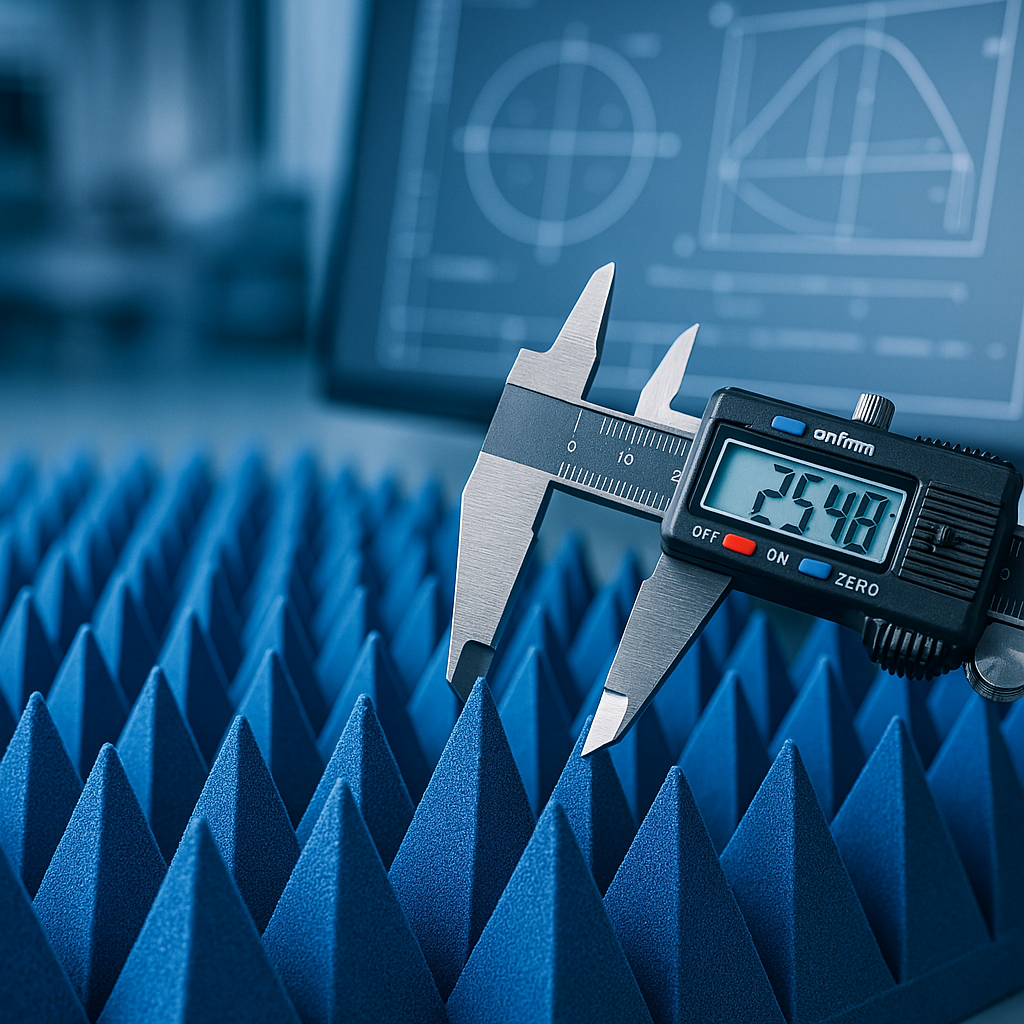
Engineers place the device under test inside an anechoic chamber. These specialized rooms have walls covered in foam pyramids that absorb electromagnetic reflections. The chamber creates an isolated environment free from external interference.
Technicians configure the device according to the manufacturer's specifications. Power connections get established. Necessary peripherals attach. The device runs in its normal operating mode while engineers measure baseline performance without any RF exposure.
Applying RF Fields
RF immunity test equipment generates controlled electromagnetic waves. Signal generators produce precise frequencies at specific power levels. Specialized antennas direct these waves at the device from various angles and distances.
The exposure protocol varies based on applicable standards. Some tests sweep through frequency ranges gradually. Others focus on specific bands where interference commonly occurs. Field strength increases systematically to identify the threshold where problems emerge.
During exposure, monitoring equipment tracks device behavior continuously. Does the display show errors? Do outputs become unstable? Does the device crash or reboot? Every anomaly gets recorded with details about the RF conditions that caused it.
Analyzing Results
Post-exposure evaluation determines whether problems were temporary or permanent. Some devices recover immediately when RF fields disappear. Others suffer lasting damage or persistent malfunctions.
Testing generates detailed documentation covering:
- Environmental conditions during testing
- RF frequencies and power levels applied
- Device behavior throughout exposure
- Any deviations from normal operation
- Post-test performance compared to baseline
This documentation supports regulatory submissions and provides engineering teams with actionable data for design improvements.
Compliance Testing Protects Market Position
RF immunity testing isn't optional paperwork—it's a legal gateway to market access. Without it, products cannot legally enter most major markets regardless of their actual performance or quality.
Legal Consequences of Non-Compliance
Regulatory bodies have enforcement power. They can block imports, demand product recalls, and impose penalties on companies selling non-compliant devices. The cost of violations far exceeds testing expenses.
Beyond regulatory action, liability concerns loom large. Products that malfunction due to RF interference can cause property damage, injuries, or deaths in sensitive applications. Manufacturers who skip proper testing expose themselves to lawsuits and criminal charges.
Quality Assurance Benefits
Testing validates design assumptions under controlled conditions. Engineers discover weaknesses during development when fixes remain relatively straightforward. Finding problems after manufacturing thousands of units creates expensive nightmares.
Pre-production testing identifies issues that might never emerge in the lab but surface constantly in customer environments. This early detection prevents warranty claims, returns, and the reputation damage that follows widespread product failures.
Safety Implications of RF Immunity
Electronic reliability directly impacts user safety in many applications. RF immunity testing helps prevent dangerous situations caused by electromagnetic interference.
Critical Applications Demand Reliability
Medical devices operate in hospitals saturated with wireless equipment. Automotive electronics control braking, steering, and airbag systems. Industrial machinery handles hazardous materials and processes. These applications cannot tolerate a malfunction caused by RF interference.
Testing ensures products maintain functionality when electromagnetic conditions deteriorate. A pacemaker must keep working regardless of nearby phones. Vehicle control systems must remain stable despite radio transmissions passing through the car body.
Preventing Interference Cascades
Devices with poor electromagnetic compatibility don't just fail—they sometimes create interference affecting nearby equipment. One malfunctioning device can disrupt an entire network of electronics.
RF immunity testing verifies products won't become interference sources. This bidirectional compatibility keeps complex electronic environments stable. Hospitals, aircraft, and factories depend on multiple systems coexisting without disrupting each other.
Business Advantages Beyond Compliance
Smart manufacturers view RF immunity testing as a strategic investment rather than a regulatory burden. The testing delivers measurable business benefits beyond satisfying legal requirements.
Risk Reduction
Field failures create cascading costs. Customer support handles complaints. Logistics manages returns. Engineering investigates root causes. Manufacturing implements fixes. Marketing manages reputation damage. Every failure touches multiple departments and budgets.
Thorough testing prevents these scenarios. Problems discovered during development get fixed once. Problems discovered by customers get fixed thousands of times while dealing with angry users, negative reviews, and lost future sales.
Market Advantages
Products that pass rigorous testing earn customer trust. Professional buyers check for proper certifications before making purchase decisions. Industrial customers demand proof of electromagnetic compatibility before integrating new equipment into existing systems.
Successful testing also accelerates time-to-market. Products passing RF immunity tests on the first attempt move through regulatory approvals quickly. Those requiring design changes and retesting fall behind competitors who got their designs right initially.
Selecting Testing Partners
Most manufacturers lack the facilities and expertise for in-house RF immunity testing. Partnering with accredited laboratories provides access to specialized equipment and regulatory knowledge.
Laboratory Qualifications
Testing labs should hold relevant accreditations demonstrating technical competence. They need current knowledge of applicable standards for your product category and target markets. Experience with similar products helps labs identify potential issues early.
Early consultation benefits product development. Labs can review designs before prototyping to flag potential electromagnetic compatibility problems. This front-loading reduces the risk of expensive surprises during formal compliance testing.
Integrating Testing into Development
Treating RF immunity as an afterthought creates problems. Products designed without electromagnetic compatibility considerations often fail initial testing and require significant redesign.
Progressive manufacturers incorporate RF immunity into design reviews from the beginning. They conduct pre-compliance testing throughout development to catch issues when changes remain simple. This approach produces robust designs that sail through formal certification testing.
In Conclusion
RF immunity testing validates that electronic products can survive in electromagnetic environments crowded with wireless devices and RF interference sources. The testing satisfies legal requirements for market access while proving devices maintain functionality when radio waves strike them. Beyond compliance, testing protects manufacturers from expensive recalls, liability claims, and reputation damage caused by field failures.
Modern electronics must coexist with countless other devices broadcasting signals across overlapping frequency bands. RF immunity separates products that work reliably from those that fail unpredictably. Testing reveals which category a device falls into before customers make that determination through bad experiences.
Manufacturers investing in thorough RF immunity testing build better products, enter markets faster, and avoid problems that plague companies treating electromagnetic compatibility as an afterthought. The question isn't whether testing matters—it's whether you can afford to skip it.
Looking for high-quality RF absorbers? Browse our in-stock pyramidal absorbers — shipping from California in 1-2 business days.