RF Absorbers: End-of-Life & Disposal Guide

Industrial hygiene research has long flagged degraded polyurethane foam as a source of airborne particulates and volatile organic compounds (VOCs), yet most testing labs still treat old RF absorbers the same way they'd treat packing foam. That gap between known risk and common practice is where problems start.
RF absorbers are chemically engineered materials, not neutral filler. What they're made of determines how they must be stored, transported, and ultimately destroyed once a chamber gets decommissioned or upgraded.
What Happens to RF Absorbers After Their Service Life Ends?
Old RF absorbers don't simply become inert once they're removed from a wall or ceiling grid. Their disposal path depends entirely on chemical composition, physical condition, and local waste regulations.
A facility can't assume that every panel qualifies for the same disposal method, and that assumption is exactly where compliance issues tend to originate.
Why RF Absorbers Can't Go in Regular Trash
Standard municipal waste systems aren't built to handle chemically loaded foam or metal-infused composites. Several factors make RF absorbers unsuitable for ordinary disposal:
- Flame retardant chemicals embedded in many foam formulations complicate standard plastic recycling.
- Heavy metal content in magnetic and ferrite-based absorbers is often classified as hazardous industrial waste.
- Structural degradation over time can release fine particulates into the air.
- Fire or thermal exposure can leave behind toxic residues that require specialized handling.
Note: even absorbers that look physically intact may still fall under hazardous waste rules, depending on their internal filler material.
How to Categorize RF Absorbent Material Before Disposal
Sorting absorbent material by composition is the single step that determines everything else, from the type of facility that can accept it to the paperwork required for transport.
Skipping this step is one of the most common (and costly) mistakes in lab decommissioning projects.
Carbon-Loaded Foam Absorbers
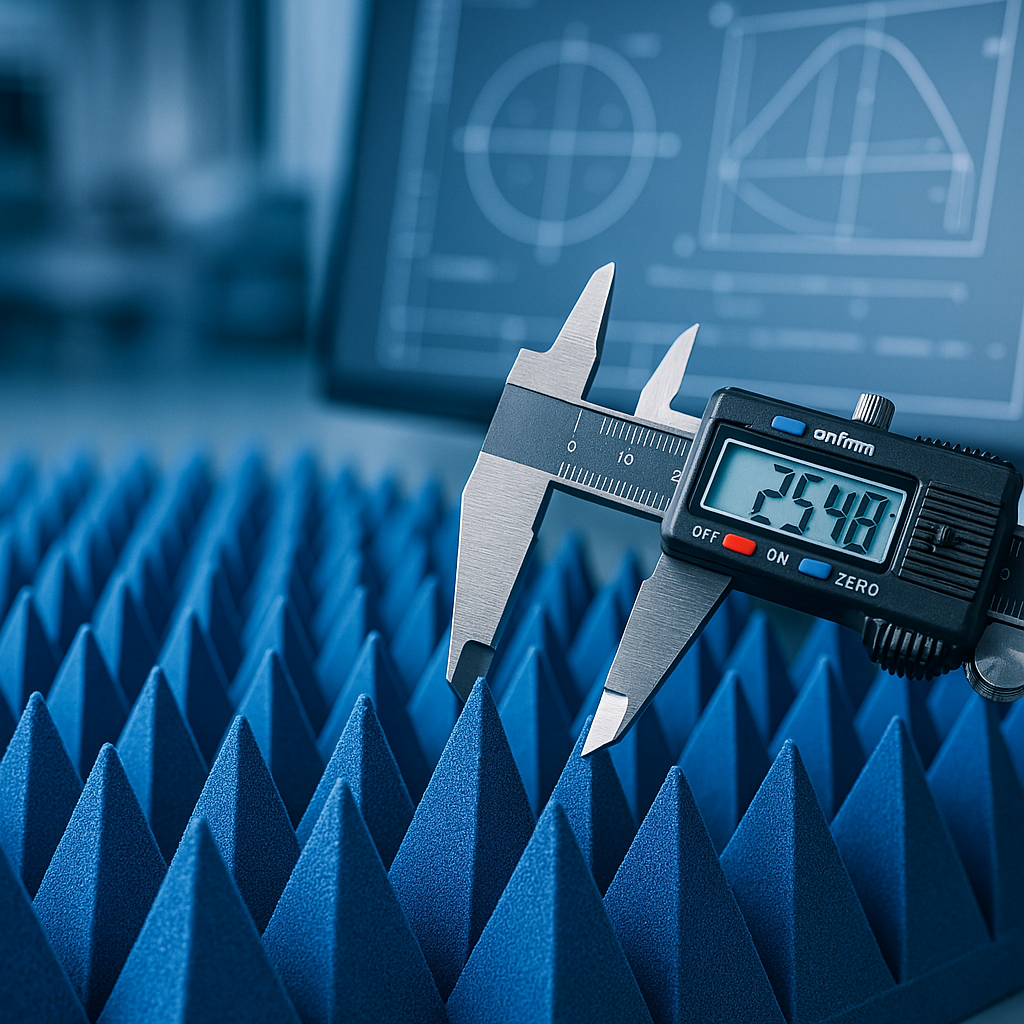
Most pyramidal panels used in anechoic chambers rely on dielectric loss, achieved by loading polyurethane or polystyrene foam with carbon. These are generally safe to handle during normal operation, but that doesn't make them landfill-friendly.
An RF foam absorber built with virgin foam often contains chemical fire retardants, which means it typically needs to go to an authorized industrial waste facility rather than a standard recycling stream.

Magnetic and Ferrite-Based Absorbers
Magnetic absorbers work through a different mechanism entirely – magnetic loss rather than dielectric absorption – and many contain iron, nickel, or rare-earth compounds. In numerous jurisdictions, that composition alone classifies them as hazardous industrial waste.
The table below breaks down how the two most common categories compare when it comes to disposal.
| Absorber Type | Primary Mechanism | Main Hazard | Disposal Requirement |
|---|---|---|---|
| Carbon-loaded foam | Dielectric loss | Flame retardants, VOC release when degraded | Authorized industrial waste facility |
| Magnetic / ferrite tiles | Magnetic loss | Heavy metals, rare-earth compounds | Certified hazardous waste handler |
| Fire-damaged material (either type) | N/A | Toxic combustion byproducts | Toxic waste protocol, no exceptions |
What Are the Regulatory and Safety Risks of RF Foam Absorber Waste?
The biggest risks come from age and damage, not normal use. Absorbers operated within their rated limits generally stay chemically stable throughout their working life.
Once foam starts to break down or has been exposed to heat beyond its rating, the risk profile changes considerably.
VOC Exposure and PPE Requirements
Degraded foam can shed microscopic particles or release VOCs as its internal structure weakens. Workers dismantling or relocating aging panels should wear appropriate personal protective equipment (PPE), since both inhalation and skin irritation are documented occupational concerns in industrial hygiene literature.
Fire and Thermal Damage Risks
Pro Tip: any absorber exposed to sparking, overheating, or visible charring should be isolated immediately and labeled as toxic waste – never mixed with undamaged panels awaiting standard disposal.
High-energy exposure can trigger thermal breakdown or, in rare cases, combustion. Burned or charred material contains hazardous byproducts that require dedicated handling, regardless of how small the affected section appears.
Sustainable Disposal and Reuse Options for RF Absorbers
Disposal doesn't automatically mean total loss. Facilities that plan for end-of-life before installation tend to face fewer complications when decommissioning day eventually arrives.
That forward planning starts with reducing waste generation and continues through reuse wherever it's practical.
Reducing Waste at the Source
Traditional absorber sheets often require extensive die-cutting to match chamber geometry, generating scrap in the process. Dispensed absorber systems, which apply material only where needed, cut down on offcuts and reduce the volume of hazardous waste generated per installation.
Some manufacturers are also testing alternative sourcing, including coconut pith and latex-based composites, though these remain experimental for high-performance chamber applications.
Reuse and Upcycling Opportunities
Modular RF absorbers used in EMC test chambers can often be salvaged and reinstalled elsewhere, provided they remain undamaged and haven't lost their pyramidal shape. A chamber shutdown doesn't have to mean the panels themselves are finished.
Recommended steps before final decommissioning:
- Inspect each panel for contamination from bio-hazards or chemical residue tied to specific testing activities.
- Contact a local environmental waste agency to identify a hauler certified for industrial polymers and heavy-metal composites.
- Maintain detailed logs of material volume and composition for sustainability audits and corporate environmental reporting.
Choosing RF Absorbers That Simplify End-of-Life Management
Performance still matters most when selecting new material, but manufacturers who can speak clearly about disposal tend to understand the full product lifecycle rather than just the point of sale.
A lab evaluating pyramidal foam absorbers should ask suppliers directly about chemical composition, flame retardant content, and available decommissioning guidance. Clear answers to these questions usually indicate a supplier worth building a long-term relationship with.
Well-designed pyramidal anechoic absorbers, sourced with cleaner formulations and minimal scrap generation, make the eventual disposal process noticeably less complicated – and considerably less expensive.
Ready to Upgrade Your Chamber's RF Absorbers?
Facilities sourcing new pyramidal foam absorbers should ask about material composition, disposal support, and long-term documentation before placing an order. A brief conversation with a knowledgeable supplier now can prevent a far more expensive cleanup later – reach out dB Absorber to discuss which pyramidal RF absorbers fit both current testing needs and future decommissioning plans.
Frequently Asked Questions
Can RF absorbers be recycled like regular foam?
No. Most contain flame retardants or metal fillers that disqualify them from standard plastic recycling streams.
Are all RF absorbers classified as hazardous waste?
Not automatically. Carbon-loaded foam is generally lower risk than magnetic or ferrite-based material, though damaged or fire-exposed panels of either type require hazardous handling.
What should a facility do with absorbers before disposal?
Inspect for contamination, confirm material composition, and work with a certified hazardous waste hauler familiar with industrial polymers and heavy-metal composites.
Is it possible to reuse old RF absorbers instead of disposing of them?
Yes, undamaged modular panels from EMC chambers can often be salvaged and reinstalled in another testing environment.