Pyramidal Absorber vs Wedge vs Flat: Choosing the Right Shape

Pyramidal vs. Wedge vs. Flat Absorber: Matching Shape to Application
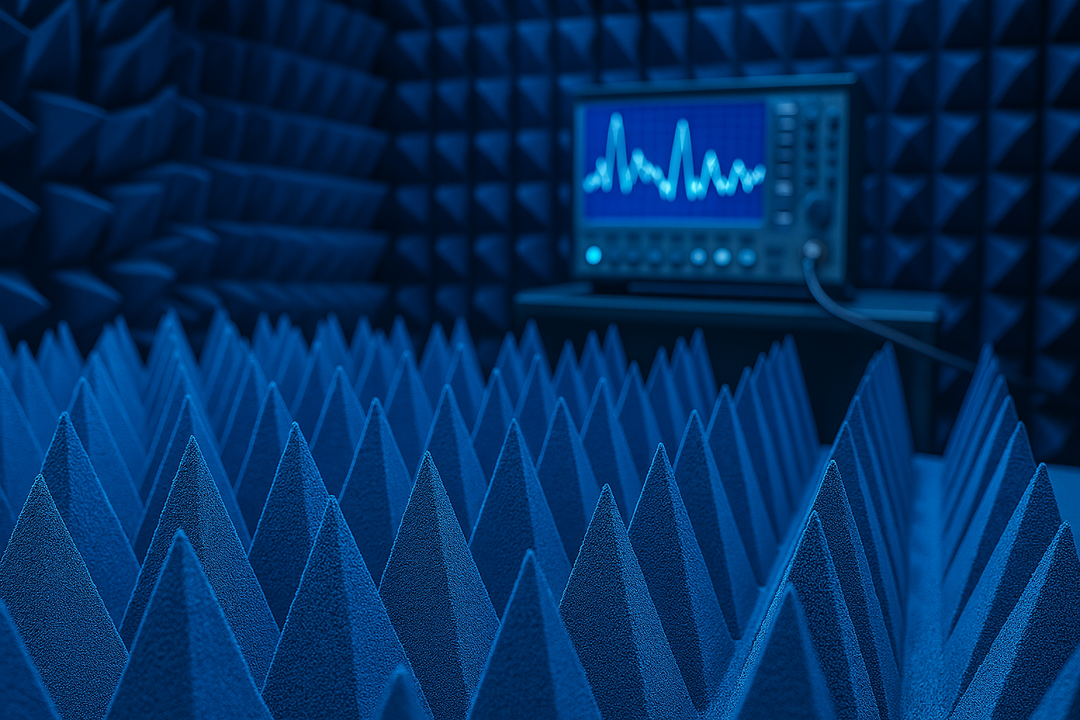
Anechoic chambers rely on absorbing material to control reflections, and the accuracy of any radiated emissions test depends heavily on how well that material performs. The Federal Communications Commission's own standards update confirms this directly: FCC testing above 1 GHz now follows ANSI C63.25.1, a validation method built specifically to check how well a chamber's absorber layout controls reflected energy up to 18 GHz through updated site validation methodology incorporated into FCC rules. That single technical detail explains why shape and depth of absorbing foam are never just a cosmetic decision.
So which shape actually belongs in which room? Pyramidal absorbers, wedge absorbers, and flat absorbers all solve different parts of the same problem, and mixing them up wastes both budget and test accuracy.
What Makes Absorber Shape a Technical Decision, Not a Design Choice
Every RF absorber works by forcing a wave to travel further through lossy material before it can bounce back. Flat foam gives a wave one short pass. Angled or peaked foam forces multiple passes at different angles. That difference in path length is the entire reason geometry matters so much in chamber design.
Automotive testing under CISPR 25 is a good illustration. The measurement frequency range for CISPR 25 spans 150 kHz to 2500 MHz, and hitting the lower end of that range with any consistency requires absorber depth that a flat panel simply cannot provide. This is precisely where pyramidal RF absorber material earns its reputation as the default choice for certified test environments.
How Depth Relates to Frequency
A quick rule worth remembering: the lower the frequency, the deeper the absorber needs to be. Wavelength and absorber height are directly linked, which is why:
- Low-frequency EMC work often needs wedge absorbers or tall pyramidal absorbers
- Mid-to-high frequency work can use shorter pyramidal absorbers
- General flutter and reflection control can often be handled with flat absorbers
This relationship is the reason a comparison chart that only lists "absorber type" without frequency range and height is close to useless for planning a chamber.
Pyramidal Absorbers: The Default for Serious Testing
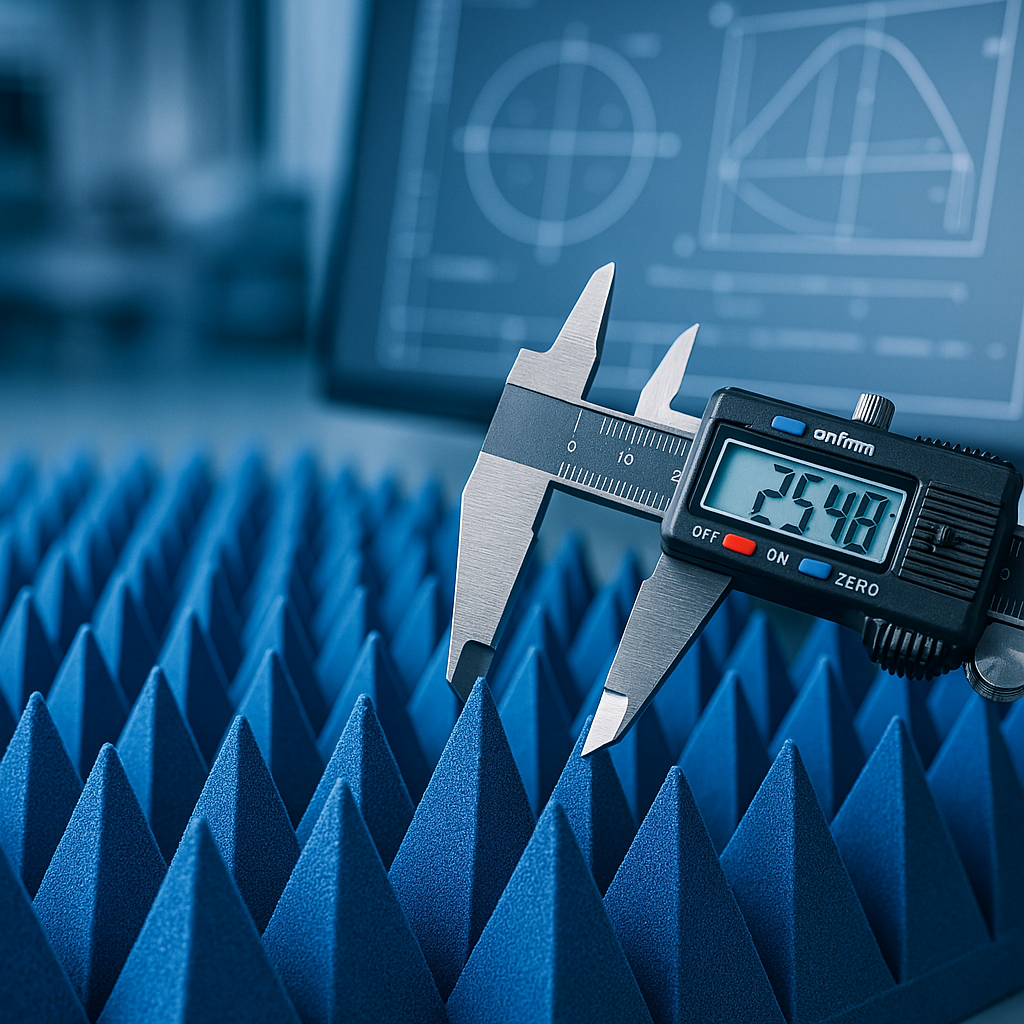
Pyramidal absorber material is shaped into repeating four-sided peaks that scatter incoming energy across several angles instead of reflecting it back in one direction. That scattering, paired with a density gradient built into the foam itself, is what gives a pyramidal absorber its broad frequency coverage.

Where Pyramidal Absorbers Get Specified
Full compliance chambers, radar cross-section facilities, and military-standard test labs almost always default to pyramidal absorber layouts. A few practical reasons keep coming up:
- One pyramidal absorber design can often cover several frequency bands, avoiding the need to swap absorber types mid-project.
- Reflectivity performance stays fairly consistent across a wide sweep rather than dropping sharply outside a narrow band.
- Facilities anticipating future testing needs tend to treat pyramidal absorber installations as a long-term investment rather than a temporary fix.
The obvious tradeoff is size. Deeper pyramids absorb lower frequencies better, and that added depth reduces usable floor space inside the chamber. A pyramidal absorber built for sub-1 GHz work will always be noticeably taller than one designed for higher bands.
Wedge Absorbers: Built for Directional and Space-Limited Zones
Wedge absorber material looks like a row of narrow ridges rather than individual peaks. The elongated shape concentrates surface area along one axis, which is particularly effective for catching low-frequency energy in situations where full pyramidal coverage isn't practical.

Sidewalls, ceiling sections, and transition zones between chamber areas are common spots for wedge absorber material. Its narrower footprint allows installation in spaces that a bulkier pyramidal absorber setup couldn't fit into cleanly. That said, wedge absorber performance tends to be strongest within a targeted band rather than across an extremely wide sweep, so wideband certification work still leans toward pyramidal geometry.
Flat Absorbers: Efficient, Simple, and Space-Saving
Flat absorber panels skip raised geometry entirely. Without peaks or ridges to extend the wave's path through the material, absorption at very low frequencies drops off, but performance across mid-to-high ranges stays reasonably strong.

That tradeoff makes flat absorbers a sensible fit for smaller labs, secondary chamber walls, or supplementary treatment areas where full pyramidal absorber or wedge absorber coverage isn't required. Some facilities combine all three: pyramidal absorber material in the primary quiet zone, wedge absorber sections along tighter walls, and flat panels filling in the rest.
Comparing the Three Shapes at a Glance
| Application | Recommended Shape | Why |
|---|---|---|
| Full compliance, radar, military-standard testing | Pyramidal absorber | Wide frequency coverage, consistent reflectivity |
| Sidewalls, tight corners, directional low-frequency zones | Wedge absorber | Narrower footprint, strong low-frequency absorption |
| Secondary walls, smaller labs, general RF quieting | Flat absorber | Space efficient, adequate mid-to-high frequency control |
Reading a Comparison Chart Without Getting Lost
A few figures matter more than the rest when comparing absorber options:
- Reflectivity, expressed in decibels – a rating closer to negative 40 dB or lower means stronger absorption.
- Height and depth – taller absorbers generally reach lower frequencies, but they also demand more chamber space.
- Fire rating and material composition – a detail that shouldn't be skipped regardless of how tight the budget is.
Pro tip: match the absorber's rated frequency floor to the lowest frequency the chamber actually needs to test, not to whatever number looks most impressive on a spec sheet. Overbuying deep pyramidal absorber coverage for a chamber that only ever tests above 1 GHz wastes both money and floor space.
Common Mistakes When Selecting Absorber Shape
A handful of missteps show up repeatedly in chamber planning, and they're usually avoidable with a bit more attention upfront.
- Choosing flat absorber panels for a chamber that needs low-frequency certification, then discovering the reflectivity numbers don't meet the required standard.
- Installing pyramidal absorber material at a height that leaves no usable working space inside the chamber.
- Skipping fire rating checks entirely because performance specs looked strong on paper.
None of these mistakes are dramatic on their own, but together they tend to explain why so many chamber retrofits happen sooner than expected.
Working With a Supplier That Understands the Difference
Selecting the right combination of pyramidal absorber, wedge absorber, and flat absorber material isn't guesswork once frequency range, chamber depth, and reflectivity targets are laid out clearly. dB Absorber manufactures pyramidal absorbers, wedge absorbers, and flat absorbers designed around real testing standards rather than generic foam cut into a shape. Reach out directly to get a configuration recommendation based on the actual frequency range, chamber size, and certification requirements a facility is working with, rather than a one-size-fits-all layout.
Frequently Asked Questions
What's the main difference between a pyramidal absorber and a wedge absorber?
A pyramidal absorber uses four-sided peaks that scatter energy across a wide frequency range, while a wedge absorber uses elongated ridges optimized for low-frequency absorption in a narrower footprint. Both can absorb similar frequency ranges depending on depth, but pyramidal shapes generally offer broader, more consistent coverage.
Can a flat absorber replace a pyramidal absorber in a compliance chamber?
Not typically for full compliance testing. Flat absorbers handle mid-to-high frequency control well but lack the depth needed to absorb lower frequencies as effectively as pyramidal or wedge shapes, which is usually required for certified test standards.
How is absorber height related to frequency range?
Lower frequencies require longer wavelengths to be absorbed, which means taller or deeper absorber material. This is why absorbers built for sub-1 GHz work are noticeably larger than those designed for higher-frequency applications.
Is it common to mix absorber shapes in one chamber?
Yes. Many facilities combine pyramidal absorber material in the primary test zone with wedge absorbers along tighter sidewalls and flat panels in secondary or supplementary areas, matching each shape to what that specific wall needs to accomplish.
What should be checked besides frequency range when comparing absorbers?
Reflectivity in decibels, physical height relative to available chamber space, and fire rating of the material all matter. Skipping any of these can lead to absorbers that look good on paper but underperform or fail safety requirements in practice.
Does a more expensive absorber always perform better?
Not necessarily. Cost should match the actual testing requirement. A small lab running occasional pre-compliance checks rarely needs the same depth and rating of pyramidal absorber material required for full military-standard or radar certification work.