The Science Behind RF Absorbing Foam: How It Works to Control Signal Reflection
Radio frequency signals are everywhere in modern technology, powering devices from smartphones to industrial equipment. Yet these same signals can create serious interference problems that degrade performance and disrupt communication systems. RF absorbing foam offers a sophisticated solution that goes beyond traditional shielding methods.
Unlike metallic shields that reflect unwanted signals back into the environment, RF absorbing foam converts electromagnetic energy into harmless heat. This fundamental difference makes it an essential tool for controlling signal interference in sensitive applications.
Understanding Radio Frequency Interference
Electronic devices operating in close proximity often generate conflicting signals that interfere with each other. This interference manifests in various ways, from dropped wireless connections to distorted audio transmissions. The problem becomes more complex as the number of connected devices continues to grow.
Common Sources of RF Interference
Modern environments contain numerous sources of electromagnetic interference:
- Wireless communication devices (phones, tablets, routers)
- Industrial equipment and motors
- Microwave ovens and heating systems
- LED lighting and power supplies
When these sources operate simultaneously, their signals can overlap and create interference patterns. The resulting electromagnetic chaos can disrupt critical communications and compromise device functionality.
Effects on Electronic Systems
RF interference impacts electronic systems in predictable ways. Communication devices may experience reduced range or complete signal loss. Data transmission errors become more frequent, leading to slower network performance. Audio and video equipment suffer from distortion and noise that degrades user experience.
The Physics Behind Signal Control
Electromagnetic waves follow well-established physical principles that determine how they interact with different materials. Understanding these principles helps explain why RF absorbing foam performs differently than traditional shielding approaches.
Wave Reflection vs Absorption
Traditional metal shielding works by reflecting electromagnetic waves away from protected areas. While effective for containing signals within specific zones, this approach redirects interference to other locations. The reflected energy must travel somewhere, potentially creating new interference problems.
RF absorbing foam eliminates this issue by converting wave energy into heat through resistive and magnetic losses. The electromagnetic energy that enters the foam never returns to interfere with other systems.
Material Properties That Enable Absorption
RF absorber foam contains specialized particles that interact with electromagnetic fields. Carbon-loaded materials create conductive pathways that dissipate electrical energy through resistance. Ferrite particles absorb magnetic field components through hysteresis losses.
How RF Absorbing Foam Works
The absorption process involves multiple physical mechanisms working simultaneously to convert electromagnetic energy. These mechanisms operate at the molecular level within the foam structure.
Energy Conversion Mechanisms
When electromagnetic waves encounter the foam, several processes occur:
- Electric fields induce currents in conductive particles
- Resistance in these pathways converts electrical energy to heat
- Magnetic fields interact with ferrite materials
- Hysteresis losses dissipate magnetic energy
The combination of electrical and magnetic losses ensures efficient absorption across broad frequency ranges. Quality RF foam can achieve absorption rates exceeding 99% for targeted frequency bands.
Foam Structure and Impedance Matching
The cellular structure of the foam serves multiple purposes beyond providing lightweight construction. Air pockets within the foam create impedance variations that help match the material properties to free space. This matching reduces reflections at the foam surface, allowing more energy to enter the absorbing material.
Frequency Response Characteristics
Different foam formulations target specific frequency ranges based on their material composition and thickness. Lower frequencies generally require thicker absorbers or specialized magnetic materials. Higher frequencies absorb more readily, allowing thinner foam sections to provide adequate performance.
Types and Configurations of RF Foam
RF absorbing foam comes in various forms designed for different applications and performance requirements. Each type offers specific advantages for particular use cases.
Standard Flat Sheet Absorbers
Flat sheet RF foam provides the most versatile option for general absorption applications. These sheets can be cut to fit specific spaces and provide consistent absorption performance across their surface. Installation typically involves adhesive mounting to walls, equipment enclosures, or test chamber surfaces.
Pyramidal Absorber Designs
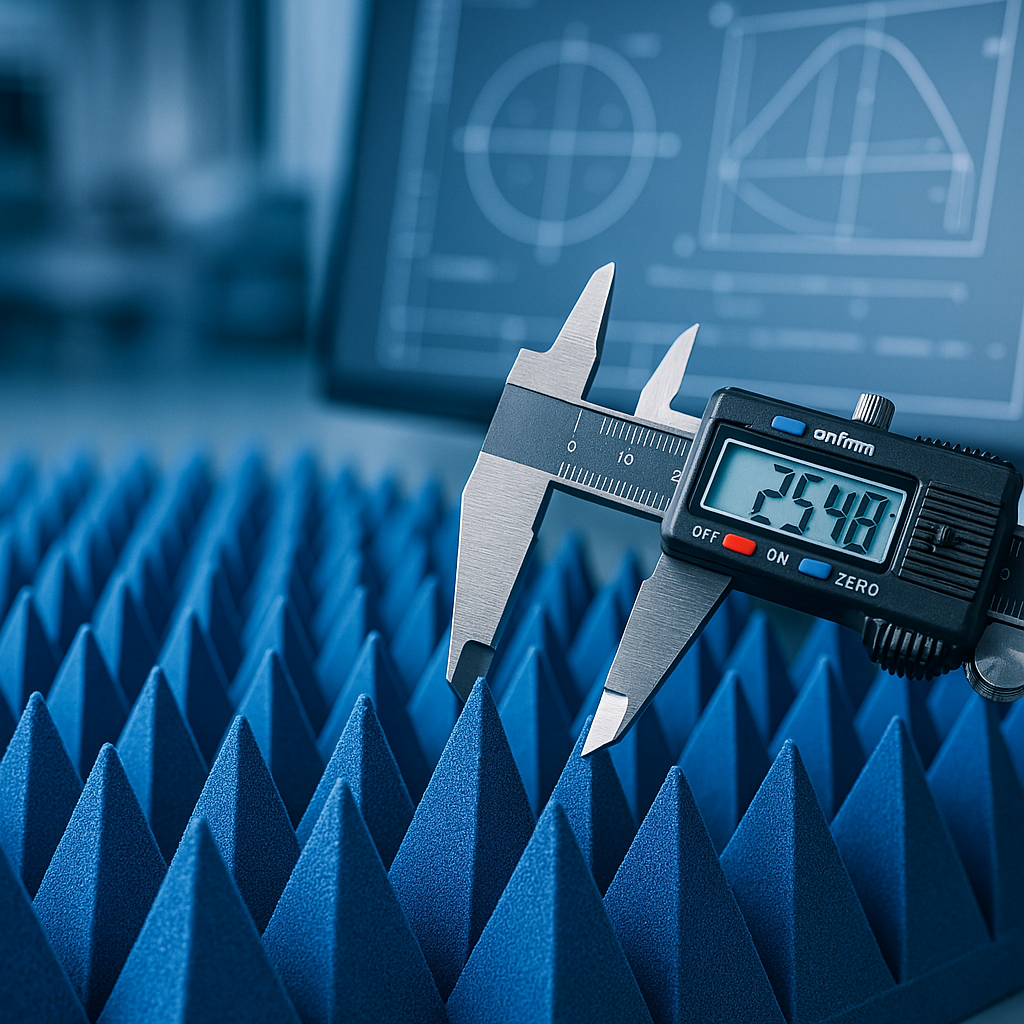
Pyramidal RF absorbing foam features distinctive wedge-shaped surfaces that enhance absorption performance. The pyramid geometry creates a gradual impedance transition from air to the absorbing material, reducing surface reflections significantly.
Specialized Geometric Configurations
Advanced foam geometries offer enhanced performance for specific applications:
- Convoluted surfaces increase effective surface area
- Honeycomb structures provide mechanical strength
- Tapered designs optimize impedance matching
Applications in Testing Environments
Testing facilities represent some of the most demanding applications for RF absorbing foam. These environments require precise electromagnetic control to ensure accurate measurements and repeatable results.
Anechoic Chamber Construction
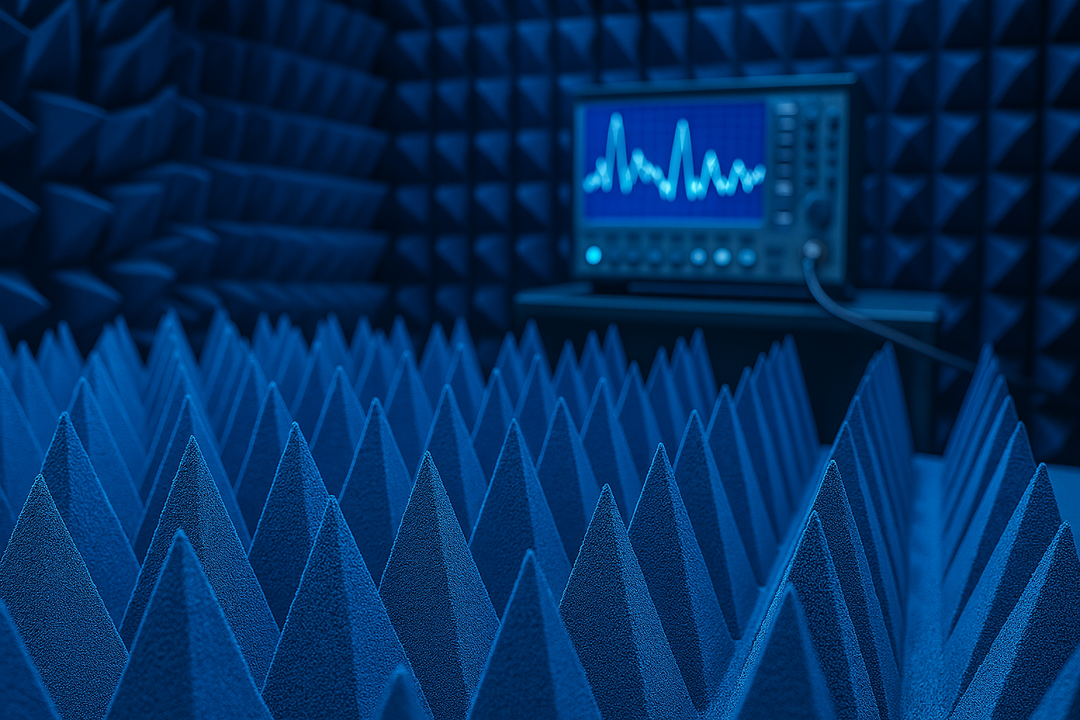
Anechoic chambers rely on RF absorbing foam to create reflection-free test environments. These specialized rooms eliminate unwanted signal reflections that could compromise measurement accuracy. The foam lining must perform consistently across wide frequency ranges while maintaining extremely low reflection levels.
Chamber design considerations include foam placement, thickness requirements, and geometric optimization. Professional installations often combine multiple absorber types to achieve optimal performance across different frequency bands.
EMC Testing Facilities
Electromagnetic compatibility testing requires controlled environments free from external interference and internal reflections. RF absorber foam helps create these conditions by managing signal propagation within test chambers and shielded rooms.
Testing laboratories use various foam configurations depending on their specific requirements. Some facilities need broadband absorption for general EMC testing, while others require frequency-specific performance for specialized applications.
Industrial and Commercial Applications
Beyond testing environments, RF absorbing foam finds widespread use in industrial and commercial applications where electromagnetic interference poses operational challenges.
Telecommunications Equipment
Modern telecommunications equipment often incorporates foam internally to manage signal reflections and reduce interference between components. Base stations, routers, and switching equipment benefit from strategic absorber placement that improves overall system performance.
Data centers face increasing electromagnetic challenges as equipment density grows. RF foam helps manage interference between servers, networking equipment, and support systems.
Automotive Electronics
Vehicle electronics systems require careful electromagnetic management to prevent interference between multiple radio systems. RF absorbing foam helps automotive manufacturers meet regulatory requirements while ensuring the reliable operation of navigation, entertainment, and safety systems.
Medical Device Applications
Medical equipment must operate reliably in electromagnetically complex hospital environments. RF absorber foam helps ensure that sensitive diagnostic equipment and implanted devices function properly without interfering with other systems.
Installation and Performance Considerations
Proper installation of the foam significantly impacts its effectiveness. Several factors must be considered to achieve optimal performance in real-world applications.
Coverage and Seam Management
Complete coverage is essential for effective RF absorption. Gaps between foam pieces create reflection points that can compromise overall performance. Professional installations use specialized mounting techniques and sealing methods to eliminate these problem areas.
Environmental Factors
Temperature, humidity, and mechanical stress can affect foam performance over time. Quality installations account for thermal expansion and provide mounting systems that maintain absorber effectiveness throughout the expected service life.
Performance Verification
The effectiveness of RF absorbing foam installations can be verified through reflection measurements and field strength testing. These measurements help identify performance gaps and guide optimization efforts for critical applications.
Future Developments in RF Absorption Technology
RF absorbing foam technology continues advancing as new materials and manufacturing techniques become available. These developments promise improved performance, reduced costs, and expanded application possibilities.
Advanced Material Systems
Next-generation RF foam incorporates nanomaterials and advanced composites that offer enhanced absorption performance across wider frequency ranges. These materials may provide better temperature stability and reduced weight compared to current options.
Manufacturing Innovations
New production methods enable more precise control over foam properties and allow customization for specific applications. These advances help optimize performance while reducing manufacturing costs.
In Summary
RF absorbing foam represents a sophisticated approach to electromagnetic interference control that converts unwanted signals into harmless heat rather than reflecting them back into the environment. The science behind this technology involves careful material engineering to create structures that interact efficiently with electromagnetic waves across targeted frequency ranges.
From anechoic test chambers to telecommunications equipment, RF absorbing foam provides essential interference control in applications where signal quality and electromagnetic compatibility are critical. The various types and configurations available allow engineers to select optimal solutions for specific requirements, whether dealing with broadband interference or frequency-specific challenges.
As electronic systems become more complex and electromagnetic environments grow more crowded, the importance of effective RF absorption technology will only increase. Understanding how RF absorbing foam works enables better application of this technology to solve interference problems and improve system performance across numerous industries and applications.
Looking for high-quality RF absorbers? Browse our in-stock pyramidal absorbers — shipping from California in 1-2 business days.