Microwave Absorbing Materials: From Foams to Films
Meta description: Discover how metals, foams, composites, and polymers protect electronics from harmful microwave radiation.
From Foams to Films: Materials That Make Microwave Shielding Work
Electromagnetic waves pulse through modern environments constantly. Microwave frequencies—spanning 300 MHz to several gigahertz—power cell networks, radar systems, and kitchen appliances. Yet these same waves threaten electronic devices. They induce unwanted currents, corrupt data, and damage sensitive components. Protection demands specialized materials engineered to block or absorb this invisible energy.
Understanding the Threat
Microwave radiation occupies a peculiar zone in the electromagnetic spectrum. The waves penetrate walls and materials easily. This makes them excellent for communication but problematic for electronics.
The Nature of Microwave Radiation
Cell towers, Wi-Fi routers, and radar installations flood urban areas with microwave energy. Natural sources contribute too. Cosmic radiation from distant stars bombards Earth continuously. Individual sources may seem harmless, but cumulative exposure creates challenging electromagnetic environments. Modern life depends on these frequencies, yet they require careful management.
Why Electronics Need Protection
Electronic components operate with voltages measured in volts and currents in milliamps. External microwave fields easily disrupt these delicate signals. Different research shows that electromagnetic interference affects sensitive medical devices in hospital environments. Smartphone GPS receivers, for instance, detect extraordinarily faint satellite signals. Nearby microwave sources can drown them out completely.
Damage isn't always immediate. Prolonged exposure gradually degrades semiconductor junctions, causing premature failure. Medical equipment faces critical risks—an electrocardiograph misreading a heartbeat due to interference could prove fatal. These realities drive continuous innovation in microwave shielding solutions.
The Materials Behind the Shield
Engineers employ two fundamental strategies: reflection and absorption. Some materials bounce waves away. Others convert electromagnetic energy into heat. Many applications combine both approaches.
Reflective Approaches: When Metals Take Center Stage
Metals excel at blocking microwaves through reflection. High conductivity enables them to cancel incoming waves effectively.
Aluminum Solutions
Aluminum dominates reflective microwave shielding material applications. It offers several advantages:
- Excellent conductivity despite lower cost
- Lightweight compared to copper or steel
- Resistant to corrosion in most environments
- Effective regardless of thickness
Engineers wrap cables in aluminum foil to prevent interference. Manufacturers line equipment enclosures with it, creating Faraday cages. Microwave reflection occurs at the surface, so even thin foils provide substantial protection.
Copper and Specialty Metals
Copper delivers superior conductivity. This makes it ideal for maximum shielding effectiveness. However, copper costs more and oxidizes readily. Applications requiring every decibel of protection justify these drawbacks. High-stakes environments like aerospace and military installations frequently specify copper.
Mesh and Fabric Options
Solid metal sheets don't suit all applications. Microwave shielding fabric offers flexibility while maintaining effectiveness. These materials consist of metal wires woven into grids or textiles. They drape over irregular surfaces easily. Military units employ shielding fabric in protective tents and clothing. The mesh approach works because microwaves cannot pass through openings smaller than their wavelength.
Absorptive Materials: Converting Energy to Heat
Reflection solves many problems but creates others. Reflected microwaves bounce elsewhere, potentially causing interference in different locations. Absorptive microwave shielding materials offer alternatives by converting energy into heat.
Conductive Foams
Foam materials infused with conductive particles represent elegant solutions. Their low density and large internal surface area create numerous interaction opportunities. Carbon foams exemplify this approach. Engineers can tune their conductivity by varying carbon content and foam structure. The three-dimensional architecture allows multiple internal reflections, enhancing absorption significantly.
Films and Coatings
Specialized paints and films bring microwave shielding to awkward surfaces. These coatings contain conductive particles suspended in liquid carriers. They can be applied to virtually any surface. Materials with high magnetic permeability absorb the magnetic component of microwave radiation effectively. A painted wall becomes a protective barrier without installation challenges or added weight.
Advanced Carbon Materials
Materials science has unlocked new possibilities through carbon structures. Graphene, carbon nanotubes, and carbon cloth form conductive networks at microscopic scales. These materials absorb microwaves while remaining lightweight and flexible. Some researchers combine carbon materials with other compounds. Carbon cloth enhanced with molybdenum disulfide nanosheets creates composites with extraordinary absorption properties. Silicon carbide occupies a unique niche, too. This chemically inert ceramic converts microwave energy into heat efficiently, particularly in high-temperature environments.
Composite and Polymer Solutions
Modern microwave shielding increasingly relies on engineered combinations of materials. Composites merge different shielding mechanisms into unified solutions.
Engineered Composites
Embedding metal powders, carbon fibers, or conductive elements into polymer matrices creates materials that are effective, lightweight, and mechanically robust. Engineers tune these composites for specific applications by adjusting composition. A typical composite might include:
- Metal particles for reflection
- Carbon structures for absorption
- Polymer binders for flexibility
- Additional fillers for mechanical strength
The resulting materials conform to complex shapes while providing 40 to 80 decibels of shielding effectiveness. This versatility explains their growing dominance in new applications.
Conductive Polymers
Traditional plastics insulate rather than conduct, but modern chemistry changed that limitation. Conductive polymers incorporate additives that grant electrical conductivity while maintaining processing advantages. They can be injection molded or extruded using standard manufacturing techniques. This dramatically reduces production costs compared to metal alternatives. Shielding effectiveness typically ranges from 30 to 60 decibels—adequate for many consumer electronics. Their light weight particularly suits portable devices where every gram matters.
Matching Materials to Applications
Different industries demand different solutions. Selection requires balancing effectiveness, weight, cost, and environmental factors.
Consumer Electronics
Smartphones contain multiple microwave shielding types. Internal covers made from conductive polymers or thin composites protect radio frequency circuitry. These shields prevent the phone's transmitters from disrupting its receivers while blocking external interference. Design must balance shielding effectiveness with size and weight constraints.
Laptops face similar but distinct challenges. Larger size allows more substantial solutions, but heat dissipation becomes critical. Many modern laptops incorporate composite materials strategically, providing targeted protection where needed most.
Industrial and Commercial Equipment
Radar systems and communication base stations operate in environments flooded with electromagnetic energy. These installations require robust protection to maintain signal integrity. Metal enclosures remain common here. Performance requirements justify their weight and cost. High-performance composites find use where specific mechanical properties matter.
Communication infrastructure presents unique challenges because it must simultaneously transmit desired signals while blocking unwanted interference. Selective shielding using carefully designed mesh screens and filters allows equipment to function while minimizing electromagnetic footprints.
Medical Applications
Medical electronics demand the highest electromagnetic compatibility standards. MRI machines generate powerful fields while requiring protection from external interference. Nuclear magnetic resonance instruments, electrocardiographs, and diagnostic equipment rely on microwave shielding for accurate readings. Even minor interference could lead to misdiagnosis.
The medical field drives innovation in shielding materials. Shielded rooms using metal panels and conductive gaskets create interference-free zones. These installations often combine multiple strategies—reflective surfaces backed by absorptive materials—to achieve necessary protection levels.
Military and Aerospace
Military applications stretch material capabilities. Protective clothing and shelters must shield personnel from microwave surveillance and directed energy weapons while remaining practical for field deployment. Microwave shielding fabric woven with metal fibers provides this protection without rigidity. These fabrics can be sewn into tents, clothing, and field gear.
Aerospace applications face even more extreme demands. Equipment must function reliably amid intense natural and man-made electromagnetic radiation while minimizing weight. Advanced composites incorporating carbon nanotubes push boundaries, delivering unprecedented effectiveness with minimal mass.
The Selection Process
Choosing appropriate microwave shielding requires analyzing multiple factors. Required shielding effectiveness serves as the starting point. A smartphone might need 40 dB of protection. A military radio could require 80 dB or more. The specific frequency range matters too. Different materials perform better at different parts of the microwave spectrum.
Physical constraints often dictate choices. Does the application allow rigid metal enclosures, or must the shield conform to irregular surfaces? Weight limitations favor lightweight composites and conductive polymers. Cost considerations can't be ignored either. Aerospace budgets might accommodate exotic materials, but consumer electronics need economical solutions.
Environmental factors add complexity. Equipment operating in extreme temperatures needs resistant materials. Chemical exposure, moisture, or physical wear affect material selection. Silicon carbide thrives in high heat, but its brittleness makes it unsuitable for applications involving physical stress. These trade-offs require engineers to thoroughly understand both materials and application requirements.
Conclusion
The invisible world of microwave radiation demands sophisticated protection strategies. From aluminum foil to carbon nanotube composites, microwave shielding materials represent a fascinating intersection of physics and engineering. These materials work silently, enabling the reliable operation of countless devices.
As electronics grow more sophisticated and electromagnetic environments become more complex, effective shielding grows increasingly critical. Tomorrow's devices will pack more power into smaller packages, creating even more challenging conditions. Ongoing research into nanomaterials and multifunctional composites promises shields that deliver higher performance with less weight. The materials making microwave shielding work today continue evolving for tomorrow's applications—blocking, absorbing, and managing invisible waves so technology can function as intended.
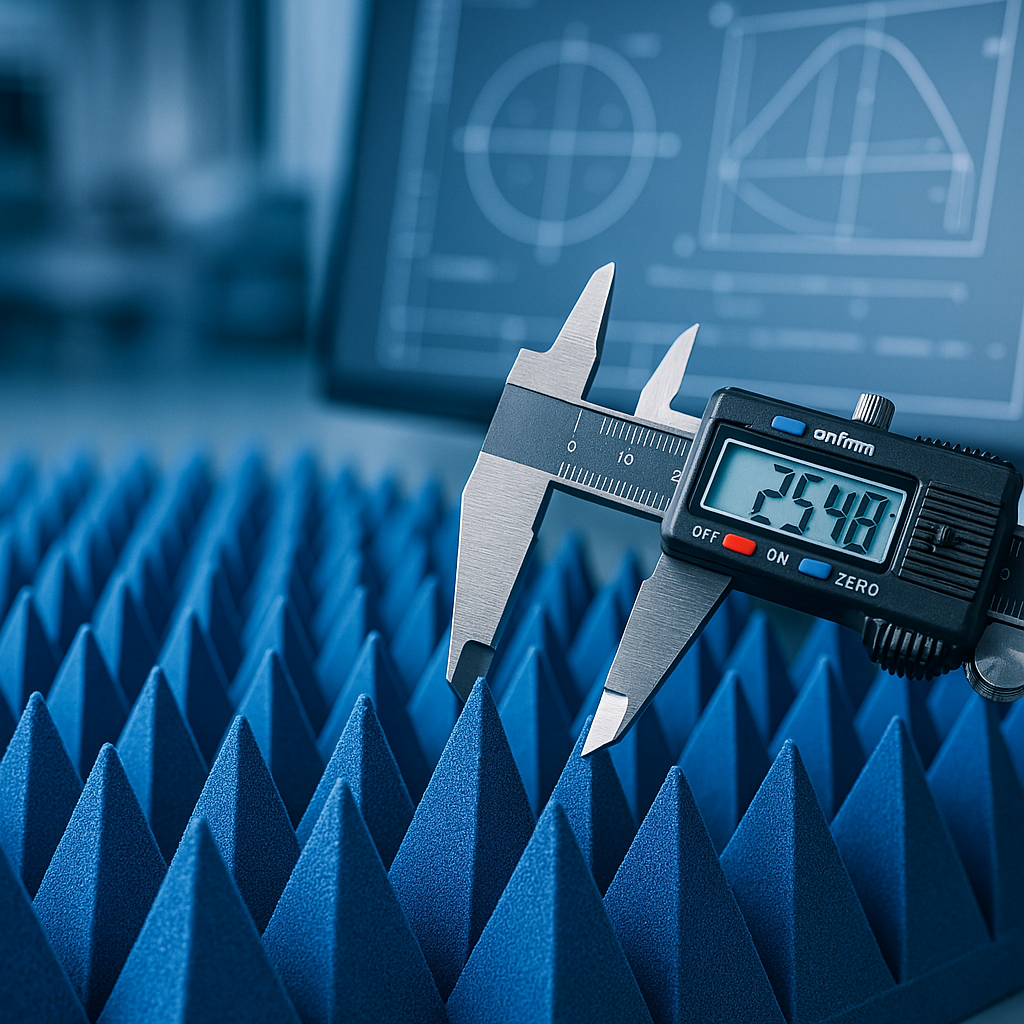
Looking for high-quality RF absorbers? Browse our in-stock pyramidal absorbers — shipping from California in 1-2 business days.