Unveiling the Chemistry of Anechoic Coatings: Materials That Absorb and Isolate Sound
Have you ever wondered how submarines glide silently through ocean depths, or why recording studios produce crystal-clear audio without echo interference? The answer lies in specialized materials engineered to manipulate sound waves at a molecular level. These remarkable substances, known as anechoic coatings, represent a fascinating intersection of chemistry, physics, and materials science that most people never think about—yet they shape numerous aspects of our modern world.
An anechoic coating is essentially a specialized material designed to absorb sound waves rather than reflect them back into the environment. The term "anechoic" literally means "without echo," which perfectly describes what these coatings accomplish. When applied to surfaces, they create environments where sound energy dissipates into the material itself, preventing unwanted reverberations and noise transmission.
Industries ranging from acoustics and automotive manufacturing to electronics and medical diagnostics depend heavily on these coatings. Submarine manufacturers use them to avoid sonar detection. Automotive engineers apply them to reduce cabin noise and improve passenger comfort. Electronics companies incorporate them into consumer devices to minimize acoustic interference. Medical facilities rely on them to create controlled environments for sensitive diagnostic equipment. The versatility of anechoic coatings makes them indispensable across countless applications.
The Science Behind Sound Absorption
Understanding how anechoic coatings work requires a basic grasp of sound wave behavior and material interactions.
How Sound Waves Interact with Materials
Sound travels as mechanical waves through various media—air, water, or solid materials. When these waves encounter a surface, three things can happen: reflection, transmission, or absorption. Hard, smooth surfaces like concrete or metal reflect most sound energy back, creating echoes and reverberation. Soft, porous materials absorb sound by converting acoustic energy into tiny amounts of heat through friction within the material structure.
The Role of Materials in Sound Absorption
Industries from acoustics and car manufacturing to electronics and medical diagnostics rely on these coatings. Submarine builders use them to avoid sonar detection. Automotive engineers add them to cut cabin noise and make rides more comfortable. Electronics firms put them into devices to reduce acoustic interference. Medical facilities use them to create controlled spaces for sensitive diagnostic equipment. Their versatility makes anechoic coatings indispensable across many applications.
Chemical Composition of Anechoic Coatings
The magic of anechoic coatings lies in their carefully engineered chemical makeup, which determines how they interact with sound waves.
Overview of Key Materials in Anechoic Coatings
Modern anechoic coatings utilize various base materials, each selected for specific acoustic properties and application requirements. Manufacturers often combine different materials to create hybrid coatings that perform well across broader frequency ranges. The chemistry behind these materials determines their density, elasticity, porosity, and thermal stability—all critical factors in sound absorption performance.
Detailed Breakdown of Common Materials
Polyurethane-based coatings offer excellent versatility and durability. These synthetic polymers can be formulated with varying densities and cell structures to target specific sound frequencies. The chemical structure of polyurethane includes both rigid and flexible segments, creating viscoelastic properties ideal for damping acoustic energy. They resist moisture, chemicals, and temperature fluctuations better than many alternatives.
Rubber-based coatings excel at low-frequency sound absorption due to their high mass and damping characteristics. Natural and synthetic rubbers contain long polymer chains that move against each other when sound waves pass through, converting acoustic energy into heat. Butyl rubber, neoprene, and silicone variants are common choices depending on environmental conditions and frequency targets.
Acoustic foams and composites feature open-cell or closed-cell structures filled with air pockets. Melamine foam, polyester foam, and polyether foam represent popular options. The cell walls and air spaces create multiple interfaces where sound waves lose energy through reflection, refraction, and friction. Composite formulations may include fillers like carbon black, barium sulfate, or ceramic microspheres to enhance absorption characteristics.
Metallic and non-metallic coatings serve specialized applications where traditional foams cannot. Perforated metal panels backed by absorbent materials provide durable surfaces in harsh environments. Non-metallic options include ceramic-based coatings and mineral wool composites that withstand extreme temperatures while maintaining acoustic performance.
How Chemical Properties Contribute to Sound Absorption
Several chemical properties directly influence acoustic performance:
- Molecular weight and chain length affect material density and flexibility
- Cross-linking density determines the rigidity versus elasticity balance
- Filler particle size and distribution modify porosity and surface area
- Chemical bonding types influence energy dissipation mechanisms
- Polymer crystallinity affects damping characteristics across temperatures
Innovative Materials in Anechoic Coatings
Recent developments include nano-engineered materials with precisely controlled pore structures, bio-based polymers from renewable sources, and shape-memory materials that adapt to different acoustic conditions. Graphene-enhanced composites show promise for ultra-thin, high-performance applications. Self-healing anechoic coatings incorporate microcapsules that release repair agents when damaged, extending service life in demanding environments.
Mechanisms of Sound Isolation and Absorption in Anechoic Coatings
Three primary mechanisms enable anechoic coatings to control sound effectively.
Porosity and Surface Area
The internal structure of an anechoic coating creates countless pathways for sound waves to enter and dissipate. Open-cell foams allow air to flow through, creating friction that converts acoustic energy to thermal energy. The greater the surface area relative to volume, the more opportunities exist for this energy conversion. Pore size distribution matters significantly—smaller pores work better at high frequencies, while larger pores absorb low-frequency sounds more effectively.
Viscoelastic Properties
Viscoelastic materials exhibit both viscous and elastic characteristics, meaning they deform under stress but also resist that deformation. When sound waves cause these materials to flex and compress, internal molecular friction generates heat and dissipates energy. The loss modulus—a measure of energy dissipation—quantifies this behavior. Optimal anechoic coatings balance storage modulus and loss modulus to maximize absorption without sacrificing structural integrity.
Frequency Dependence of Sound Absorption
No single material absorbs all sound frequencies equally. Low frequencies (below 250 Hz) require thick, dense materials or resonant cavities to absorb effectively. Mid-range frequencies (250-2000 Hz) respond well to moderately porous materials. High frequencies (above 2000 Hz) are easily absorbed by thin, porous surfaces. Engineers design multi-layer anechoic coatings with graduated properties to address this frequency dependence, placing different materials in strategic arrangements.
Applications of Anechoic Coatings in Various Industries
The practical uses of these specialized materials span numerous sectors.
Testing and Measurement Environments
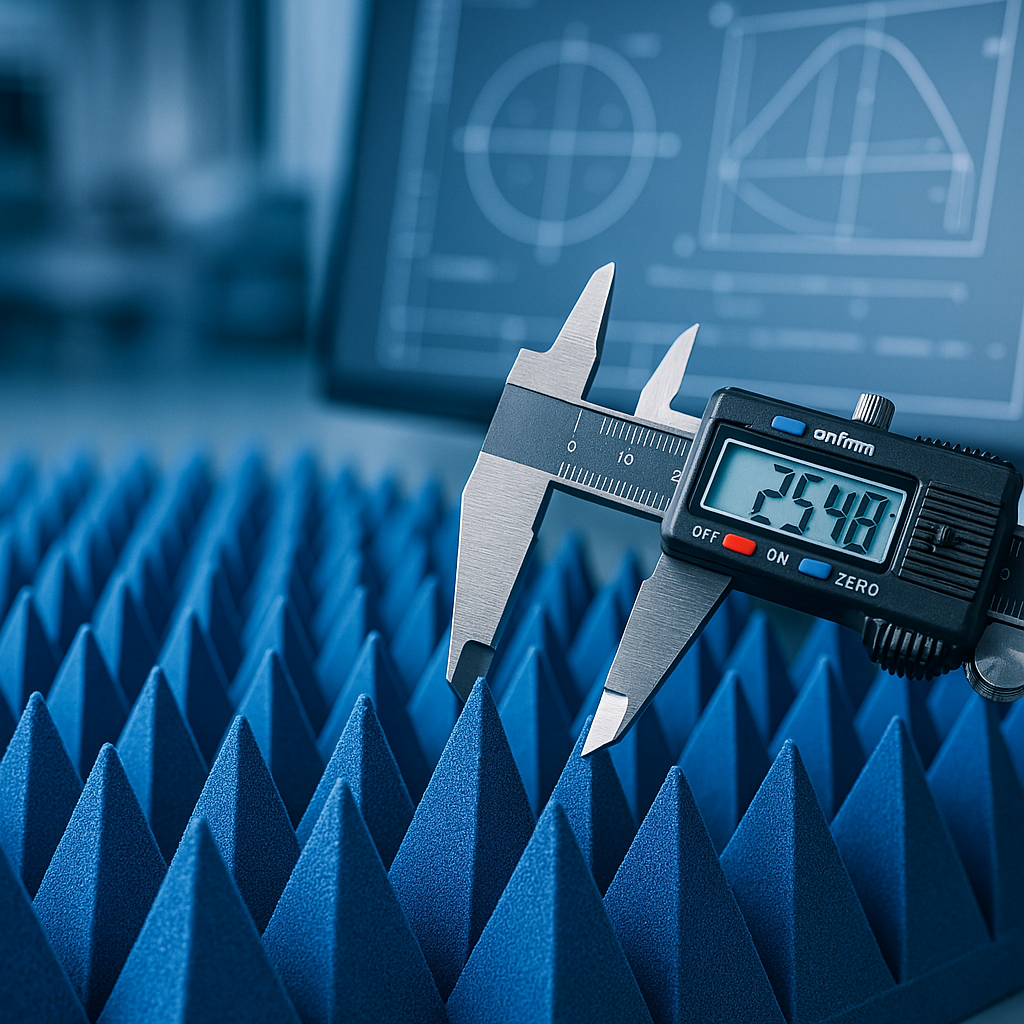
Anechoic chambers serve as gold-standard facilities for acoustic testing. These rooms feature walls, floors, and ceilings completely covered in anechoic coatings—typically pyramid-shaped foam wedges. The geometry and material properties eliminate virtually all sound reflections, creating "free field" conditions that simulate infinite open space. Audio equipment manufacturers, automotive companies, and aerospace contractors use these chambers to measure sound emissions accurately without environmental interference.
Automotive and Aerospace Industries
Vehicle manufacturers apply anechoic coatings to engine compartments, wheel wells, and cabin interiors to reduce noise pollution and improve comfort. Aerospace applications include aircraft engine nacelles and helicopter cabin treatments. Naval vessels use thick rubber-based anechoic coatings on hull exteriors to absorb active sonar pulses and reduce acoustic signatures, making submarines harder to detect.
Electronics and Telecommunications
Consumer electronics benefit from thin anechoic coatings that prevent acoustic feedback in speakers and microphones. Smartphone manufacturers use micro-scale acoustic absorbers around microphone ports. Data centers apply sound-absorbing treatments to reduce equipment noise. Telecommunications equipment rooms require acoustic control to protect sensitive recording and transmission devices from interference.
Medical Applications
Medical imaging facilities use anechoic coatings to create quiet environments essential for patient comfort and equipment performance. Ultrasound systems incorporate acoustic absorbers to prevent signal artifacts. Audiology clinics require sound-isolated testing booths with precise acoustic properties. Psychiatric and therapy facilities employ these materials to create calming, echo-free spaces that support patient well-being.
Summing Up the Importance of Anechoic Coatings
Industries from acoustics and car manufacturing to electronics and medical diagnostics rely on these coatings. Submarine builders use them to avoid sonar detection. Automotive engineers add them to cut cabin noise and make rides more comfortable. Electronics firms put them into devices to reduce acoustic interference. Medical facilities use them to create controlled spaces for sensitive diagnostic equipment. Their versatility makes anechoic coatings indispensable across many applications.
Understanding the science behind these impressive materials helps us appreciate the complex engineering tucked into everyday life. Whether we're enjoying a quiet car ride, listening to a podcast, or benefiting from advanced medical tests, we’re seeing thoughtful chemical design turn sound energy into better, quieter performance.
Looking for high-quality RF absorbers? Browse our in-stock pyramidal absorbers — shipping from California in 1-2 business days.