Building an EMC Testing Lab on a University Budget

A limited budget doesn't have to mean limited testing capability. Universities can build a functional EMC testing lab for a fraction of commercial costs by prioritizing pre-compliance diagnostics over full certification – and by solving one problem that trips up almost every DIY setup: RF reflections inside the test space.
Why Do Most University EMC Programs Never Get Off the Ground?
Cost is the usual answer, but it's not the whole story. Many electronics engineering programs already teach EMC theory, yet such courses focus on coupling methods and don't include EMC testing activities because testing requires expensive and complex installations such as open-area test sites or semi-anechoic chambers. Put simply, students learn the concepts on a whiteboard and rarely touch a spectrum analyzer.
That gap has consequences that follow graduates into industry.
The Real Cost of Skipping Hands-On Testing
Here's a number worth sitting with: data from EMC test laboratories indicate that 85% of products submitted for final compliance testing fail on the first attempt. Engineers who never practiced pre-compliance testing as students are, unsurprisingly, more likely to be on the wrong end of that statistic later.
Pro Tip: Catching a design flaw before a formal compliance test isn't just cheaper – it also reduces retesting time at accredited facilities, which is usually billed by the hour.
What Problems Come With Building an EMC Testing Lab on a Tight Budget?
Three problems show up almost every time, regardless of the university:
- Instrumentation cost – full spectrum analyzers and EMI receivers built for CISPR 16 compliance can be cost-prohibitive for teaching labs.
- Space constraints – few departments have room for a dedicated anechoic chamber.
- RF reflections – even with good equipment, an untreated room bounces signal back into the antenna and corrupts the reading.
The first two problems get plenty of attention in academic literature. The third is where most setups quietly fail.
Why Reflections Are the Hidden Weak Point
An EMC RF lab doesn't need to be silent – it needs to be predictable. Reflected energy off bare walls, metal furniture, or a concrete floor adds noise that has nothing to do with the device being tested. Researchers building low-cost lab setups have noted that pre-compliance measurement systems can diagnose conducted EMI without needing a spectrum analyzer at all, which shows how much of this field is about smart workarounds rather than expensive replacements. Absorption is one of those workarounds – and arguably the one that gets skipped most often.

How Do Pyramidal RF Absorbers Solve This?
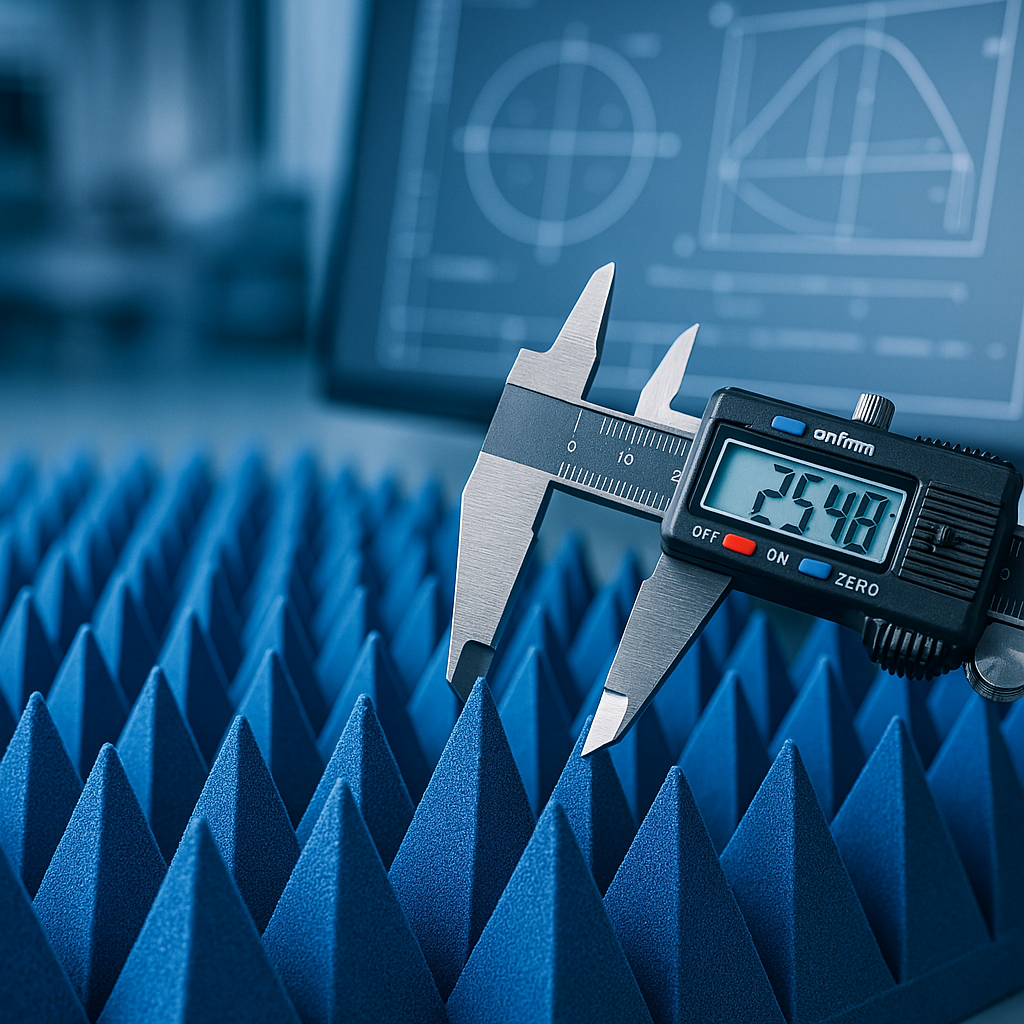
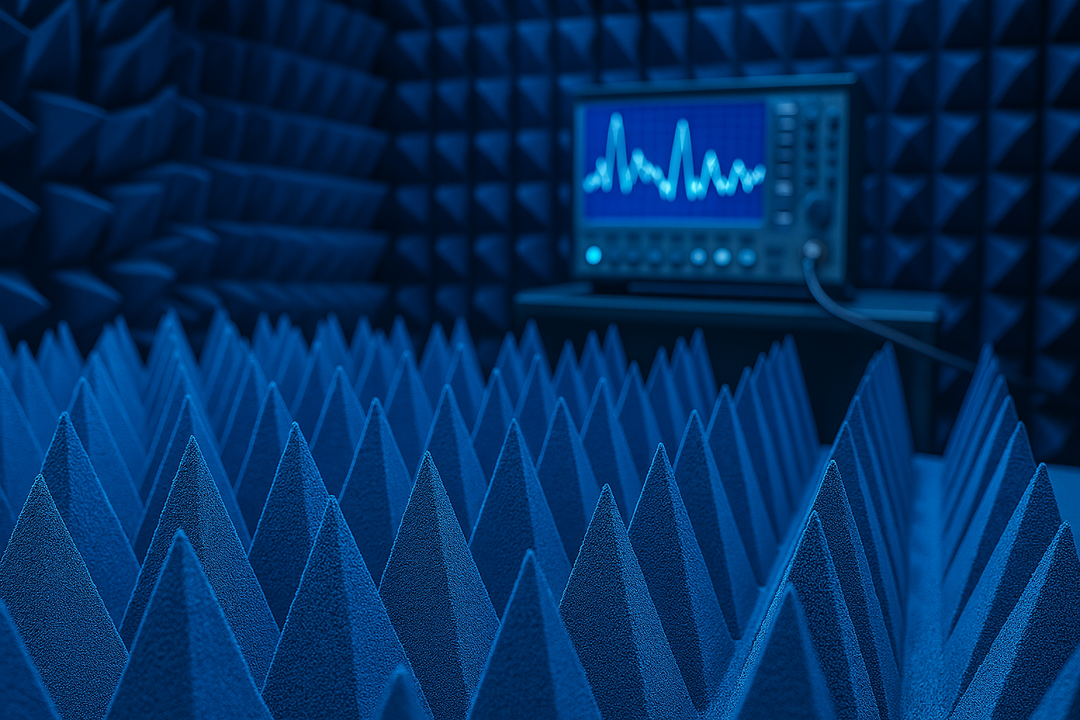
Pyramidal foam absorbers reduce reflected RF energy by gradually tapering the material's impedance, so incoming signal is absorbed rather than bounced back toward the antenna. That's the entire function in one sentence – the rest is a matter of choosing the right thickness and coverage for the frequency range in question.
A university lab converting a spare room into an EMC testing lab typically doesn't need full-room coverage. Targeted placement around the antenna and along the nearest walls is usually enough to bring measurement variance down to a workable level.
| Absorber Type | Best Use Case | Typical Frequency Range | Relative Cost |
|---|---|---|---|
| Pyramidal foam | General radiated emissions testing | 200 MHz – 40 GHz | Low–Moderate |
| Hybrid (ferrite + foam) | Low-frequency reflection control | 30 MHz – 1 GHz | Moderate |
| Ferrite tile only | Thin-profile, space-limited rooms | 30 MHz – 200 MHz | Moderate–High |
Note: Frequency ranges vary by manufacturer and tile thickness. Always confirm specifications against the target test standard (CISPR, FCC Part 15, or MIL-STD-461) before finalizing a room layout.
Not sure which tile thickness fits your target frequency range? The pyramidal absorber collection at dbabsorber.com covers everything from lightweight panels for basic pre-compliance rooms to denser tiles built for lower-frequency work.
Building a Functional EMC Testing Lab: A Practical Sequence
Departments that succeed with a limited budget tend to follow a similar order of operations:
- Define the testing goal – diagnostic troubleshooting, not certification.
- Select entry-level instrumentation matched to the target frequency range.
- Choose a room and map out reflection sources before buying anything else.
- Install targeted absorber panels around the antenna position.
- Validate the setup with a known reference signal before testing real devices.
Skipping step three is the most common mistake. Departments buy the spectrum analyzer first and discover the reflection problem only after readings stop making sense.
What Does the Research Say About Educational EMC Labs?
Academic work in this area backs up the budget-first approach. A widely cited study describes an affordable EMC pre-compliance test lab built specifically for educational purposes, paired with lab activities covering four core EMC topics, aimed at teaching students to think about EMC from the earliest design stages rather than treating it as a final checkbox. That framing – design-stage awareness over after-the-fact certification – is exactly what a modest university lab is positioned to teach well.
Fix the Reflection Problem in Your Lab
A well-planned instrument list only goes so far if the room itself is working against the measurement. Reflections are usually the cheapest problem on the list to fix once the right material is in place, and getting the specification right the first time saves both budget and lab hours down the road.
Explore the full range of pyramidal absorbers and find the right fit for your room dimensions and frequency range. Reach out directly if guidance is needed on matching absorber thickness to a specific test standard.
Frequently Asked Questions
What's the difference between an EMC testing lab and a fully accredited EMC lab?
An accredited facility performs certification-grade testing under strict standards; a university EMC testing lab focuses on pre-compliance and diagnostics, which is enough to catch most design flaws early.
Do pyramidal absorbers replace the need for a shielded room?
No. Shielding blocks outside interference from entering; absorbers control reflections generated inside the room. Most functional EMC RF labs use both.
How much room coverage is actually needed?
Full coverage is rarely necessary for pre-compliance work. Targeted placement near the test antenna and adjacent walls typically resolves the majority of reflection issues.
Can a converted classroom realistically function as an EMC testing lab?
Yes, provided the space addresses grounding, basic shielding, and reflection control. Several published case studies describe exactly this kind of setup at the university level.