The Complete Guide to Designing an Anechoic Room for Precise Acoustic Testing
Acoustic testing environments have evolved significantly over the past decades. The need for precise measurements has led to the development of specialized chambers that eliminate external interference and provide controlled conditions for accurate data collection.
Understanding Anechoic Rooms and Their Purpose
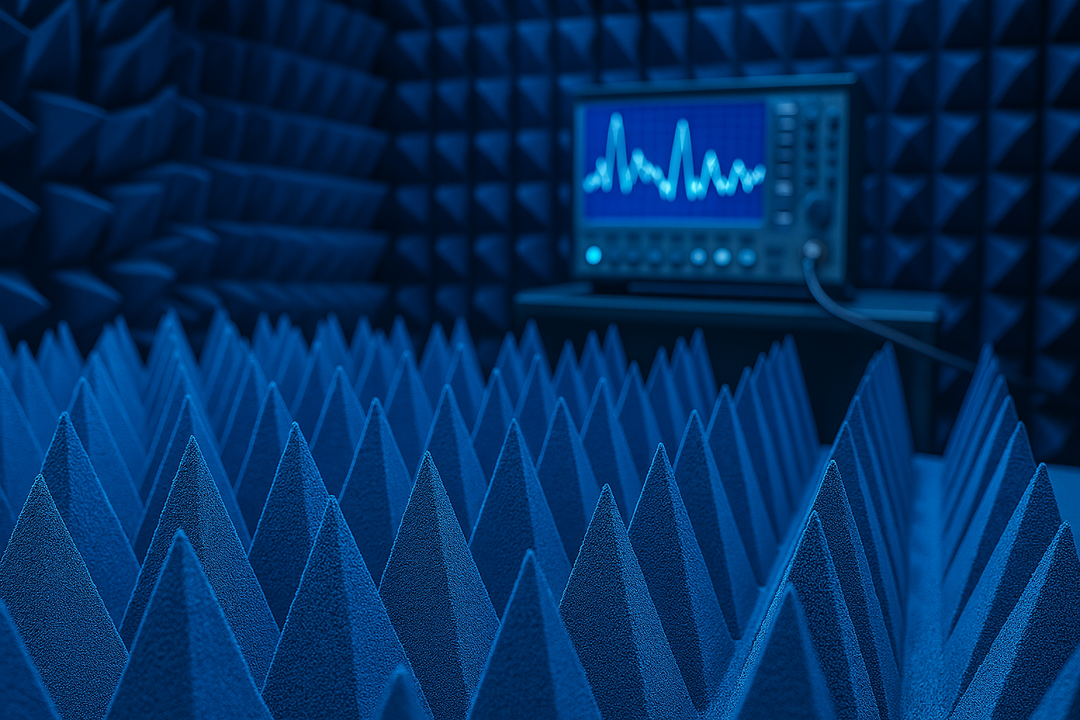
An anechoic room represents one of the most sophisticated testing environments in modern acoustic engineering. These specialized chambers create conditions that closely simulate free-field acoustic environments by eliminating unwanted reflections and ambient noise interference. The term "anechoic" literally means "without echo," which perfectly describes the primary function of these remarkable spaces.
Core Functions of Anechoic Chambers
The fundamental purpose of an anechoic room centers on providing researchers and engineers with precise acoustic measurements. Unlike conventional testing environments where sound waves bounce off walls and create interference patterns, these chambers absorb virtually all sound energy that strikes their surfaces. Key benefits include:
- Elimination of sound reflections and echoes
- Creation of free-field acoustic conditions
- Protection from external noise interference
- Controlled environmental parameters for consistent testing
Environmental Control Advantages
Temperature, pressure, humidity, and external environmental factors can significantly affect acoustic measurements when testing occurs outdoors. An anechoic room eliminates these variables by providing a controlled indoor environment. The chamber maintains consistent conditions while blocking external noise sources that could contaminate test results.
Modern acoustic testing demands extremely high precision, particularly when calibrating sensitive audio equipment or measuring speaker performance characteristics. An anechoic room achieves this precision by creating an environment where the only sound present comes from the device under test.
Types and Classifications of Anechoic Chambers
Different types of anechoic chambers serve various testing needs and budget requirements. Each configuration offers specific advantages depending on the intended application and performance requirements.
Full Anechoic Chambers
A full anechoic chamber represents the most complete acoustic isolation solution available for testing applications. These chambers feature sound-absorbing materials covering all six surfaces, including the floor, ceiling, and all four walls. The complete coverage ensures that no sound reflections occur from any surface within the testing environment.
Full chambers typically require specialized floor systems that allow personnel and equipment access while maintaining acoustic properties. These floors often consist of mesh or grated surfaces suspended above the sound-absorbing materials. The construction complexity of full anechoic chambers makes them significantly more expensive than other options, though they provide the highest level of acoustic isolation possible.
Semi-Anechoic Room Design
A semi-anechoic room offers a practical compromise between performance and cost for many testing applications. These chambers feature sound-absorbing materials on five surfaces, with a hard reflective floor remaining exposed. The solid floor provides easier access for equipment and personnel while still delivering excellent acoustic performance for most testing scenarios.
Applications that benefit from semi-anechoic configurations include:
- Automotive interior testing
- Engine noise evaluation
- Large equipment assessment
- Cost-sensitive projects requiring good performance
The anechoic chamber room design for semi-anechoic configurations requires careful consideration of floor reflection effects. Engineers must account for the single reflection point when analyzing measurement data.
Specialized Chamber Configurations
Tapered anechoic chambers represent a unique design approach optimized for low-frequency testing applications. These chambers feature a rectangular cross-section at one end that gradually tapers to a smaller opening at the opposite end. This geometric configuration helps minimize reflections at frequencies below 1 GHz.
Rectangular anechoic chambers follow more traditional design principles with consistent cross-sectional dimensions throughout their length. These chambers typically feature pyramidal absorbers on the floor, ceiling, and end walls, with wedge-shaped absorbers covering the side walls. Some facilities require hybrid chamber designs that combine acoustic and electromagnetic testing capabilities.
Critical Design Considerations and Technical Specifications
Successful anechoic room design requires careful attention to multiple technical factors that directly impact performance and functionality.
Chamber Sizing and Dimensional Requirements
The physical dimensions of an anechoic room directly impact its performance characteristics and frequency response capabilities. Chamber size determines the lowest frequency at which free-field conditions can be achieved, with larger rooms providing better low-frequency performance. Engineers must calculate minimum dimensions based on the intended testing applications and required frequency range.
The relationship between chamber size and performance follows established acoustic principles related to wavelength and absorption efficiency. For effective absorption at a given frequency, the chamber must provide sufficient space for sound waves to develop and interact with the absorbing materials.
Working Distance and Access Requirements
Working distance requirements within the chamber significantly influence the overall size specifications. The distance between the sound source and measurement microphones must be sufficient to ensure far-field acoustic conditions. Personnel access and equipment installation requirements add another layer of complexity to chamber sizing decisions.
Sound Absorption Materials and Wedge Design
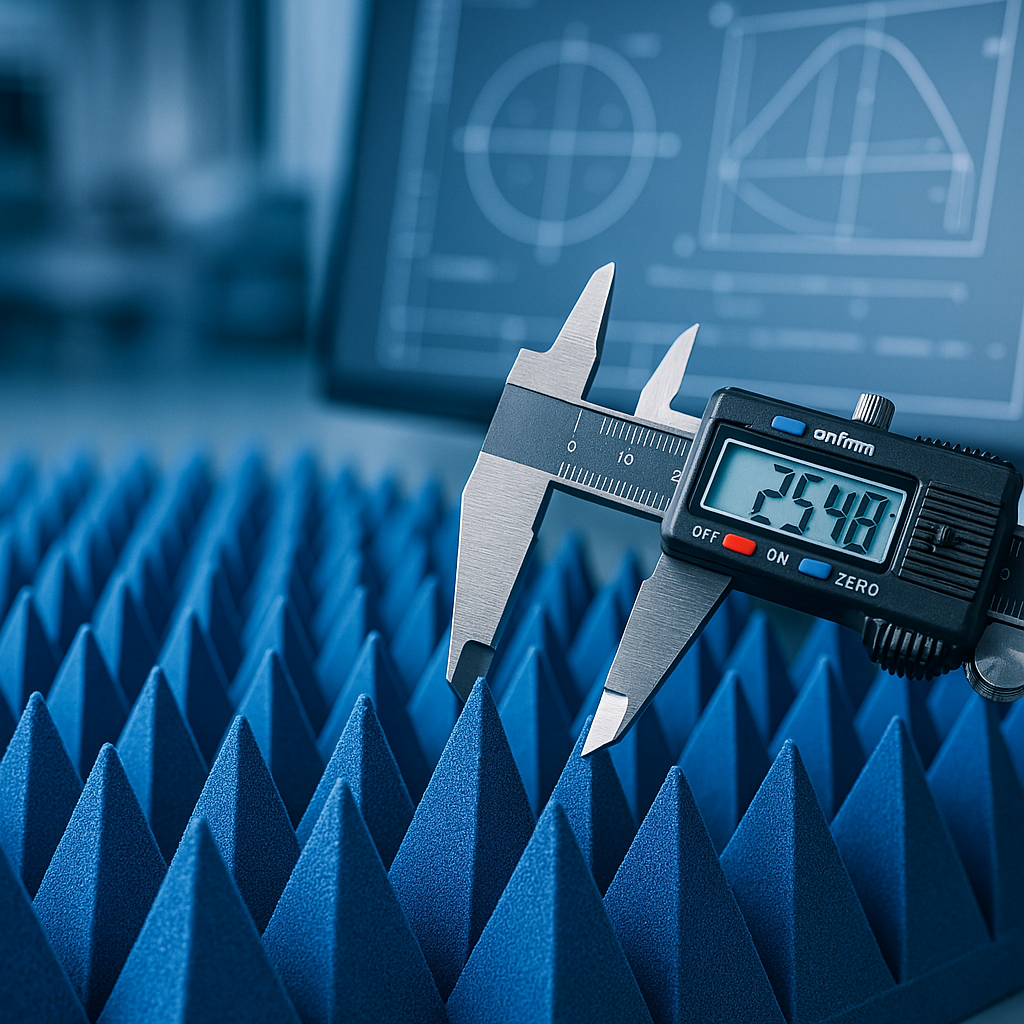
Wedge-shaped absorbers represent the most common approach to achieving high absorption coefficients in anechoic room construction. These geometric forms maximize surface area while providing gradual impedance transitions that minimize reflections. The wedge design allows sound waves to penetrate deeply into the absorbing material rather than reflecting off the surface. Common materials for acoustic wedges include:
- High-density fiberglass for superior low-frequency absorption
- Melamine foam for lightweight applications
- Polyurethane foam for cost-effective solutions
- Perforated metal for specialized applications
Fiberglass remains the most popular material choice for constructing acoustic wedges due to its excellent absorption properties and cost-effectiveness. The geometric design of absorbing wedges requires careful optimization to achieve target absorption coefficients.
Construction Materials and Structural Framework
The structural framework of an anechoic room must provide adequate support for the absorbing materials while minimizing vibration transmission. Steel frame construction typically offers the best combination of strength and acoustic isolation. The frame design must account for the significant weight of acoustic absorbers, particularly when using dense fiberglass materials.
Wall construction requires careful attention to sound transmission loss characteristics to prevent external noise from entering the chamber. Multi-layer wall systems incorporating mass-loaded vinyl, gypsum board, and air gaps provide excellent isolation performance.
Door Systems and Penetration Sealing
Door and penetration sealing represents a critical aspect of chamber construction that significantly affects overall performance. Acoustic doors with multiple sealing points prevent sound leakage while maintaining access functionality. All electrical and mechanical penetrations require careful sealing to maintain the acoustic integrity of the chamber envelope.
Environmental Control and Ventilation Systems
Temperature and humidity control within an anechoic room requires specialized ventilation systems designed to minimize noise generation. Traditional HVAC systems produce significant noise that would contaminate acoustic measurements. Sound-attenuated ventilation systems incorporate multiple layers of acoustic treatment to reduce fan and airflow noise.
Air velocity within the chamber must remain low enough to prevent aerodynamic noise generation while providing adequate air exchange rates. The ventilation system design must account for the thermal load generated by test equipment and personnel within the sealed chamber environment.
Humidity Management
Humidity control becomes particularly important when using hygroscopic absorbing materials like fiberglass. Excessive moisture can degrade the acoustic properties of some materials while creating uncomfortable working conditions. Dehumidification systems help maintain optimal moisture levels while operating within the strict noise limits required for acoustic testing.
Performance Verification and Quality Assurance
Chamber performance verification requires comprehensive acoustic testing to confirm that design specifications have been achieved. Free-field measurements using calibrated sound sources and microphones verify that the chamber provides the intended acoustic environment. Key performance parameters include:
- Cut-off frequency determination
- Background noise level verification
- Sound field uniformity assessment
- Absorption coefficient validation
The cut-off frequency represents the most critical performance parameter for any anechoic room, defining the lowest frequency at which free-field conditions exist. Regular maintenance and performance monitoring ensure that the anechoic chamber continues to meet specifications over time.
Final Considerations
The design and construction of an anechoic chamber room requires a thorough understanding of acoustic principles, materials science, and engineering practices. Success depends on careful integration of chamber sizing, absorption materials, structural systems, and environmental controls. While the initial investment can be substantial, a properly designed anechoic room provides decades of reliable service for precision acoustic testing applications.
The choice between full and semi-anechoic configurations depends on specific testing requirements, budget constraints, and intended applications. Regardless of the selected configuration, attention to detail during the design phase ensures optimal performance and long-term reliability. These specialized facilities continue to play a vital role in advancing audio technology, automotive engineering, and countless other fields that depend on precise acoustic measurements.
Looking for high-quality RF absorbers? Browse our in-stock pyramidal absorbers — shipping from California in 1-2 business days.