Absorber Panel Degradation: Inspection Checklist

RF absorber degradation doesn't announce itself. It creeps in through crushed foam tips, sagging corners, and dust nobody bothered to check. The IEEE Recommended Practice for RF Absorber Evaluation (IEEE 1128-1998) exists precisely because absorber performance can't be assumed – it has to be measured and verified against real standards. That single fact should change how facilities think about inspection schedules.
Why Chamber Accuracy Depends on Absorber Condition
An anechoic chamber only works if reflected energy stays out of the test volume. Every absorber panel lining the walls is doing one job: soaking up RF energy instead of bouncing it back toward the equipment under test.
Once that material weakens (through crushing, moisture, or age) the chamber starts lying about its own performance. A compliance test can fail not because the device under test is faulty, but because a wall panel quietly stopped doing its job months earlier.
Pro tip: facilities that log inspection dates and locations tend to catch degradation patterns (like wear near doorways or HVAC vents) far earlier than those relying on memory alone.
Visual Inspection: What to Look For First
What does absorber damage actually look like? In most cases, it starts small – a chipped tip, a faint yellow tint, a corner that no longer sits flush. None of these seem urgent on their own. Together, they tell a different story.
Tip and Edge Wear
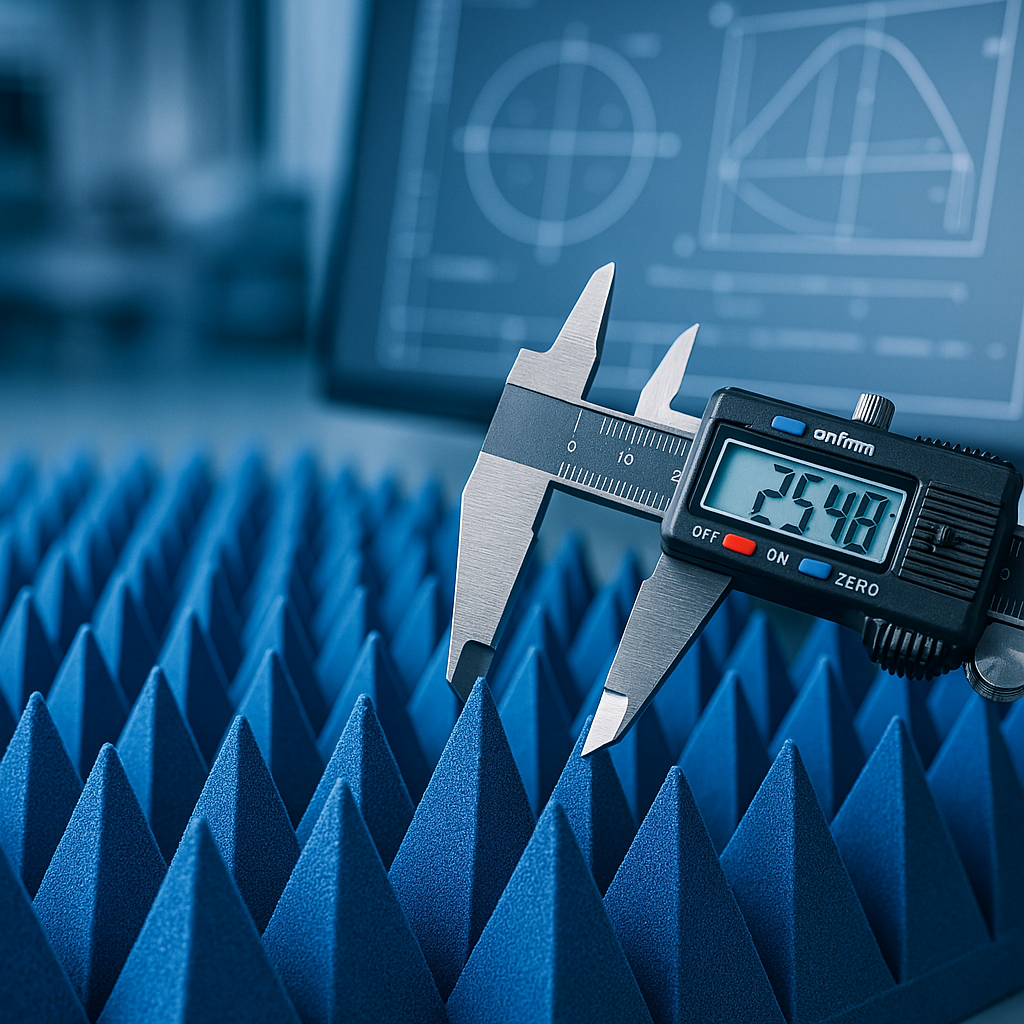
Pyramidal foam tips are the first line of defense against reflected energy, and they're also the most fragile part of any absorber panel. Foot traffic, equipment carts, and general handling tend to concentrate damage near entryways.
A single chipped tip rarely changes chamber performance. A cluster of them across several panel absorbers usually means something in the workflow – storage, handling, cart routing – needs adjusting.
Discoloration and Surface Buildup
Yellowing or fading typically signals UV exposure or general aging. A chalky, whitish surface often means the fire-retardant coating is starting to break down. Dust, mold, and moisture are separate problems entirely, and moisture intrusion should always be treated as urgent since foam absorbs it unevenly.
| Visual Sign | Likely Cause | Urgency |
|---|---|---|
| Chipped or missing tips | Handling, foot traffic | Low–Moderate |
| Yellowing/fading | UV or age-related wear | Moderate |
| Mold or moisture spots | Humidity, water intrusion | High |
| Scorch marks/charring | High-power RF exposure | High |
| Sagging corners | Adhesive failure | High |
Thermal Damage and Sagging
Scorch marks don't fade or repair themselves – they represent a permanently weakened section that needs replacement, not monitoring. Sagging is quieter but just as serious: once an adhesive bond starts failing, gravity finishes the job slowly, often over months.
Physical Inspection: Checking What You Can't See
How do you catch problems that visual inspection misses? By touching the material directly, using anti-static or cleanroom gloves. Some failures – like a hollow bond behind an intact-looking surface – never show up until someone presses on the foam.

A short physical checklist covers most of what matters:
- Press gently on sections of the absorber panel to feel for hollow, spongy, or shifting spots
- Confirm screws, bolts, and brackets on ferrite tiles or hybrid panels are tight and rust-free
- Check that chamber doors and gaskets don't crush nearby foam when closing
That last point gets missed constantly. A door closing slightly out of alignment can grind down foam over dozens of cycles before the damage becomes visible.
Cross-Checking Visual and Physical Findings
A panel that looks fine but feels spongy underneath is often further along in degradation than one with a visible chip and a solid bond. Relying on sight alone tends to miss internal delamination until it's already progressed into a visible sag – which is exactly why both inspection types belong in the same log, cross-referenced by date and location.
Maintenance Steps That Actually Extend Absorber Life
Cleaning and environmental control matter as much as the inspection itself. Neither one is complicated, but both get skipped more often than they should.
- Vacuum dust using an industrial HEPA vacuum with non-metallic, static-free attachments – never water or harsh chemicals, which damage the foam's cell structure
- Maintain stable temperature and humidity to reduce foam rot and adhesive delamination
- Replace or patch damaged sections before they shift the boundaries of the chamber's quiet zone
Repair or Replace?
Small localized damage (a chipped tip, a minor tear) is usually fine to patch. Once scorching, sagging, or spongy bonding spreads across multiple sections, replacement becomes the more reliable option, both for measurement accuracy and for long-term cost. Mixed-age foam within the same chamber can also introduce small absorption inconsistencies that are difficult to diagnose later.
Why Foam Quality Matters From the Start
Inspection results often trace straight back to the quality of the original material. A well-made pyramidal absorber panel holds its shape under normal handling, resists crushing better, and maintains consistent absorption across the array. Lower-grade foam tends to show wear faster, which means more frequent inspections and earlier replacement cycles.
For chambers relying on outdated or inconsistent panel absorbers, upgrading sections with properly rated pyramidal foam – matched to the chamber's frequency range and testing intensity – reduces the guesswork that comes with mixed materials.
Ready to Replace Worn Absorber Panels?
A chamber is only as reliable as the material lining its walls. If a recent inspection turned up sagging, discoloration, or crushed tips, patchwork repairs may only buy a little time. Contact dB Absorber to find pyramidal absorber panel options matched to a specific chamber's frequency range, testing volume, and budget – the right foam now means fewer failed tests and fewer repairs down the line.
Frequently Asked Questions
How often should absorber panels be inspected?
Most facilities run visual checks monthly and a more thorough physical inspection quarterly, though high-usage chambers may need it more often.
Can a single damaged absorber panel really affect test results?
Yes. Reflected energy from even one weakened section can shift readings enough to fail a compliance test, especially in sensitive frequency ranges.
Is patching foam damage a permanent fix?
For minor, localized damage, yes. Once degradation spreads across multiple tiles or the foam has passed its expected service life, replacement is the more dependable choice.
What causes premature absorber degradation?
Moisture, UV exposure, physical impact from handling, and exposure to high-power RF testing beyond the foam's rated tolerance are the most common causes.