The Engineer's Complete Guide to RFI Shielding: Materials, Testing & Optimization
Meta description: Explore RFI shielding techniques, material selection, testing methods, and performance optimization strategies to protect electronics from electromagnetic interference.
The Engineer's Complete Guide to RFI Shielding: Materials, Testing, and Performance Optimization
Electronic devices live dangerously. Every second, invisible electromagnetic waves assault sensitive circuits from countless directions. Cell phones blast microwaves. Power lines hum with 60-hertz interference. Lightning strikes inject massive voltage spikes across continents.
Modern equipment operates in this electromagnetic battlefield where failure means more than inconvenience. Medical devices monitoring patients can crash. Aircraft navigation systems lose their way. Industrial control systems shut down entire factories.
RFI shielding stands as the primary defense against these invisible threats. Yet many engineers struggle with implementation, testing, and optimization.
Electromagnetic Warfare: What Engineers Face Daily
The electromagnetic spectrum has become humanity's most contested resource. Wireless devices multiply exponentially while available frequencies remain fixed by physics.
Radio frequency interference occurs when unwanted electromagnetic energy disrupts electronic systems. Unlike visible light, these waves penetrate materials, bend around obstacles, and interfere constructively in unpredictable ways. The results range from annoying static to catastrophic system failures.
Sources That Never Sleep
Human-made interference dominates most environments:
- Switching power supplies generate harmonics extending into gigahertz ranges
- Digital circuits create sharp-edged pulses rich in high-frequency content
- Wireless transmitters operate at power levels measured in watts or kilowatts
- Industrial equipment produces broadband electromagnetic noise
- Transportation systems emit interference from ignition, braking, and propulsion
Natural phenomena add another layer of complexity. Solar flares can disrupt GPS satellites globally. Lightning creates broadband electromagnetic pulses that travel thousands of miles. Even the aurora generates radio frequency interference affecting polar communications.
Internal interference presents equally challenging problems. High-speed digital circuits generate switching noise. Motor drives create harmonics. Oscillators produce spurious signals that mix with desired frequencies in unexpected ways.
When Shielding Fails: Real Consequences
Medical equipment malfunctions kill patients. The FDA documented cases where electromagnetic interference caused ventilators to stop, dialysis machines to deliver incorrect dosages, and cardiac monitors to provide false readings.
Aviation incidents multiply as aircraft electronic density increases. GPS jammers can blind navigation systems. Cell phone interference disrupts communication radios. Passenger electronics interfere with flight control computers.
Military systems face deliberate electromagnetic attack. Enemy forces use high-power microwave weapons to disable electronics. Jamming systems blind radars and communication networks. Electronic warfare has become as important as kinetic weapons.
Material Selection: The Foundation of Protection
Effective EMI RFI shielding begins with understanding material properties at the atomic level. Conductive materials contain free electrons that respond to electromagnetic fields by generating opposing currents.
Metals: The Traditional Champions
Copper dominates high-performance applications. Its conductivity of 59.6 million siemens per meter provides exceptional attenuation across broad frequency ranges. Oxygen-free copper offers even better performance for critical applications.
Silver surpasses all other metals in conductivity, but cost limits its use to specialized components. Silver-plated surfaces combine excellent electrical properties with reasonable economics for many applications.
Aluminum weighs 70% less than copper while delivering 60% of the conductivity. Aerospace applications favor aluminum enclosures where every gram counts toward payload capacity.
Steel provides mechanical strength alongside electromagnetic protection. Cold-rolled steel offers good shielding effectiveness below 1 MHz due to its magnetic properties.
Mu-metal specializes in low-frequency magnetic shielding. This nickel-iron alloy provides magnetic permeabilities exceeding 100,000, making it essential for protecting sensitive instruments from power-frequency magnetic fields.
Coatings: Flexibility Meets Performance
Conductive coatings transform non-metallic substrates into effective electromagnetic barriers. These materials democratize RFI shielding by enabling protection on plastic enclosures, printed circuit boards, and complex geometries.
Silver-filled paints achieve surface resistivities below 0.01 ohms per square when properly applied. Multiple thin coats outperform single thick applications by reducing surface roughness and improving adhesion.
Nickel coatings resist corrosion better than silver alternatives while maintaining reasonable conductivity. Electroless nickel plating creates uniform thickness on complex surfaces without line-of-sight limitations.
Carbon-based coatings cost less than metallic alternatives but provide adequate RFI protection for many commercial applications. These materials excel where flexibility and chemical resistance matter more than peak conductivity.
Gaskets: Sealing the Weak Links
Even perfect enclosures fail without proper gasket systems. Electromagnetic waves exploit the smallest gaps, turning intended shields into ineffective barriers.
Wire mesh gaskets combine excellent conductivity with compression tolerance. Knitted from monel, beryllium copper, or tin-coated steel wires, these gaskets maintain electrical contact across wide compression ranges.
Elastomeric gaskets blend conductive fillers with flexible polymer bases. Silver-filled silicone provides the best electrical performance but costs significantly more than nickel-graphite alternatives.
Form-in-place gaskets eliminate tolerance stackup problems by conforming to actual mating surfaces. Dispensed as liquids that cure into conductive seals, these materials handle complex geometries that defeat preformed gaskets.
Testing That Reveals Truth
Laboratory measurements provide controlled environments for evaluating shielding effectiveness. However, real-world performance often differs significantly from laboratory results.
Laboratory Precision vs. Field Reality
Standard test methods like IEEE 299 specify precise measurement procedures using specialized equipment. These tests place transmitting antennas inside shielded enclosures while external antennas measure transmitted signals.
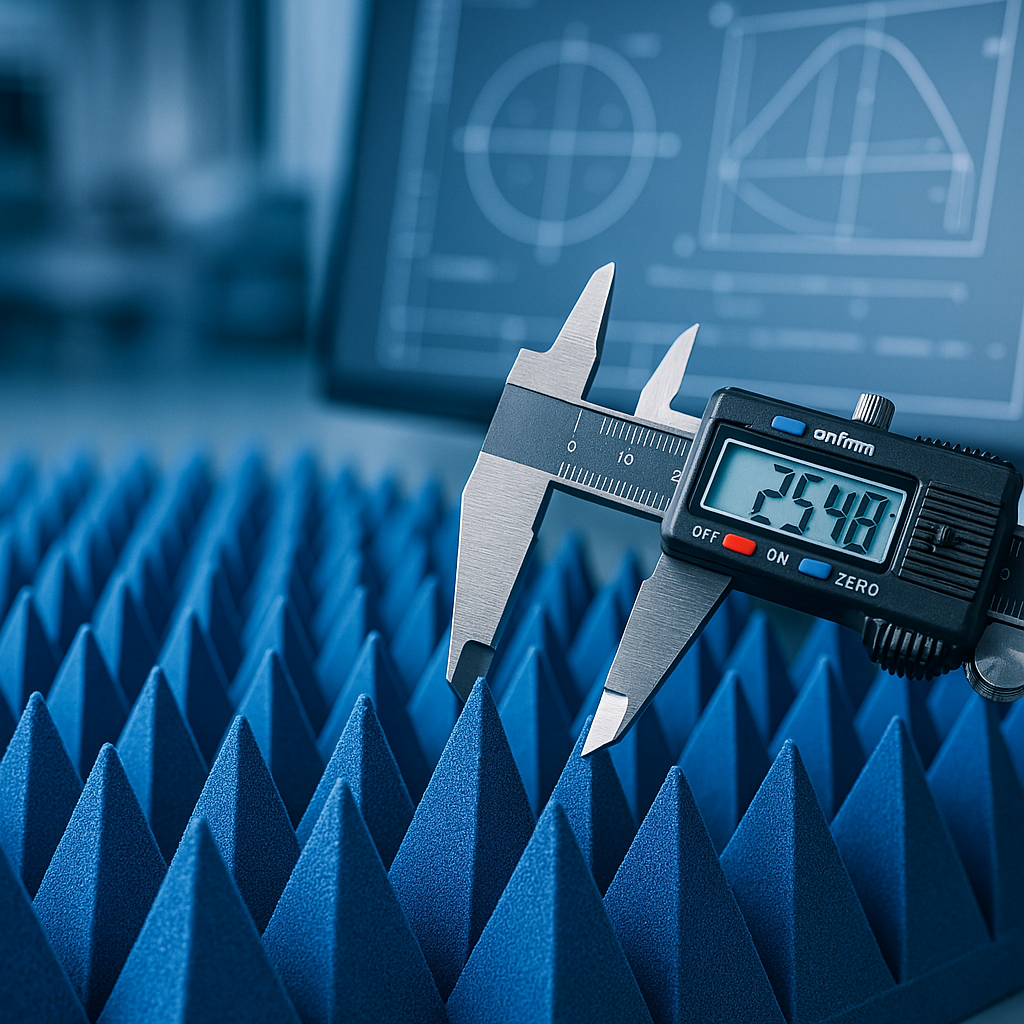
Anechoic chambers eliminate reflections that could corrupt measurements. Ferrite tiles absorb electromagnetic energy across broad frequency ranges, creating "free space" conditions inside buildings.
Network analyzers measure S-parameters that characterize material properties across wide frequency ranges. Time-domain techniques reveal specific locations where shielding breaks down.
But laboratory perfection rarely translates directly to installed systems. Cable penetrations, ventilation requirements, and manufacturing tolerances create leakage paths that laboratory specimens lack.
Field Testing: Where Theory Meets Reality
Spectrum analyzers reveal the actual electromagnetic environment surrounding installed equipment. These instruments display real-time frequency domain information that helps identify specific interference sources.
Near-field probes map electromagnetic leakage around enclosure surfaces with millimeter resolution. Magnetic field probes detect current loops while electric field probes locate voltage discontinuities.
Time-domain reflectometry locates specific discontinuities within shielded cables and connectors. This radar-like technique identifies exactly where shielding integrity breaks down.
Real installations include complications that laboratory testing cannot predict:
- Cable bundles create coupling between circuits
- Ventilation holes act as slot antennas at specific frequencies
- Mechanical tolerances create variable gap dimensions
- Environmental conditions affect gasket performance over time
Standards: The Rules of Engagement
Military applications follow MIL-STD-461 requirements that specify both emissions and susceptibility limits. These standards recognize that critical systems cannot rely on statistical approaches where some units might fail.
Commercial equipment must comply with FCC Part 15 rules in the United States. Similar regulations exist worldwide, but with different test methods and limits. CE marking in Europe requires compliance with electromagnetic compatibility directives.
Medical devices face dual requirements under IEC 60601-1-2 standards. Equipment must both limit emissions and continue functioning when subjected to external interference. Hospitals contain diverse equipment that can interfere unpredictably.
Performance Optimization: Beyond Basic Protection
Achieving optimal RFI protection requires system-level thinking that addresses every potential coupling path. The weakest link determines overall performance.
System Architecture: Defense in Depth
Zoning separates incompatible functions within single enclosures. High-power switching circuits are located far from sensitive analog inputs. Digital processing sections require different shielding approaches than RF front-ends.
Physical separation provides the first line of defense. Distance reduces field strength according to inverse square law relationships. Strategic component placement can eliminate many interference problems without additional shielding.
Grounding systems profoundly influence shielding effectiveness, yet many engineers treat grounding as an afterthought. Star grounding works well at low frequencies but creates ground loops when wavelengths approach conductor dimensions.
Cable Management: The Weakest Links
Cables represent the most common RFI protection failure mode. These structures act as efficient antennas that couple interference into otherwise well-shielded enclosures.
Shielded cables provide the first defense, but termination techniques determine ultimate effectiveness. Shield pigtails longer than one-tenth wavelength at the highest frequency can degrade performance rather than improve it.
Ferrite cores offer frequency-selective filtering that eliminates interference without affecting desired signals. These components present high impedance to common-mode currents while allowing differential signals to pass.
Filtered connectors integrate EMI filtering directly into cable entry points. These components combine capacitive and inductive elements to create low-pass filters that preserve signal integrity.
Environmental Challenges: Time and Temperature
Temperature cycling stresses gasket seals as different materials expand at different rates. Elastomeric gaskets may harden in cold environments or soften excessively in hot conditions.
Corrosion destroys electrical continuity even when mechanical integrity remains intact. Galvanic compatibility charts help avoid problematic material combinations. Stainless steel fasteners provide better long-term reliability than standard alternatives.
Humidity creates conductive paths that bypass intended shielding barriers. Sealed enclosures may require active dehumidification. Breathing vents must balance pressure equalization with electromagnetic sealing.
The electromagnetic environment continues evolving as wireless devices multiply and operate at higher frequencies. Engineers who master current RFI shielding principles will be prepared for tomorrow's challenges. Success requires understanding not just individual techniques but how they integrate into comprehensive electromagnetic compatibility solutions.
Looking for high-quality RF absorbers? Browse our in-stock pyramidal absorbers — shipping from California in 1-2 business days.