RF Absorber Fire Ratings: UL 94, NRL 8093 & DIN 4102 Decoded

Fire Safety Ratings for RF Absorbers: UL 94 and NRL 8093 Decoded
Fire alone doesn't scare procurement managers. What scares them is not knowing what's actually inside the foam they just bought. In 2024, U.S. fire departments responded to roughly 1.39 million fires that caused $19.1 billion in direct property damage, according to NFPA's 2024 fire loss summary – a reminder that fire risk in commercial and industrial buildings is far from a rare event.
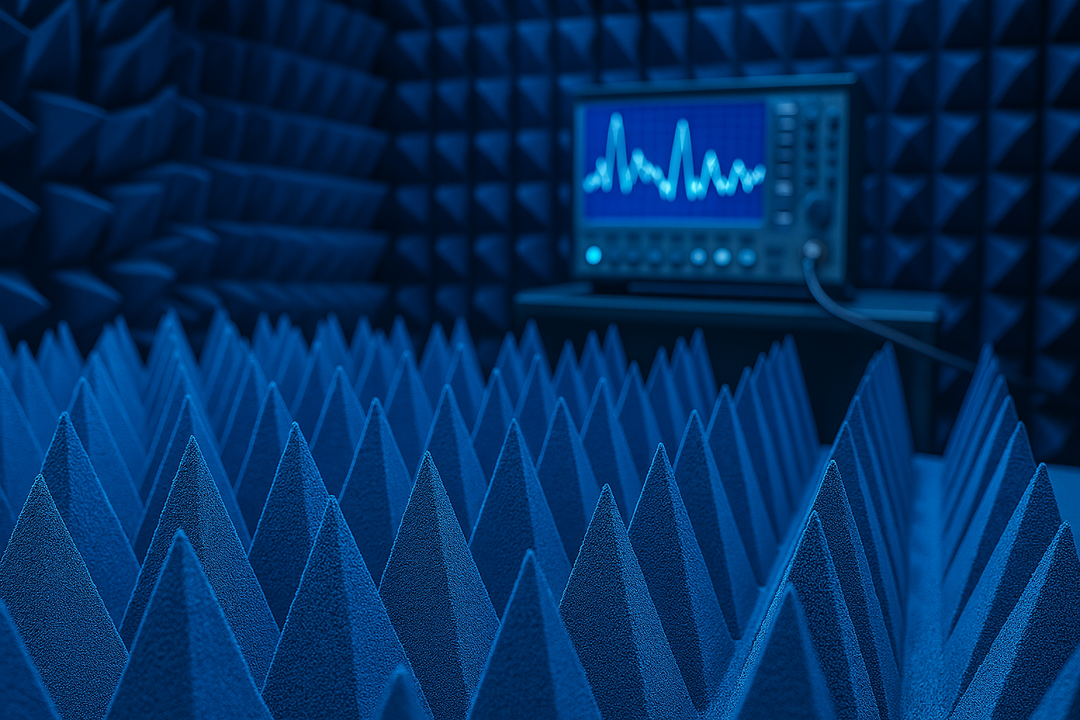
RF chambers sit inside that same risk pool. Rooms lined floor-to-ceiling with pyramidal foam are, structurally speaking, rooms full of fuel unless that foam has been tested and rated for how it burns. Three names show up constantly on absorber spec sheets – UL 94, DIN 4102 B2, NRL 8093 – and each one answers a slightly different question about what happens when that foam meets a flame.
What Fire Rating Actually Means for RF Absorber
A fire rating is not a guess. It's the result of a controlled lab test that measures ignition time, burn rate, and self-extinguishing behavior under specific conditions. When a supplier of RF absorber claims a "fire-retardant" foam, that phrase alone proves nothing without a certificate attached to it.
This matters more in chambers than in almost any other application. A typical anechoic room can hold hundreds of pyramidal cones covering every wall and the ceiling. That's a dense, continuous fuel load in an enclosed space – very different from a single foam panel sitting in an open workshop.
Why "Fire Retardant" on a Label Isn't Proof
Labels are marketing copy. Certificates are evidence. The only way to confirm a material's real fire behavior is to check which standard it was tested against, which test number applied, and whether the certificate matches the batch actually being shipped.
A few things worth noting before signing off on a purchase order:
- Certification is tied to a specific foam density and thickness – a rating earned on one variant doesn't automatically apply to another.
- Reformulated foams need re-testing; a manufacturer's older certificate may no longer describe what's currently in production.
- A verbal assurance from a sales rep is not documentation – a lab-issued PDF with a test number is.
UL 94: The Standard Most Chamber Buyers Recognize First
What does UL 94 actually test? It measures how plastic and foam samples respond to a small flame applied directly to them, then removed, checking whether the material keeps burning, self-extinguishes, or drips flaming particles.
For foam absorbers, a horizontal burn rating (HBF) is common – the material is tested lying flat and expected to resist sustained combustion. Vertical ratings go further. UL 94 V-0 is the tier most safety-conscious labs look for: the sample is ignited vertically and must stop burning within a short window, without dropping burning debris that could ignite whatever sits below it.
What UL 94 Leaves Out
The standard doesn't measure smoke toxicity or how material behaves under sustained radiant heat, and it says nothing about smoldering – a slow, often invisible burn that can persist deep inside foam. For a chamber holding a large volume of pyramidal absorber, that's a real gap, which is exactly why other standards were developed specifically for this material.
NRL 8093: A Standard Written for Chambers, Not Just Plastics
Where UL 94 was built for plastics generally, NRL 8093 (a Naval Research Laboratory report) was written with radar-absorbent, anechoic-grade foam in mind from the start. It breaks testing into three distinct parts.
| Test | What It Measures | Why It Matters in a Chamber |
|---|---|---|
| Test 1 | Ease of ignition under direct flame | Establishes baseline resistance to accidental ignition |
| Test 2 | Flame propagation speed and distance | Critical in rooms where foam covers every surface |
| Test 3 | Smoldering and localized high-heat exposure | Confirms foam doesn't burn invisibly or release toxic gas after the flame source is gone |
Note: passing Test 1 alone means little if a material fails Test 2 – a foam that resists ignition but spreads flame quickly is still a hazard in a densely packed room.
Who Tends to Require It
Government labs, aerospace test facilities, and EMC houses working under strict compliance mandates often specify NRL 8093 directly, since it was built around the exact geometry and density found in real RF chambers rather than a flat test coupon. Commercial labs without a defense contract in sight increasingly ask for it too, simply because it was designed for this material specifically.
DIN 4102 B2: The European Building-Code Angle
DIN 4102 takes a wider view – it classifies how construction and interior materials, including wall linings and insulation, behave under fire exposure as part of a whole structure rather than as an isolated sample.
Class B2 corresponds to "normally flammable" material: it resists a small direct flame for a defined period and generally self-extinguishes once that source is removed, though it isn't held to the stricter thresholds reserved for non-combustible structural barriers. For RF absorbers going into facilities under German or EU building codes, DIN 4102 B2 is frequently the minimum documentation an inspector will ask to see, separate from whatever U.S. rating the same product also carries.
Reading the Paperwork Before It Ships
The gap between a marketed claim and a verified fact shows up constantly in workplace safety data more broadly. Employers across U.S. industries reported 2.5 million nonfatal workplace injuries and illnesses in 2024, according to the Bureau of Labor Statistics – a figure that underscores how often "should be fine" turns into an incident report. Foam that hasn't been properly verified is the same kind of assumption, just with higher stakes.
A short list of questions to ask before finalizing an order:
- Which standard and test number does the certificate reference – UL 94 HBF, UL 94 V-0, NRL 8093 Tests 1 through 3, or DIN 4102 B2?
- Does the certificate match the exact density and thickness being purchased?
- Is the document current, or does it describe a discontinued formulation?
Pro tip: ask for the certificate before placing the order, not after the foam arrives. A supplier that hesitates to produce it is telling buyers something important on its own.
Pyramidal RF Absorbers Built With Documentation, Not Just Claims
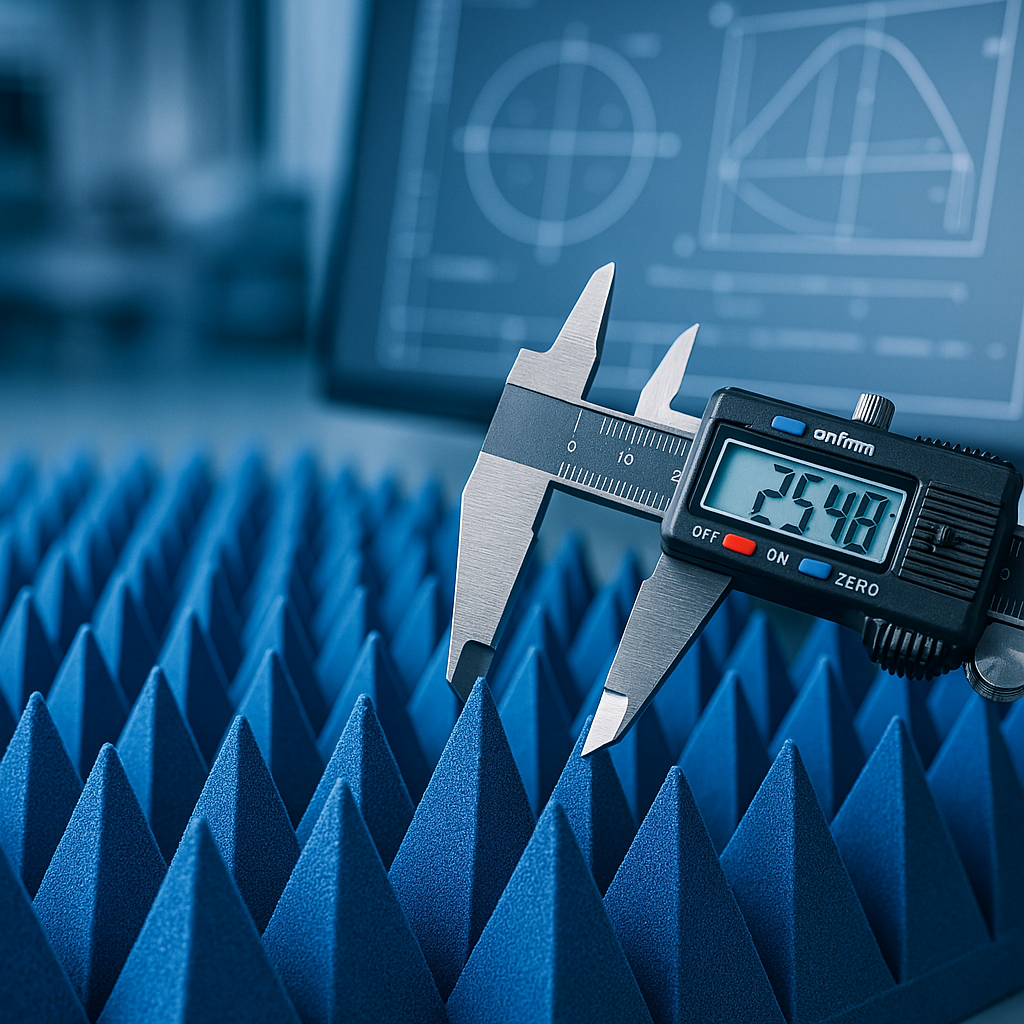
Pyramidal geometry is the standard shape for RF absorber because it breaks up reflected signals effectively across a wide frequency range. None of that performance matters if the foam behind it hasn't been verified against a recognized fire standard – RF performance and combustion behavior come from different aspects of the material, and one doesn't guarantee the other.

Labs assembling or retrofitting RF chambers are better served asking for pyramidal absorber backed by UL 94, NRL 8093, or DIN 4102 B2 certification matched to the exact batch being supplied. That single step (checking paperwork instead of trusting a label) closes most of the risk before it ever becomes a real incident.
Ready to Source Certified Pyramidal Absorber?
Reach out for pyramidal RF absorber backed by documented UL 94, NRL 8093, and DIN 4102 B2 test certificates matched to the exact batch supplied – real paperwork, not a label, standing behind the material going into the next build.
Frequently Asked Questions
Is UL 94 V-0 enough on its own for a chamber build?
It's a solid baseline, but it doesn't cover smoldering or large-scale flame propagation. Chambers with heavy foam density often pair it with NRL 8093 for a fuller picture.
Does NRL 8093 replace UL 94?
No – they test different things. NRL 8093 was built specifically for anechoic-grade foam, while UL 94 is a broader plastics standard. Many serious installations reference both.
Why would a European facility need DIN 4102 B2 if the product already has a UL rating?
Because building inspectors in Germany and much of the EU work from DIN classifications, not U.S. standards. A UL certificate typically doesn't satisfy that requirement on its own.
Can a manufacturer's website claim substitute for a lab certificate?
No. A certificate names the accredited lab, test number, sample specifications, and date. A website claim is marketing copy until that document exists.