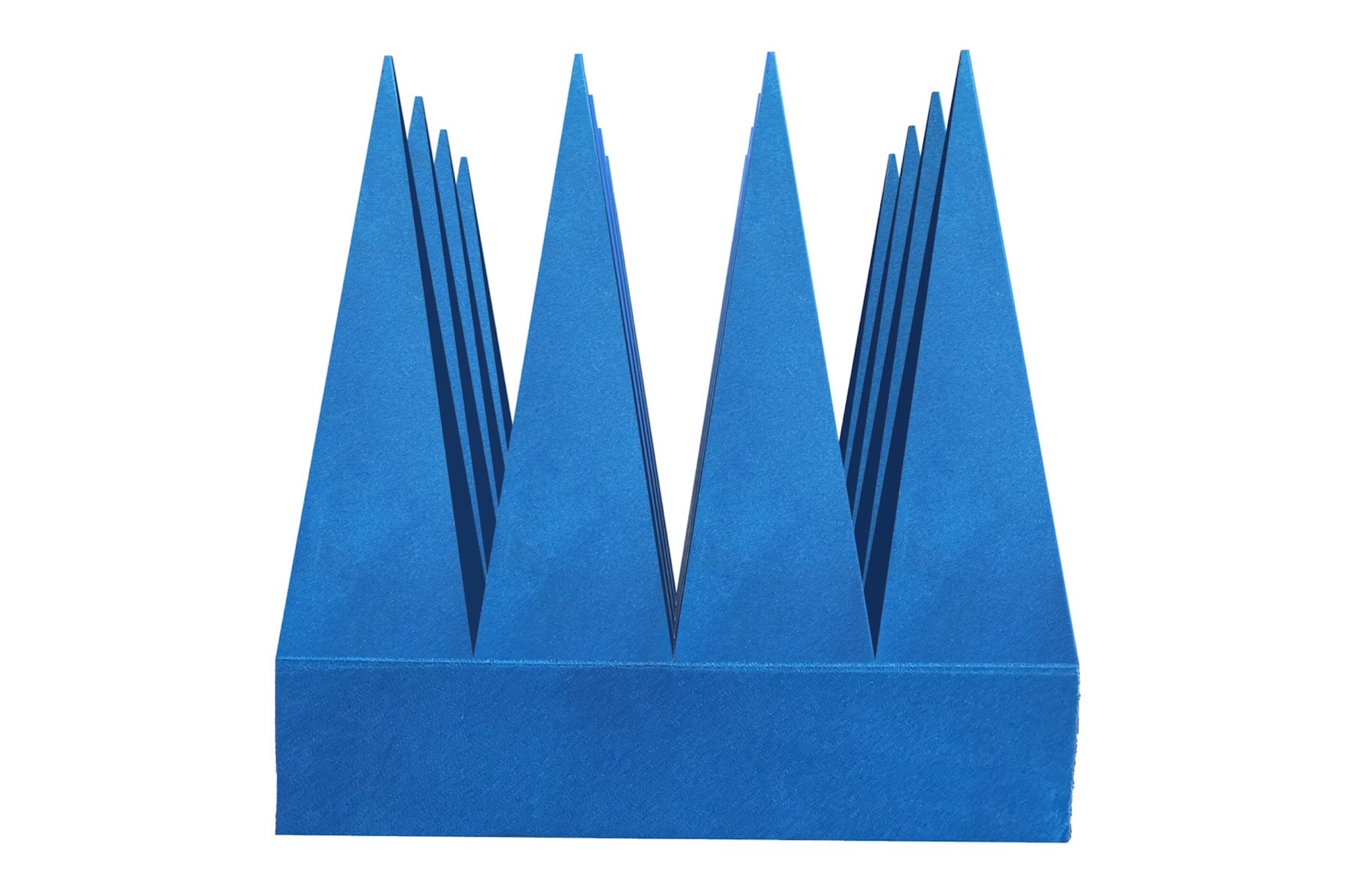
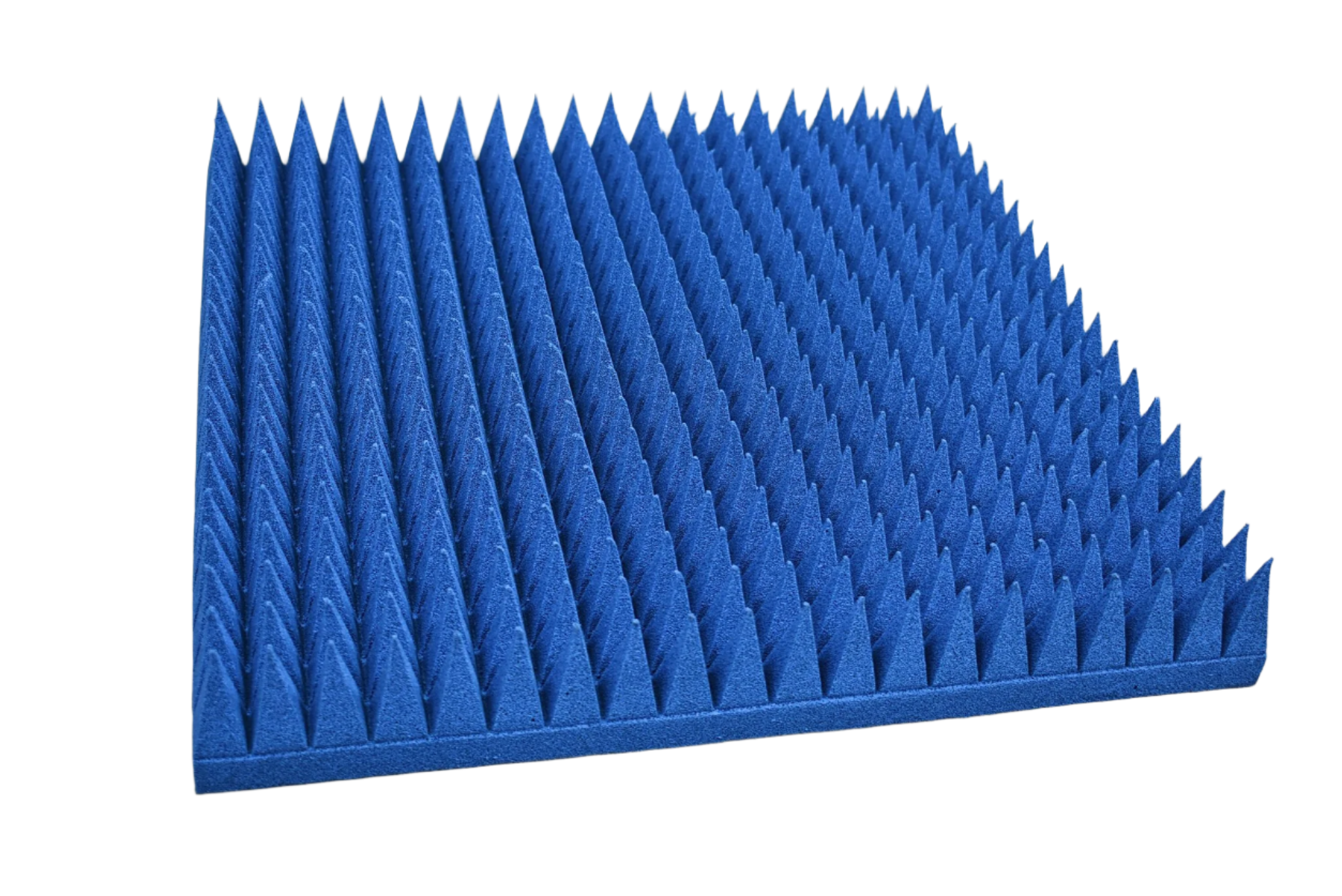
Composition: carbon and fire retardant chemical loaded polyurethane foam
Working Temperature: -85°F to 176°F (-50°C to +80°C)
Environment: Indoor Use
Fire Retardancy: Certified to NRL 8093 Tests I, II & III
Typical Power Handling: 1kW/m²
Installation: Adhesive bonding
| Thickness | Weight | Base Size |
|---|---|---|
| 2in (50mm) | 4.2 kg/m² | 20×20in (500×500mm) |
| Reflectivity | Normal frequency (GHz) | |||||
|---|---|---|---|---|---|---|
| 1.5 GHz | 3 GHz | 5 GHz | 10 GHz | 15 GHz | 40 GHz | |
| Reflectivity (-dB) at normal incidence | 6 | 10 | 10 | 13 | 15 | 17 |
Flat absorbers have a smooth, uniform surface with no pyramid geometry — ideal for corners, hard-to-reach positions, and compact microwave anechoic boxes where a flush surface is needed. Pyramidal absorbers provide deeper absorption at equivalent thickness; flat absorbers are the practical choice where depth is constrained or surface uniformity is required.
The 2in flat absorber provides absorption from 1.5 GHz to 40 GHz, with best performance above 5 GHz. For lower frequency coverage or deeper absorption, consider our pyramidal absorber line.
The 2in flat absorber is in stock and ships within 1–2 business days from our California warehouse.
Our flat absorbers are made of carbon and fire retardant chemical loaded polyurethane foam — the same material as our pyramidal line, volumetrically loaded for consistent electromagnetic properties throughout.
Yes, all dB Absorber foam is certified to NRL 8093 Tests I, II & III. Additional certifications include DIN 4102-1 Grade B2 and UL94 HBF.
Flat absorbers are installed via adhesive bonding directly to chamber walls, corners, or enclosure surfaces. The smooth back surface makes them ideal for irregular positions that pyramidal tiles cannot cover.

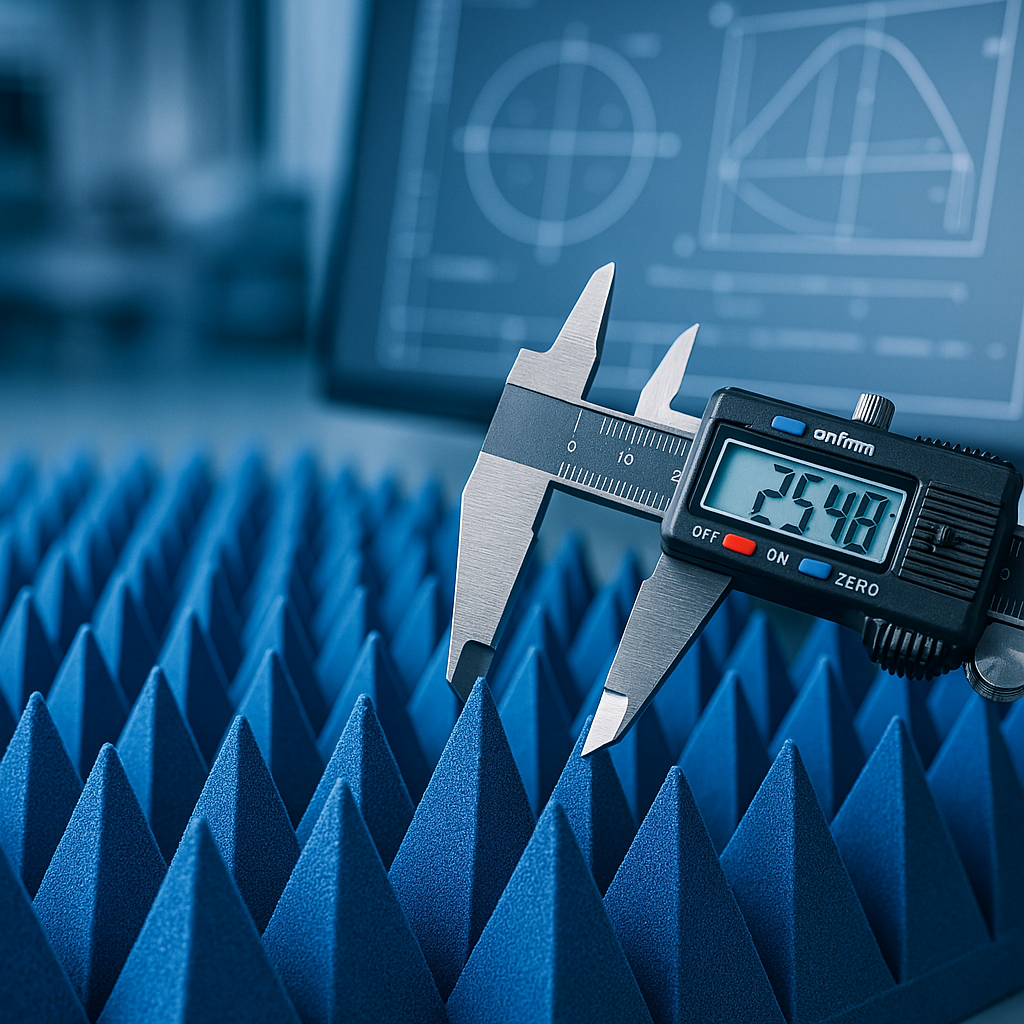
Every absorber is crafted to meet demanding RF and microwave performance standards, with exacting tolerances for consistent, reliable results.

No long lead times. Our absorbers are warehoused in California and ship within 1–2 business days.

Tested in accordance with NRL 8000 standards, our absorbers deliver broadband performance in critical environments from 30 MHz to 110 GHz.