The Ultimate Guide to RF Absorbing Material: Key Types and Applications
Electromagnetic interference remains a persistent challenge across numerous industries, from telecommunications to aerospace engineering. RF absorbing material provides effective solutions for managing unwanted radio frequency energy that can compromise system performance. These engineered materials transform electromagnetic energy into thermal energy, preventing reflections that would otherwise cause signal degradation.
The selection of appropriate RF absorber materials depends on multiple factors, including frequency range, environmental conditions, and specific application requirements. Different material compositions offer varying performance characteristics, making proper selection essential for optimal results.
What is RF Absorbing Material, and How Does It Work?
RF absorbing materials function through sophisticated electromagnetic principles that convert radio frequency energy into thermal energy. These materials utilize specific electrical and magnetic properties to interact with incoming electromagnetic waves. The conversion process prevents the formation of standing waves and reduces electromagnetic interference in sensitive electronic equipment.
Basic Operating Principles
The effectiveness of RF absorbing material relies on impedance matching with free space while providing adequate thickness for complete energy absorption. Material composition determines absorption characteristics across different frequency ranges. Engineers balance multiple factors when designing these materials:
- Permeability levels for magnetic energy dissipation
- Permittivity values for dielectric loss mechanisms
- Conductivity parameters for resistive absorption
- Physical thickness relative to target wavelengths
Material Classification Methods
RF absorber materials can be categorized based on their primary absorption mechanisms and frequency characteristics. Each category offers distinct advantages depending on the intended application.
Pyramidal Foam Technology
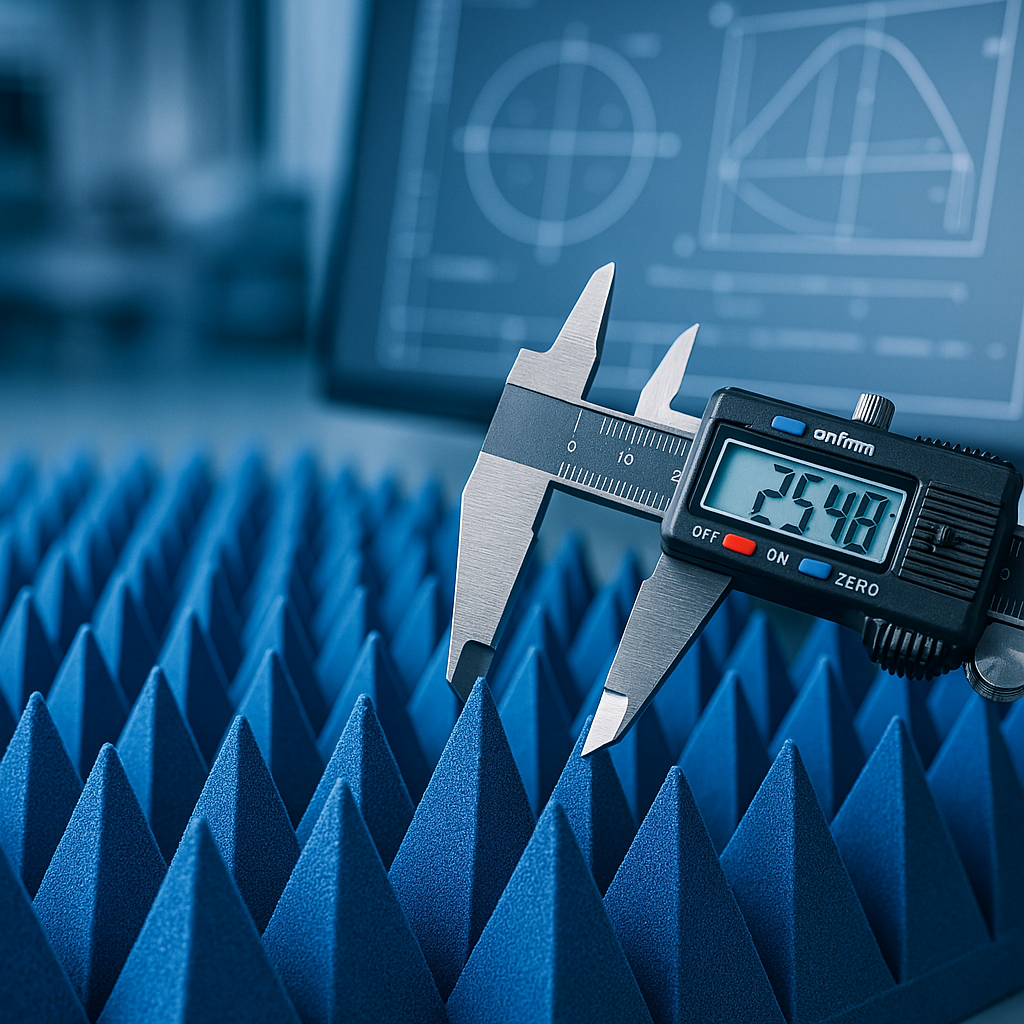
Pyramidal foam structures represent the most recognizable form of RF absorbing material found in professional testing environments. These polyurethane-based materials incorporate carbon particles and fire-retardant compounds to achieve effective absorption across broad frequency ranges.
Construction and Composition
The pyramid geometry provides gradual impedance matching that reduces reflections at the material interface. Carbon loading within the foam structure creates the conductive properties necessary for RF energy dissipation. Distributed carbon particles establish multiple absorption sites throughout the material thickness.
Performance Characteristics
Pyramidal foam absorbers operate effectively from 100MHz to 40GHz, with the physical dimensions determining the lowest usable frequency. Larger pyramid structures can absorb lower frequency signals but require more physical space within anechoic enclosures. This relationship stems from quarter-wavelength absorption principles that govern material effectiveness.
Ferrite-Based Solutions
Ferrite tiles deliver exceptional absorbing performance combined with environmental resistance and thermal stability. These RF absorber materials excel within specific frequency ranges while offering superior mechanical properties.
Standard Configurations
Individual ferrite tiles typically measure 100mm square with 6.7mm thickness. Manufacturers often supply these tiles pre-mounted on 600mm square MDF panels for simplified installation. This modular approach enables efficient coverage of large surface areas while maintaining consistent absorption performance.
Frequency Response
Ferrite materials provide excellent absorption from 30MHz to 1GHz, though effectiveness diminishes rapidly above 1GHz. The magnetic properties of ferrite enable efficient energy absorption through magnetic loss mechanisms. Combined installations often overlay ferrite tiles with smaller pyramidal foam absorbers to extend performance down to 30MHz without losing valuable chamber space.
The high strength and thermal resistance of ferrite tiles make them suitable for demanding environmental conditions. These characteristics prove particularly valuable in applications requiring long-term reliability under extreme temperature variations.
Carbon-Loaded Materials
Carbon-loaded RF absorbing materials utilize conductive properties to dissipate electromagnetic energy effectively at higher frequencies. These materials incorporate various carbon forms distributed throughout host matrix materials.
Carbon Types and Distribution
The concentration and distribution of carbon particles directly influence absorption characteristics and frequency response. Common carbon forms include:
- Graphite particles for controlled conductivity
- Carbon black for enhanced absorption density
- Carbon fibers for structural reinforcement and conductivity
Higher carbon concentrations generally improve absorption performance while affecting material flexibility and processing characteristics. Manufacturing techniques include mixing carbon particles into foam, rubber, or plastic matrices, with each approach offering different advantages in mechanical properties and environmental resistance.
Advanced Dielectric Systems
Dielectric absorbers represent specialized RF absorbing material that relies on dielectric losses to convert electromagnetic energy into heat. These materials typically consist of ceramic or polymer matrices loaded with lossy dielectric particles.
Performance Advantages
High dielectric constant materials can achieve significant absorption in relatively thin sections compared to other absorber types. This characteristic makes dielectric absorbers particularly attractive for space-constrained applications where thick absorbing materials prove impractical. Temperature stability represents a key advantage of many dielectric RF absorbing materials, with ceramic-based systems maintaining consistent performance across wide temperature ranges.
Composite and Hybrid Technologies
Modern RF absorber material development focuses on composite systems that combine multiple absorption mechanisms. These hybrid materials achieve broader frequency coverage and enhanced performance compared to single-mechanism absorbers.
Design Approaches
Several composite design strategies have proven effective:
- Ferrite particles embedded in carbon-loaded foam matrices
- Layered structures with different absorber types in sequence
- Gradient materials where properties vary continuously through thickness
Multi-layer systems offer broadband absorption by stacking different absorber types in sequence. Each layer targets specific frequency ranges, creating an overall performance that exceeds individual material capabilities. Gradient materials represent an advanced approach providing optimized impedance matching while maintaining high absorption efficiency.
Performance Optimization Strategies
Absorption performance depends heavily on proper impedance matching between free space and the RF absorbing material. Surface treatments and geometric modifications can significantly improve this matching while reducing reflections at the air-material interface.
Surface Enhancement Techniques
Several surface modification approaches enhance absorption performance:
- Tapered surfaces for gradual impedance transitions
- Textured coatings to minimize interface reflections
- Graded compositions throughout the material thickness
Thickness requirements vary considerably among different absorber types and target frequencies. Quarter-wavelength thickness provides optimal absorption for many materials, though practical considerations often require compromises. Thinner materials may sacrifice some absorption performance but offer advantages in weight, cost, and space utilization.
Environmental factors, including temperature, humidity, and chemical exposure, can significantly affect absorber performance over time. Material selection must account for these factors to ensure long-term reliability in operational environments.
Anechoic Chamber Applications
Anechoic chambers represent the most demanding application for RF absorbing material, requiring precise control of electromagnetic reflections to simulate free-space conditions. These facilities enable accurate antenna measurements, electromagnetic compatibility testing, and research into electromagnetic phenomena.
Design Requirements
Design specifications for anechoic chambers typically require reflection coefficients below -40dB across the operating frequency range. Meeting these stringent requirements often necessitates using multiple types of RF absorbing materials in combination. Lower frequencies may require ferrite tiles overlaid with pyramidal foam to extend performance down to 30MHz without consuming excessive chamber volume.
Chamber size directly influences absorbing material selection since larger chambers can accommodate thicker absorbers for improved low-frequency performance. Smaller chambers must rely on more compact absorber designs that may sacrifice some performance for space efficiency.
EMC Testing Environments
Electromagnetic compatibility testing relies heavily on RF absorber materials to create controlled test environments free from unwanted reflections. Test facilities must minimize interference from external sources while preventing internal reflections that could invalidate measurement results.
Compliance testing often requires specific absorber configurations specified by international standards organizations. These requirements ensure measurement repeatability between different test facilities and provide confidence in certification results. Cost considerations play a larger role in EMC testing applications compared to research facilities since commercial testing operations must balance performance requirements against economic constraints.
Wireless Communication Systems
Modern wireless communication infrastructure increasingly incorporates RF absorbing materials to reduce interference and improve signal quality. Base station installations use absorbers to minimize reflections from nearby structures that could create dead zones or signal distortion.
5G Network Requirements
5G networks present new challenges for RF absorbing material applications due to their higher operating frequencies and more complex antenna systems. The millimeter-wave frequencies used in 5G require absorbers with different characteristics compared to traditional cellular systems. Material selection must account for these frequency-specific requirements while maintaining cost-effectiveness for large-scale deployments.
Indoor wireless systems benefit from strategic absorber placement to control multipath propagation effects. Automotive applications represent a growing market for RF absorbing materials as vehicles incorporate more wireless communication systems.
Medical and Scientific Applications
Medical devices frequently require RF absorbing material to prevent electromagnetic interference that could affect sensitive measurements or patient safety. MRI systems use specialized absorbers to control RF fields and prevent heating of conductive objects within the imaging volume.
Specialized Requirements
The demanding environmental conditions in medical facilities require absorbing materials with excellent chemical resistance and easy cleaning capabilities. Biocompatibility and fire safety characteristics of medical-grade absorbers require careful material selection and testing. Research instrumentation often operates at the limits of measurement sensitivity, making electromagnetic interference control critical for accurate results.
Laboratory environments benefit from materials that reduce reflections and external interference without introducing contamination or other complications.
Selection Guidelines and Best Practices
The frequency range represents the primary consideration when selecting RF absorbing material for any application. Materials must provide adequate absorption across the entire operating frequency range while maintaining consistent performance.
Key Selection Factors
Several critical factors influence material selection decisions:
- Frequency range coverage and absorption requirements
- Environmental conditions, including temperature and humidity
- Physical constraints such as weight and space limitations
- Cost considerations for both initial purchase and maintenance
- Installation requirements and mechanical properties
Environmental conditions significantly influence material selection since absorbers must maintain performance throughout their operational lifetime. Temperature cycling, humidity exposure, chemical contamination, and mechanical stress all affect long-term reliability. Material testing under simulated operational conditions provides essential data for proper selection.
Cost analysis must consider both initial material costs and long-term maintenance requirements. Some materials offer lower initial costs but require frequent replacement or maintenance. Others provide higher initial costs but deliver superior long-term value through extended service life and consistent performance.
Physical constraints, including weight, space limitations, and installation requirements, often dictate material choices regardless of electrical performance characteristics. Lightweight materials may be required for aerospace applications, while space-constrained installations may necessitate high-performance thin absorbers despite higher costs.
To Sum Up
RF absorbing material serves as a fundamental component in modern electromagnetic interference control across diverse industries and applications. The variety of available material types and technologies allows engineers to select optimal solutions for specific frequency ranges, environmental conditions, and performance requirements. Pyramidal foam absorbers provide broad frequency coverage for anechoic chambers, while ferrite tiles offer robust performance for lower frequency applications.
Advanced composite and hybrid materials continue expanding the capabilities of RF absorbing material technology. These developments enable better performance in challenging applications while reducing size and weight requirements. The growing complexity of wireless communication systems and increasing electromagnetic interference challenges make proper absorber selection more critical than ever.
Success in implementing RF absorbing material depends on a thorough understanding of application requirements and careful evaluation of material characteristics. The investment in appropriate absorber technology delivers significant benefits in system performance, interference reduction, and regulatory compliance. As electromagnetic environments become more complex, the role of effective RF absorption technology will continue growing in importance across numerous industries and applications.
Looking for high-quality RF absorbers? Browse our in-stock pyramidal absorbers — shipping from California in 1-2 business days.