Radar Absorbing Material: Advanced Technology Behind Modern Stealth Systems

Radar absorbing material is critical in modern defense systems and commercial applications. These specialized materials reduce the reflection of electromagnetic waves, making objects less visible to radar detection. From military aircraft to commercial buildings near airports, specialized absorbing materials provide strategic advantages in various scenarios.
The Science and Fundamentals of Radar Absorbing Material
Radar absorbing material (RAM) functions through two primary mechanisms: absorption and multiple reflections. When radar waves strike these materials, they convert electromagnetic energy into heat instead of reflecting it back to the source. This process significantly reduces the radar cross-section of objects coated with these materials.
The effectiveness of a radar absorber depends on several key factors:
-
Frequency range compatibility
-
Material composition and thickness
-
Environmental resilience
-
Application-specific requirements
RAMs work by manipulating the electromagnetic properties of surfaces. The science involves precise engineering of materials with specific permittivity and permeability values. These properties determine how electromagnetic waves interact with the material, affecting reflection, absorption, and transmission characteristics.
Core Principles of Radar Absorption
The fundamental principles behind radar absorbent material involve complex electromagnetic interactions. Unlike sound waves, radar uses short-term microwaves that travel in straight lines until encountering an object. When radar waves hit conventional materials, they reflect back to the source, allowing detection and identification. However, absorbing materials disrupt this process.
The electromagnetic propagation through RAM depends on two critical factors:
-
Electric field permittivity: Determines how the material responds to electric fields
-
Magnetic field permeability: Controls the material's interaction with magnetic components
These properties allow RAMs to attenuate incoming waves through several mechanisms, including:
-
Ohmic losses
-
Dielectric losses
-
Magnetic losses
-
Destructive interference
When properly engineered, RAMs can reduce radar signatures by converting wave energy into heat or creating destructive interference patterns that cancel reflected signals.

Types and Compositions of Radar Absorbing Materials
Various types of RAMs exist, each designed for specific frequency ranges and applications. The selection of appropriate materials depends on the operational requirements and environmental conditions.
Common RAM Formulations
Modern radar absorbers incorporate diverse materials with specific electromagnetic properties:
Carbon-Based Materials
Carbon-based formulations represent a significant category of radar absorbing materials. These include:
-
Carbon fibers
-
Carbon black
-
Carbon nanotubes
-
Graphene and its derivatives
Carbon-based RAMs offer high electrical conductivity and excellent absorption capabilities across broad frequency ranges. When incorporated into polymer matrices, they create flexible composites that can conform to complex geometries while maintaining effective absorption properties.
Magnetic Materials
Ferrite materials constitute another important class of radar absorbing materials. These iron-based compounds possess magnetic properties that effectively absorb and dissipate electromagnetic waves. Common configurations include:
-
Sintered iron/nickel tiles
-
Iron ball paint containing tiny magnetic particles
-
Magnetic composite materials
Ferrite tiles typically measure around 100mm x 100mm with 6mm thickness and feature central fixing holes. Their high density (similar to steel) requires robust support structures when installed in anechoic chambers or on other surfaces.
Foam Absorbers
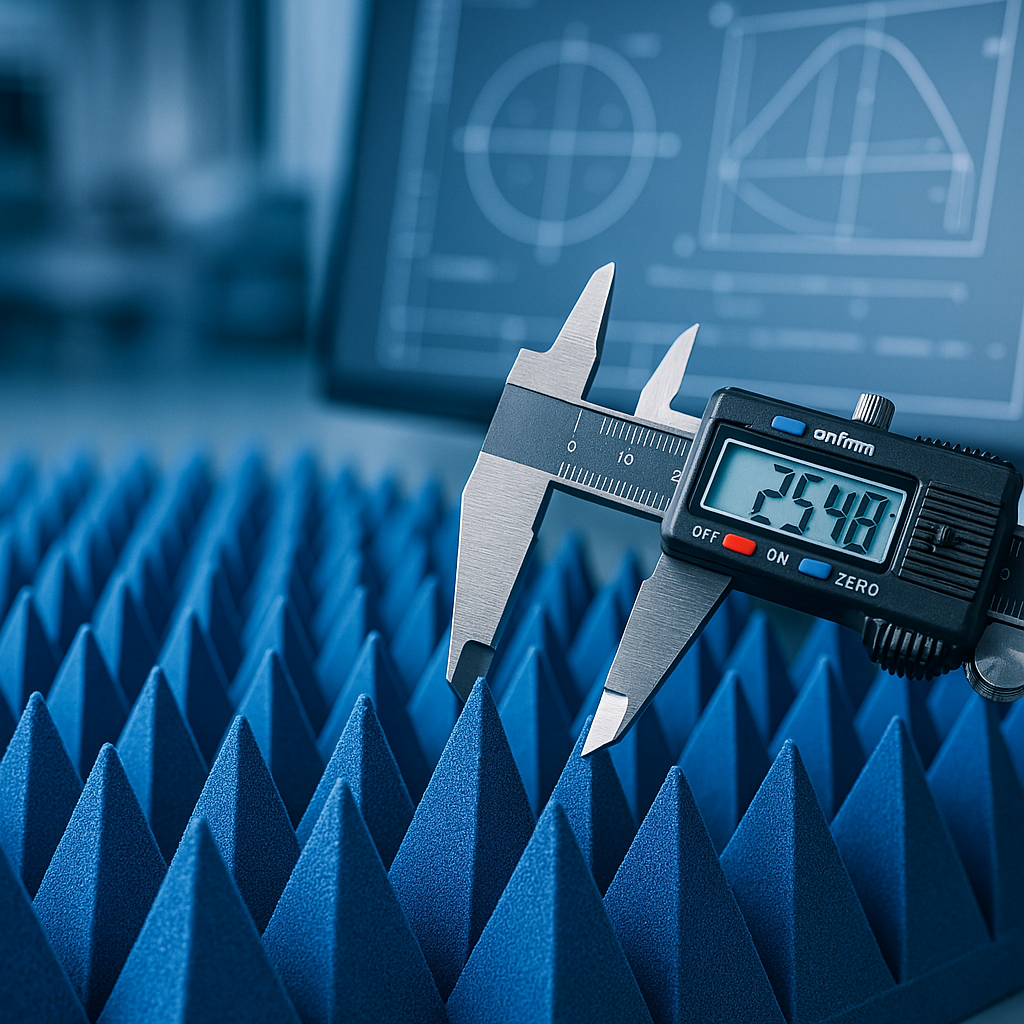
Pyramidal or wedge-shaped foam absorbers represent one of the most recognizable forms of radar absorbing material. These structures typically consist of:
-
Closed-cell polyurethane or polystyrene foam
-
Carbon doping for conductivity
-
Fire-resistant coatings
The distinctive pyramidal shape creates a gradual impedance transition between air and the absorbing material, improving performance across a wide range of incidence angles. These absorbers work particularly well at higher frequencies and are commonly used in anechoic chambers.
Advanced Composite Radar Absorbing Materials
Modern radar absorbing technology increasingly utilizes layered composite structures. These sophisticated materials combine different absorption mechanisms to enhance performance across wider frequency bands. Key approaches include:
-
Layered structures with alternating dielectric and conductive materials
-
Jaumann absorbers using multiple reflective sheets separated by spacers
-
Salisbury screens, consisting of resistive sheets placed at quarter-wavelength distances
-
Gradient-index materials with smoothly varying electromagnetic properties
Composite absorbing materials often integrate carbon-based components with magnetic particles to optimize both electric and magnetic field absorption. These combinations maximize effectiveness across broader frequency ranges and incidence angles.
Applications of Radar Absorbing Material
RAMs serve numerous applications across the military and civilian sectors. Their ability to reduce electromagnetic reflections provides solutions for various challenges.
Military Applications
The most well-known application of radar absorbent material is in stealth technology for military platforms. The United States Air Force pioneered this approach with the F-117 Nighthawk, applying radar absorbing materials to reduce the aircraft's radar signature dramatically. Today, RAMs are integrated into numerous defense systems:
-
Aircraft and unmanned aerial vehicles (UAVs)
-
Naval vessels and submarines
-
Ground vehicles and mobile equipment
-
Military infrastructure and communications systems
By reducing radar cross-sections, these materials enhance survivability and operational effectiveness. The Royal Australian Navy, for example, tests radar absorbing materials for peel and tear resistance to ensure they can reduce detection ranges of submarines by sea or airborne platforms.
Commercial Applications
Beyond military uses, absorbing materials provide important solutions for civilian applications:
-
Anechoic chambers for electronic testing
-
Electromagnetic compatibility (EMC) facilities
-
Commercial buildings near airports to prevent radar interference
-
Consumer electronics, including antennas and mobile communications
-
Automotive radar systems
In commercial settings, RAMs help prevent electromagnetic interference between different systems. Buildings near airports, for instance, may use these materials to mitigate radar scattering that could interfere with civil aviation systems.
Anechoic Chamber Design
Anechoic chambers represent specialized environments where absorbing materials create radar-quiet zones for testing and measurement. These chambers feature:
-
External Faraday cage construction to block outside signals
-
Interior surfaces covered with radar absorbing material
-
Specialized support structures made from non-conductive materials
-
Testing equipment for antenna measurements and electromagnetic compatibility assessment
The pyramidal or wedge-shaped absorbers lining these chambers create distinctive interiors optimized for minimum reflection. The size of these facilities varies from tabletop enclosures to room-sized environments where engineers can work directly with equipment under test.

Material Selection and Application Considerations
Choosing the appropriate radar absorbing material requires careful analysis of several factors to ensure optimal performance for specific applications.
Frequency Range Matching
The first consideration when selecting radar absorbing material is understanding the target frequency range. High-performance magnetic materials typically provide effective radar absorption in the 1 to 40 GHz range. The selected material must align with the operational frequencies of concern.
Different frequency bands require specialized formulations:
-
VHF/UHF bands (30 MHz - 1 GHz): Typically require thicker absorbers with magnetic properties
-
S-band (2-4 GHz): Often targeted for marine radar applications
-
X-band (8-12 GHz): Common for military radar systems
-
Ku-band and above (>12 GHz): Requires materials effective at higher frequencies
Environmental Factors
The application environment significantly impacts radar absorbing material selection. Factors to consider include:
-
Weather exposure and UV resistance
-
Temperature range during operation
-
Chemical exposure considerations
-
Mechanical stress and vibration
-
Expected service life
Materials for outdoor applications must withstand harsh conditions while maintaining their electromagnetic properties. For instance, naval applications require RAMs that resist saltwater exposure, while aerospace applications must consider temperature extremes and aerodynamic forces.
Cost-Effectiveness Analysis
Balancing performance with cost remains an important consideration for radar absorbing material applications. While some materials offer superior absorption capabilities, they may come at significantly higher prices. Options like pre-tin plated steel provide cost-effective solutions for lower frequencies when budget constraints exist.
A comprehensive cost analysis should include:
-
Initial material costs
-
Installation expenses
-
Maintenance requirements
-
Expected service life
-
Performance benefits
Testing and Validation Methods
Effective evaluation of RAMs requires specialized testing approaches to confirm performance across relevant frequency bands and conditions.
Measurement Techniques
Several methods exist for characterizing radar absorbing material performance:
-
Transmission/Reflection (T/R) Method: Places samples in waveguides or coaxial cables, working well for medium to high-loss materials but challenging above 10 GHz
-
Free Space Method: Uses both transmission and reflection techniques to measure non-uniform materials, particularly effective at high frequencies, though diffraction at corners may occur
-
Radar Cross Section (RCS) Measurements: Evaluates the effectiveness of materials in reducing the radar signature of objects
-
Anechoic Chamber Testing: Provides controlled environments for comprehensive material assessment
These testing approaches help quantify important parameters like reflection loss, absorption coefficients, and bandwidth coverage.
Performance Metrics
Key metrics for evaluating radar absorbing materials include:
-
Reflection loss: Measured in decibels (dB), indicating how much of the incident energy is not reflected
-
Absorption bandwidth: The frequency range over which the material maintains effective absorption
-
Angular performance: How absorption varies with different angles of incidence
-
Environmental stability: Performance consistency across temperature, humidity, and other environmental factors
Effective RAMs typically achieve reflection losses of at least -10 dB (90% absorption) across their operational bandwidth, with premium materials exceeding -20 dB (99% absorption).
In Summary
Radar absorbers are critical technologies for both military and commercial applications. From stealth aircraft to anechoic chambers, these specialized materials provide essential capabilities for controlling electromagnetic reflections. The science behind radar absorbers continues to advance, with graphene and other nanomaterials offering new possibilities for enhanced performance.
The selection of appropriate RAMs requires careful consideration of frequency requirements, environmental conditions, and application-specific needs. As technology evolves, radar absorbing materials will continue to play an important role in electromagnetic compatibility, stealth platforms, and various commercial applications.
Understanding the principles, types, and applications of radar absorbent material provides valuable insights for engineers, researchers, and decision-makers working with these sophisticated technologies. As radar systems become more advanced, so too will the materials designed to control and manage electromagnetic reflections.
Ready to Equip Your Anechoic Chamber?
dB Absorber offers NRL 8000 certified pyramidal RF absorbers in sizes from 2″ to 36″. In-stock products ship from California in 1–2 business days.
Browse RF Absorbers →