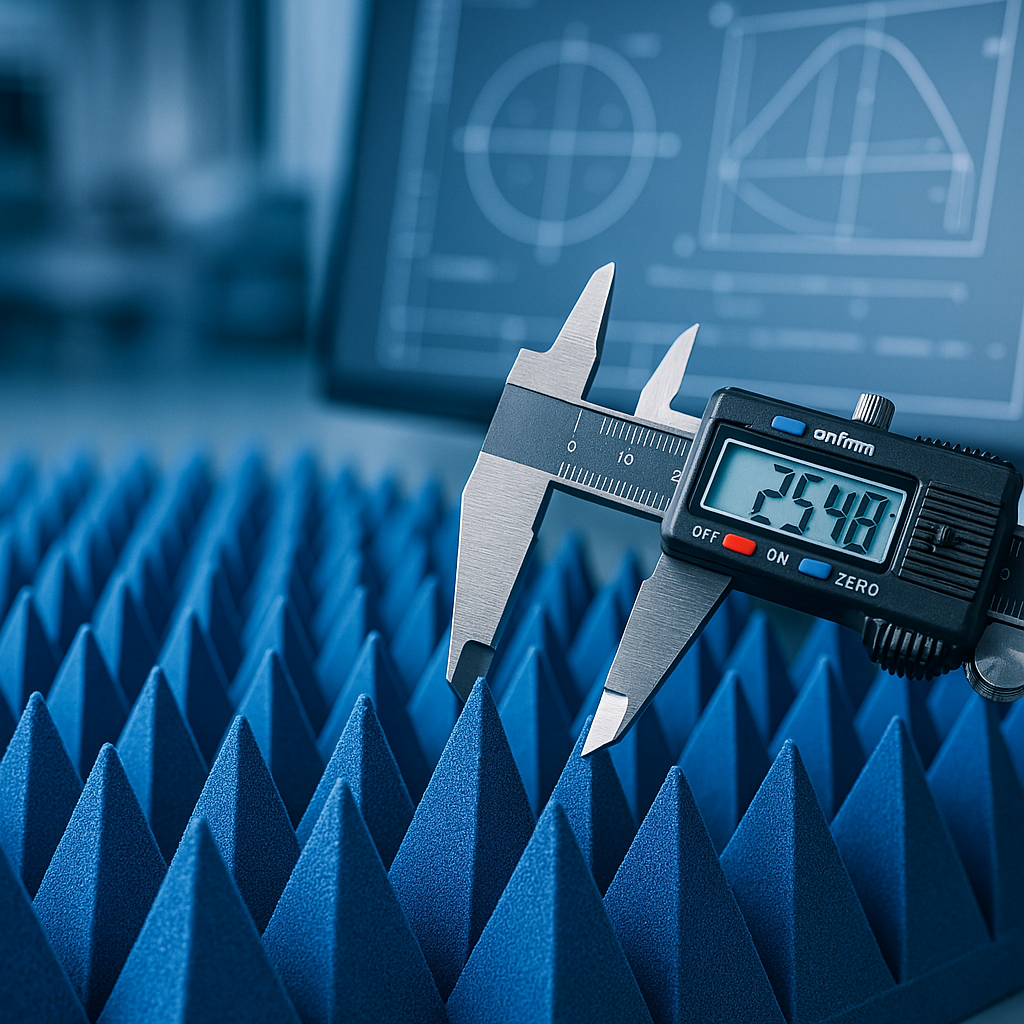
Pyramidal and Convoluted Absorber Configurations
Main Features of Pyramidal and Convoluted Surface Configurations
Pyramidal and convoluted surface configurations are specialized geometric designs used in RF and microwave absorber materials to optimize electromagnetic wave absorption and minimize unwanted reflections. These three-dimensional surface structures feature cone-shaped pyramids, angular wedges, or complex undulating patterns that gradually transition electromagnetic impedance from free space to the absorbing material, significantly enhancing absorption performance compared to flat surfaces.
In simple terms, pyramidal and convoluted surfaces work like electromagnetic "funnels" that capture and gradually absorb radio waves rather than reflecting them back. Unlike flat absorber surfaces that can create sharp impedance discontinuities leading to reflections, these geometrically complex surfaces provide smooth electromagnetic transitions that trap and dissipate wave energy more effectively across broader frequency ranges.
How Do Pyramidal/Convoluted Configurations Work?
Pyramidal and convoluted surface configurations operate by creating multiple reflection and absorption paths that progressively attenuate electromagnetic waves as they penetrate the structure. When electromagnetic waves encounter these geometric surfaces, they experience gradual impedance changes rather than abrupt transitions, reducing reflection coefficients and enhancing absorption. The angular surfaces and varying depths create multiple internal reflections that further dissipate wave energy before it can escape back to free space.
For example, when a radio wave strikes a pyramidal absorber in an anechoic chamber, it first encounters the pyramid tips where initial absorption begins. As the wave penetrates deeper into the pyramid structure, it experiences increasingly dense absorbing material while the geometric taper provides impedance matching that prevents reflection. Multiple internal bounces between pyramid walls ensure thorough energy dissipation before any residual energy reaches the base material.
Types of Surface Configurations
Pyramidal Absorbers: These feature regular cone-shaped pyramids arranged in geometric patterns, typically with square or triangular bases. Pyramid heights range from 2 inches to 36 inches depending on the target frequency range, with taller pyramids providing better low-frequency performance through improved impedance matching.
Wedge Configurations: Angular wedge patterns create directional absorption characteristics optimized for specific applications. These configurations feature triangular cross-sections that provide excellent performance for linearly polarized waves arriving from particular directions, commonly used in specialized testing applications.
Convoluted Surfaces: Complex undulating patterns with irregular geometric features provide broadband absorption across multiple frequency ranges. These surfaces combine various geometric elements to optimize performance for specific electromagnetic environments or multi-frequency applications.
Hybrid Geometries: Advanced configurations combine pyramidal, wedge, and convoluted elements in single structures, providing optimized performance characteristics tailored to specific anechoic chamber requirements or electromagnetic testing scenarios.
Key Features of Geometric Surface Designs
Impedance Matching: Pyramidal and convoluted surfaces provide gradual electromagnetic impedance transitions from free space (377 ohms) to the absorbing material, minimizing reflection coefficients and maximizing wave penetration into the absorbing structure.
Broadband Performance: These geometric configurations enhance absorption across wide frequency ranges, with properly designed pyramidal structures providing effective performance from VHF through millimeter wave frequencies in single configurations.
Polarization Independence: The three-dimensional nature of pyramidal and convoluted surfaces provides consistent absorption performance regardless of electromagnetic wave polarization, ensuring reliable operation with circularly, linearly, or elliptically polarized signals.
Scalable Design Parameters: Surface geometry can be precisely tailored to specific frequency ranges and performance requirements by adjusting pyramid heights, base dimensions, taper angles, and spacing patterns to optimize absorption characteristics.
Enhanced Quiet Zone Performance: These configurations create superior quiet zones in anechoic chambers by minimizing reflection levels and providing more uniform electromagnetic environments for accurate antenna and device testing.
Benefits of Pyramidal/Convoluted Surfaces
Pyramidal and convoluted surface configurations provide superior electromagnetic absorption performance compared to flat surfaces, enabling more accurate measurements in anechoic chambers and better electromagnetic shielding effectiveness in critical applications.
With optimized geometric designs, these surface configurations reduce the overall absorber material requirements while maintaining excellent performance, resulting in lighter weight installations and reduced facility construction costs for anechoic chambers.
Pyramidal and convoluted surfaces enhance measurement accuracy by creating cleaner electromagnetic environments with lower reflection levels, enabling more precise antenna pattern measurements, radar cross section testing, and electromagnetic compatibility evaluations.
Applications of Geometric Surface Configurations
Anechoic Chamber Construction: Pyramidal absorbers are extensively used to line the walls, ceiling, and floor of anechoic chambers for antenna testing, providing the reflection-free environments essential for accurate electromagnetic measurements across telecommunications and aerospace industries.
Radar Testing Facilities: Military and aerospace facilities utilize pyramidal and convoluted surfaces for radar cross section measurements and stealth technology development, where precise control of electromagnetic reflections is critical for system performance evaluation.
EMC Testing Environments: Electromagnetic compatibility testing facilities employ these surface configurations to create controlled electromagnetic environments for evaluating device immunity and emissions characteristics without interference from environmental reflections.
Satellite Communication Testing: Ground station antenna testing and satellite payload verification require pyramidal absorber configurations to simulate space environments and eliminate terrestrial reflection interference during critical performance measurements.
Automotive Radar Development: Modern vehicle radar systems undergo testing in facilities lined with pyramidal absorbers to ensure accurate performance characterization without interference from facility reflections that could compromise safety system development.
Pyramidal and convoluted surface configurations represent fundamental design principles in electromagnetic absorber technology, enabling the creation of high-performance anechoic environments essential for modern RF and microwave testing. By optimizing geometric parameters to provide superior impedance matching and broadband absorption, these surface designs ensure accurate electromagnetic measurements and reliable testing environments across telecommunications, aerospace, automotive, and defense industries.
Related: Explore our RF absorber products or read more on our technology blog.